Elon Musk’s SpaceX will be the world’s biggest ever IPO in 2026 - if it happens
SpaceX’s IPO plans hinge on Starlink growth, faith in Musk’s long-term space bets
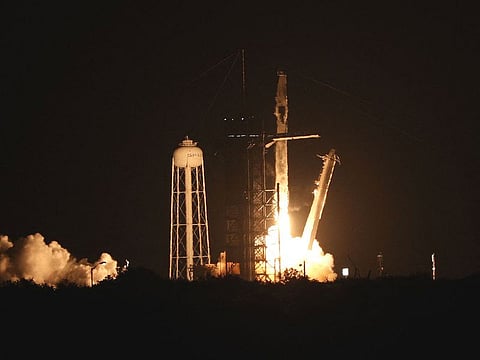
Dubai: SpaceX, the private rocket company founded by Elon Musk, is quietly moving toward a step that could reshape global financial markets: a stock market listing that may be the largest ever attempted.
In a company message seen by Bloomberg on Friday, SpaceX said it is considering a 2026 initial public offering to help fund rapid Starship launches, space-based artificial intelligence data centres and plans for a future base on the moon.
While the company remains private, recent internal share sales — which allow employees and early investors to buy or sell stock — suggest it is laying the groundwork for a public debut.
Those transactions value SpaceX at about $800 billion, already making it the world’s most valuable private company and placing it ahead of many of the biggest names listed on US stock exchanges.
In a memo to shareholders also seen by Bloomberg, Chief Financial Officer Bret Johnsen said the latest secondary offering prices shares at $421, nearly double the $212 set in July, when the company was valued at about $400 billion. The figure surpasses the previous private-market record of $500 billion set by ChatGPT owner OpenAI in October.
What SpaceX is planning
SpaceX executives have told shareholders they are preparing for a possible initial public offering, or IPO, as early as 2026. An IPO would allow everyday investors to buy shares in the company for the first time.
If it happens, SpaceX could seek a valuation of around $1.5 trillion, a level that would put it close to the size of Saudi Aramco when it listed in 2019 — the largest IPO in history.
The company says the money would help fund ambitious projects, including a faster launch schedule for its next-generation rockets, new satellite networks, and long-term plans to expand human activity beyond Earth.
There is no fixed timetable. SpaceX has warned that market conditions or technical setbacks could delay or even cancel the plan.
Why Starlink matters much
For investors, the case for buying into SpaceX today rests mostly on Starlink, its satellite internet business.
Starlink uses thousands of satellites in low-Earth orbit to provide internet access around the world. It already serves millions of customers and is expected to generate between $22 billion and $24 billion in revenue in 2026, according to people familiar with the company’s projections.
That makes Starlink SpaceX’s main source of income, far ahead of its rocket launch business.
SpaceX is also expanding Starlink beyond home internet. It is working with telecom companies to allow mobile phones to connect directly to satellites, especially in remote areas without traditional coverage. If successful, this could turn Starlink into a global communications backbone.
Valuation raises eyebrows
Even with Starlink’s growth, SpaceX’s potential valuation is eye-catching.
At $1.5 trillion, investors would be paying more than 60 times the company’s projected future sales — a level rarely seen in public markets. That means buyers would not be paying for what SpaceX earns today, but for what they believe it could become many years from now.
Supporters say SpaceX is unique, with little real competition in key areas like satellite launches and space-based internet. Critics argue the expectations leave little room for error.
At its current private valuation, SpaceX would already be worth more than the combined market value of America’s largest defence contractors.
Beyond satellites, rockets
Starlink alone does not explain SpaceX’s long-term ambitions.
Elon Musk has repeatedly said SpaceX aims to build much more than rockets and satellites. His vision includes factories in space, data centres orbiting Earth, and eventually human settlements on the moon and Mars.
All of this depends on Starship, a massive reusable rocket still under development. Starship is designed to carry people and cargo far beyond Earth at a much lower cost than today’s rockets. NASA has already awarded SpaceX contracts worth about $4 billion linked to lunar missions that rely on Starship.
Supporters believe this gives SpaceX a head start in what could become a new space economy. Skeptics point out that many of these ideas remain untested and could take decades to pay off.
Competition and timing risks
SpaceX may dominate today, but rivals are catching up. Companies backed by governments and wealthy founders are investing heavily in rockets and satellite technology, which could erode SpaceX’s lead over time.
Some analysts also question whether now is the right moment to go public. Investor enthusiasm for big, futuristic ideas — especially in artificial intelligence and space — can change quickly if markets turn cautious.
Waiting too long could also be risky. As competitors improve, SpaceX may no longer look as unbeatable as it does today.
Everything comes back to Musk
In the end, SpaceX’s IPO story is inseparable from Elon Musk.
Supporters see his track record — from Tesla to reusable rockets — as proof that bold ideas can turn into real businesses. Critics worry that so much decision-making power rests with one person.
That mix of admiration and concern creates what analysts often call the “Musk premium”: investors may be willing to pay more simply because they believe in his vision.
Whether SpaceX eventually lists or not, the question investors will face is simple but risky: are they buying a profitable satellite company — or a bet on humanity’s future in space?
If SpaceX does go public, the answer could define one of the most dramatic IPOs financial markets have ever seen.