Major carmakers escape most dieselgate claims in UK trial
Mercedes, Ford and others avoid most claims as legal fight over emissions continues
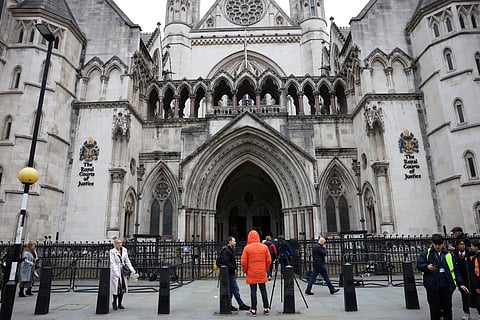
London: The High Court in London on Friday ruled largely in favour of five major carmakers accused of installing devices in diesel cars to cheat clean-air laws, as the dieselgate saga rumbles on.
"The Court rejected most of the principal allegations advanced against the manufacturers whose vehicles were examined" in the latest dieselgate trial, Justice Sara Cockerill said in a statement.
Mercedes, Ford, Peugeot-Citroen, Renault and Nissan had all denied their systems were designed to circumvent emissions tests for the air pollutant nitrogen oxides.
The dieselgate scandal erupted in September 2015, when German automaker Volkswagen admitted to fitting millions of vehicles with software to make engines appear less polluting in regulatory tests than in real driving conditions.
It caused waves in the global car industry, ensnaring several other top carmakers and leading to legal action in multiple countries including France, South Korea and the United States.
To date, Volkswagen has paid more than 32 billion euros ($36.5 billion) in penalties over the scandal, mostly in the United States.
Second trial
While the UK court on Friday favoured the carmakers, Cockerill added that they would still face a second trial in October to determine a level of damages.
This is because the Court made "adverse findings in relation to certain specific strategies", including a coolant device in Mercedes cars and a strategy used in some Peugeot-Citroen cars, the judge added.
Claims in the initial trial were brought on behalf of 1.6 million motorists against 14 carmakers, including Jaguar Land Rover, Toyota, Vauxhall-Opel and BMW, among others.
Ahead of Friday's verdict, lawyers for the claimants said the accused risked paying out billions of pounds in compensation.
Martyn Day, a lawyer at Leigh Day representing the claimants, said the ruling meant the UK was "the only significant place in Europe where manufacturers are free to build and sell cars that contain these types of devices.
"We are considering with our clients whether to apply for permission to appeal," he added.
The case had centred around whether a sample of 20 cars collectively made by the five carmakers had installed "prohibited defeat devices" which reduced the effectiveness of the vehicles' emissions-control systems outside regulatory testing conditions -- resulting in higher emissions of nitrogen oxides during normal vehicle use.
'Incredibly disappointing'
"We welcome that the English High Court of Justice ruled very largely in favour of Mercedes-Benz," the company said in a statement.
The Court "considers only one out of four of the sample vehicles as non-compliant in one functionality... (which was) remedied" via a software update, Mercedes added.
Jane Dutton, digital communications manager for campaign group Mums for Lungs, called the overall verdict "incredibly disappointing".
"We know for a fact that there are over seven million cars on our (UK) roads, diesel cars, emitting excess emissions right now... and nothing is being done about it, and nothing has been done about it for over 10 years."
Ford welcomed the decision that showed it "did not use prohibited defeat devices in our vehicles".
Renault Group said it would "pursue the recovery of its legal costs from the large institutional insurers and hedge funds who backed these claims in the hope of a financial gain".
Cockerill said "it was not enough for the claimants simply to establish that the challenged strategies reduced the effectiveness of emissions-control systems outside the relevant testing conditions.
"The Court also found that if an alternative approach were taken to the meaning of 'defeat device' most of the allegations would still fail," she added.


