Coronavirus outbreak could slow UAE's private sector loan demand
UAE’s credit growth contracts on slowing government borrowing
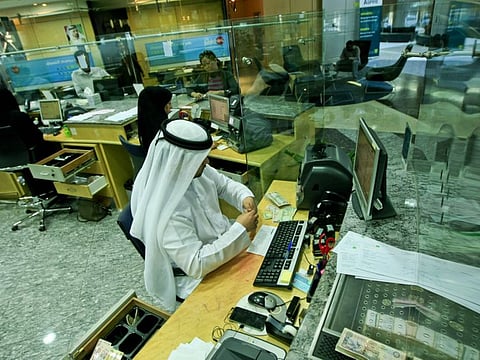


Dubai: Aggregate credit growth of the UAE banking system slowed sharply in January largely resulting from decline in borrowings by government and government related entities, according to Central Bank data analysed by Abu Dhabi Commercial Bank’s Economics Team.
Analysts expect impact of coronavirus on non-oil private sector could further slowdown privates sector loan demand in the UAE.
Latest central bank data showed gross credit contracted by 1.3 per cent month on month in January after rising by 2.2 per cent the previous month.
The yearly growth rate softened to 4.5 per cent following a sharp rise in December of 6.2 per cent.
“The monthly contraction was led by domestic loans, with government loans falling by 11.2 per cent month on month after expanding by 15.5 per cent in December,” said Monica Malik, Chief Economist of ADCB.
The sharp rise in end-2019 of government loans and the January moderation was largely driven by Abu Dhabi. Credit to the government from Abu Dhabi banks was still 103.5 per cent year on year higher in January despite the monthly fall, whilst total country-wide gross loans to the government were up 18.4 per cent year on year.

Loans to the GRE segment were up 9.8 per cent year on year in January despite a monthly contraction of 0.8 per cent. The private sector saw positive loan growth of 0.2 per cent, led by the corporate sector with retail lending flat in monthly terms. Nevertheless, overall growth trend in the private sector remains weak.
Deposits on decline
System-wide deposits contracted by 2.3 per cent month in January after expanding by 2.8 per cent the previous month. Consequently, annual deposit growth slowed to 4.1 per cent year on year from 6.5 per cent in December. Both resident (-2.0%) and non-resident (-5.0%) deposits saw a monthly drop.
“We believe that banks could have been looking to reduce some of their excess liquidity with the overall weak credit demand backdrop, especially emanating from the private sector,” Malik, Chief Economist of ADCB.
Domestically, government and GRE deposits fell, with only the private sector seeing a monthly rise. Combined net government and GRE deposits moderated in January (Fig. 4), in line with gross deposits.
Impact of rate cut
Central Bank of the UAE lowered its benchmark repo rate by 50 bps (effective 4 March), in line with the Fed’s surprise rate cut. The repo rate now stands at 1.5 per cent.
Analysts said it is too early to predict the impact of rate cut and coronavirus outbreak on banking sector data.
“It is too early to see an impact of the coronavirus on the UAE banking sector data, especially with the more global spread only beginning in mid-February,” said Thirumalai Nagesh, an economist at ADCB.
A number of key non-oil sectors are likely to be impacted — trade, tourism, logistics and transportation (airlines), with spill-overs into areas such as retail and external demand for real estate.
“This (the impact of coronavirus) could result in weaker loan demand or potentially the use of deposits in the event of payment delays or weaker sales,” said Nagesh.


