Big banks cashing in on credit from payday loan distributors
Annual interest rate tops 400%, critics call it 'offensive'
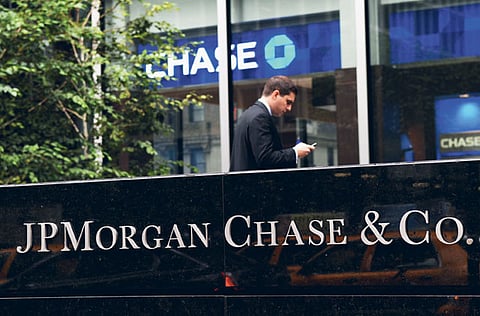
Los Angeles: People who pay high fees to borrow from so-called payday lenders generally don't have bank accounts, but that doesn't mean banks aren't making money from them.
Major banks led by Wells Fargo and Co, US Bancorp and JPMorgan Chase and Co provide more than $2.5 billion (Dh9.1 billion) in credit to large payday lenders, researchers at the Public Accountability Initiative estimate in a report released Tuesday.
The financing provides vital support for an industry criticised for charging effective annual interest rates that can top 400 per cent, the researchers said.
"Not having financing would shut the big players down," said Kevin Connor, a co-author of the report and a director of the Public Accountability Initiative, a nonprofit research group that has been critical of big business.
Image
Some major banks have shied away from doing business with payday lenders because of concerns about their practices or about the sector's image.
"Certain banks have notified us and other companies in the cash advance and cheque cashing industries that they will no longer maintain bank accounts for these companies due to reputational risks and increased compliance costs," Advance America, the biggest payday lender, wrote in a regulatory filing. Citigroup Inc, for example, says it doesn't lend to the industry.
Bank of America has fin-anced some payday lenders but tries to avoid doing so, applying a stricter-than-usual screening process when they apply for credit, said Jefferson George, a spokesman for the bank.
"We have a limited appetite for doing business with them," he said. San Francisco-based Wells Fargo provided credit lines to six of the eight largest publicly traded payday lenders and also provided early financing to help the businesses expand, according to Tuesday's report. A spokesman for Wells Fargo said the company sought to provide equal access to credit for all "responsible companies."
"We exercise strict due diligence with payday lenders and cheque cashing companies to ensure that they, just like us, do business in a responsible way and meet the highest standards," the spokesman, Gabriel Boehmer, said, adding that Wells applied stricter criteria to the industry.
"We put payday lenders through an additional level of scrutiny that other companies and industries might not have to go through," he said.
A JPMorgan Chase spokesman declined to comment, while US Bancorp did not respond to a request for comment.
Payday lenders typically charge $15 in fees for each $100 borrowed, fees that are charged each time a loan is rolled over for two more weeks. The Centre for Responsible Lending, a Washington-based research and lobbying group that has been critical of the banking industry, estimates that the average effective annual interest rates on these loans is 417 per cent.
Offensive
Uriah King, a policy specialist at the centre, called the financing from big banks to payday lenders particularly offensive in the wake of the financial crisis because banks have received taxpayer-paid bailouts and can still borrow at interest rates near zero because of Federal Reserve monetary policy.
"Is it really helping our economy when the federal government is lending at less than 1 per cent and struggling families are borrowing at over 400 per cent?" King asked.
"How in the world are those consumers going to lead us out of the potential double dip? This sort of crystallises the fundamental problems in our economy."
Steve Schlein, a spokesman for the Community Financial Services Association of America, a trade group representing payday lenders, defended the industry, saying it helped struggling Americans.
"Payday loan companies are in fact good creditors because their customers are good creditors," he said. A number of states have taken on the payday industry by capping the annual interest rate that lenders are allowed to charge at 36 per cent. The federal government has prohibited payday lenders from charging more than a 36 per cent effective annual interest rate to active-duty members of the military.
The Federal Deposit Insurance Corp staged a campaign to connect the estimated 7.7 per cent of American households that are "unbanked" with financial institutions that can provide them with affordable credit.
George Goehl, executive director of National People's Action, a community organising group that sponsored the study, said the banks that finance payday lenders should instead make that money available to struggling borrowers as short-term loans at reasonable interest rates.


