12 things UAE-based NRI businessmen are watching in India’s Budget 2026
From tax clarity to capital access: the priorities shaping overseas business sentiment
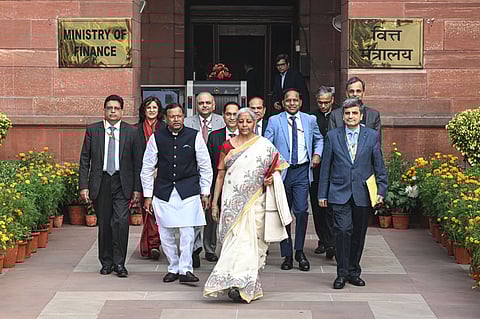
Dubai: With India’s Union Budget 2026–27 due next week, business owners and investors across the UAE are closely tracking the policy signals that could shape capital flows, operating costs, and expansion decisions tied to India.
For many NRIs running cross-border businesses, the Budget is less about headline announcements and more about the fine print that affects compliance, liquidity, sector incentives, and long-term planning.
Based on written comments from several UAE-based NRI businessmen, sector professionals, and investors, the following wishlist has emerged as the areas they are watching most closely ahead of February 1.
1. Faster tech adoption for MSMEs beyond metros
Business leaders expect the Budget to push structured technology adoption across MSMEs, particularly in Tier-2 and Tier-3 cities. For overseas entrepreneurs building supplier networks or back-office operations in India, this could translate into more efficient partners, stronger digital integration, and faster scaling outside high-cost metro markets.
2. Creation of digital economy zones in smaller cities
Proposals for dedicated digital economy zones aim to build new regional growth hubs. Such zones could open up lower-cost locations for NRI-led ventures, tech parks, and services operations while spreading risk beyond saturated urban centres.
3. National scheme to scale startups outside Tier-1 cities
Calls for a targeted programme to multiply startups in Tier-2 and Tier-3 India focus on job creation and entrepreneurship. For UAE-based angel investors and fund managers, this could widen the pipeline of investable companies and diversify deal flow geographically.
4. Expansion of PLI incentives into AI, space, robotics
Expectations that the Production-Linked Incentive scheme may extend to advanced technologies are closely watched by NRIs active in frontier sectors. Such moves could lower entry barriers, improve project viability, and support manufacturing or R&D tie-ups linked to global clients.
5. Higher public spending on future-tech infrastructure
Policy signals pointing to greater state investment in AI and advanced digital infrastructure matter for overseas founders and venture builders who rely on deep-tech ecosystems, specialised talent, and long-term government backing.
6. Customs dispute resolution, tariff rationalisation
Proposed indirect tax reforms, including a one-time customs dispute settlement mechanism and tariff clean-up, would directly affect trading businesses, regional distribution hubs, and cross-border supply chains managed from the Gulf.
7. Predictability during new income tax guideline rollout
Expectations of fewer rate changes and a smoother transition to the new income tax law are central for NRIs handling multi-country structures, dividend flows, and compliance planning across India and the Middle East.
8. Higher standard deduction for salaried taxpayers
Suggestions to lift the standard deduction are relevant for UAE residents with India-sourced salary income, board remuneration, or professional earnings, potentially easing personal tax outflows and simplifying filings.
9. More time to file belated and revised returns
Calls to extend filing timelines reflect practical realities of overseas income reporting. For NRI business owners dealing with multiple jurisdictions, longer windows reduce compliance risk and errors linked to delayed foreign tax documentation.
10. Housing loan interest relief under the new tax regime
Proposals to allow home-loan interest deductions under the new regime are closely watched by UAE-based investors with residential portfolios in India, particularly those balancing rental income, repayments, and repatriation planning.
11. Faster GST refunds and liquidity support
Demands for quicker GST refunds speak directly to exporters, manufacturing investors, and services firms reliant on working capital cycles, where cash-flow predictability often shapes expansion and hiring decisions.
12. Stronger credit guarantees, risk-sharing frameworks
Expectations around deeper domestic liquidity and enhanced credit-guarantee structures matter for those financing MSMEs, consumer businesses, and startup ecosystems, where access to affordable credit can determine deal viability and growth speed.