
The travel power essentials worth packing
Packing for another country starts with a simple question that catches many travellers out
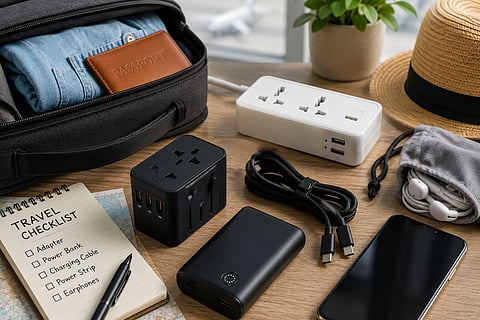
Packing for another country starts with a simple question that catches many travellers out: will your charger actually work when you arrive? The answer depends on two separate things, the shape of the plug and the voltage supplied by the socket. Fortunately, these are easy to tell apart. Most modern phone, tablet and laptop chargers already accept electricity anywhere between 100 and 240 volts, which means they only need the correct plug adapter. Understanding that difference can save luggage space, prevent damaged appliances and make your first night abroad far less stressful.
What it is and who it's for
A travel adapter changes the shape of your plug, so it fits a foreign socket. It does not change the voltage. That matters because countries use different plug types and different electrical standards. Devices such as smartphones, cameras, tablets and most laptop chargers are usually labelled "100 to 240V", making them suitable for worldwide use with only an adapter. High-power appliances, including some hair dryers and styling tools, are often single-voltage and may require a dedicated voltage converter or a dual-voltage model instead. Before every trip, check the small label on your charger rather than relying on guesswork.
What to look for
Choose a universal adapter with built-in safety features such as a fuse and safety shutters, and enough USB ports to charge several devices overnight. Remember that even the best adapter does not convert voltage. For power banks, check airline guidance before you fly. Most are carried in cabin baggage rather than checked luggage, and larger batteries may require airline approval.
RXSQUL Universal Travel Adapter
A universal adapter is the one item that earns its place on almost every international trip. The RXSQUL model is designed to work across the major plug standards used in Europe, the UK, North America, Australia and many parts of Asia. The biggest advantage is convenience. Instead of carrying several country-specific adapters, one compact unit handles multiple destinations while keeping phones, tablets and other everyday electronics ready to use. Remember that it adapts plug shapes only and is intended for dual-voltage devices.
Anker Power Bank
Long flights, airport connections and sightseeing days quickly drain a phone battery. A reliable power bank fills the gap when sockets are unavailable. The selected Anker model supports fast charging and is built around a lithium battery that should travel in your cabin bag, in line with airline guidance. For frequent travellers, it means navigation, boarding passes and messaging remain available without hunting for an outlet.
VAGREEZ Packing Cubes
Packing cubes are less about fitting more into a suitcase than keeping everything organised after arrival. Separating clothing by category or by day makes hotel unpacking much quicker and helps compress soft items into a tidier layout. They are especially useful for multi-city holidays where a suitcase may be opened and closed repeatedly over several days.
Ovener Silicone Luggage Tags
A sturdy luggage tag is easy to overlook until several identical suitcases appear on the baggage carousel. Silicone tags are flexible enough to withstand repeated handling while making your bag easier to identify. Keeping contact details securely attached to checked luggage is a small addition that can make travel smoother without taking up any meaningful space in your bag.
Verdict
Packing well for international travel is often about avoiding unnecessary extras rather than buying more equipment. Understanding the difference between a plug adapter and a voltage converter means you can travel lighter and avoid unpleasant surprises. A universal adapter is the foundation of any travel kit, followed by a dependable power bank for long days away from sockets. Add packing cubes and luggage tags, and you have a practical setup that works across most journeys.
Gulf News earns a commission on purchases made through links in this article, at no extra cost to you. Our editorial team selects products independently.


