More low-income workers in UAE will get real access to money in 2026
UAE's Wage Protection System (WPS) has ensured nearly universal digital salary payments
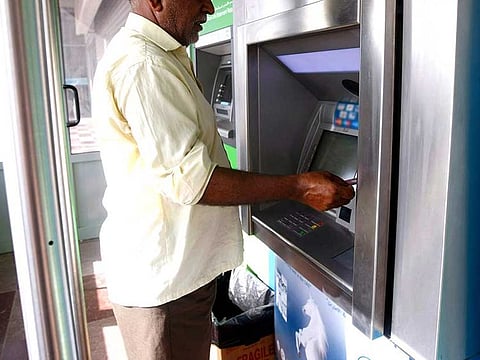
Dubai: For millions of workers across the UAE, financial inclusion is no longer an abstract policy goal. It shows up in everyday moments: how fast a salary is available after payday, whether money can be sent home without hidden fees, or how confidently a worker understands a deduction on their payslip.
More than 60% of the UAE workforce earns below Dh5,000 a month, making the way salaries are paid, accessed and managed a defining part of worker wellbeing. While the Wage Protection System (WPS) has ensured nearly universal digital salary payments, having a salary paid digitally does not automatically mean a worker can use digital finance effectively or build financial confidence.
New behavioural data from Edenred’s 2025 analysis shows that change is now gaining momentum. By 2026, financial inclusion in the UAE is becoming more personal, more practical and more closely tied to how workers manage daily life.
Digital salaries to less cash in hand
For years, most low-income workers received salaries digitally but lived almost entirely in cash. That pattern is finally breaking. Cash dependency among low-income workers has dropped 15 percentage points in two years, from 84% to 69%, the steepest decline recorded so far.
This is the first sustained, multi-year shift away from cash in the UAE’s labour market. Workers are still cautious — around 45% withdraw their salary within 24 hours of being paid — but behaviour is changing. Online transfers are now the fastest-growing financial activity among this group, helped by simpler apps, clearer pricing and better fraud controls.
If current trends continue, cash withdrawals could fall below 60% for the first time, marking a real move from “digital salary, cash life” to genuine digital usage.
Salary apps become everyday tools
What workers do after they get paid is changing too. Payroll apps are no longer just a way to check balances or withdraw cash. They are turning into all-in-one platforms that handle remittances, bill payments, micro-savings and expense tracking in one place.
For workers with limited digital confidence, this matters. Fewer apps mean less confusion and fewer mistakes. Employers using integrated payroll ecosystems already report up to 25% higher employee satisfaction, and the next phase is about adding services that support daily living, not just banking.
The salary app is becoming a daily utility — used at grocery stores, for rent, or to send money home — rather than something opened once a month.
Financial literacy at the workplace
Financial literacy is no longer treated as a “nice-to-have” benefit. Employers are seeing direct links between financial understanding and workplace stability.
In the UAE, fewer than 31% of residents demonstrate basic financial literacy, the study revealed. That gap shows up quickly in HR departments: repeated payroll queries, confusion over deductions and higher dispute rates.
As salary-linked financial products expand, employers are partnering with fintech providers to deliver multilingual education on budgeting, savings and responsible credit use. The most effective approach remains human and practical: on-site card distribution, face-to-face workshops and real examples from workers’ own payslips.
The payoff is tangible. Companies report lower turnover, fewer disputes and more stable workforces, particularly in construction, logistics and facilities management.
Broader confidence gap emerges
The issue is not limited to low-income workers. According to a recent survey commissioned by HSBC and conducted by YouGov, one in four UAE adults (25%) say they are uncertain about their financial future, while nearly one in 10 admit they have no financial plan at all.
Only 34% of respondents said they feel very confident about their financial plan for life beyond the UAE, pointing to a wider challenge around long-term financial preparedness in a highly mobile population.
For those planning to live or retire abroad, complexity across multiple countries emerged as the single biggest obstacle, cited by 28% of respondents, followed by insufficient income and simply not having started planning yet.
Compliance now a responsibility
Payroll compliance is also becoming more visible. In the first half of 2025, the Ministry of Human Resources and Emiratisation flagged more than 5,400 establishments for labour violations, including unpaid wages and WPS failures, following 285,000 inspections.
For employers, compliance is no longer a quarterly checklist. It requires continuous visibility into salary flows, timing and discrepancies. Transparent payroll systems reduce surprises, protect workers and help companies avoid fines, permit restrictions and operational disruptions.
People still matter amid AI boom
By 2026, AI is reshaping financial inclusion behind the scenes. Instead of generic warnings, data models can now flag early signs of fraud exposure, salary irregularities or financial stress.
The real impact comes when those insights are turned into simple actions: timely alerts, clearer messages in multiple languages and practical guidance that helps workers avoid financial shocks.
Technology alone is not enough. Trust, clarity and human-readable communication remain essential. AI can spot risk early, but inclusion happens when workers understand what to do next.
Across the UAE workforce, financial inclusion is becoming less about systems and more about people — their habits, their understanding and their ability to make everyday financial decisions with confidence.