Goldfish do have memories
It’s not 3 seconds ... they can remember for at least 12 days
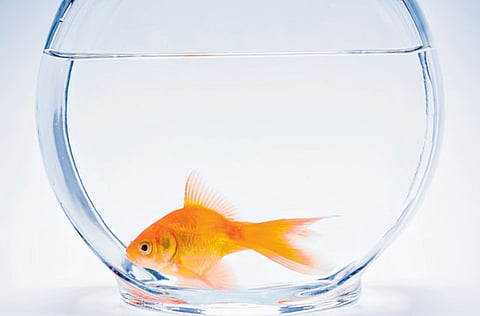
Dubai: Goldfish memory may only be myth, according to new research.
The famously minuscule memory span of fish is in doubt after scientists discovered that at least one species is able to remember where it was given food for at least 12 days.
The research on African cichlids was inspired by anecdotal reports of their intelligence from aquarium owners.
“Some people even believe that their cichlids watch television with them,” said study leader Dr Trevor Hamilton, from MacEwan University in Canada.
For the research, cichlids were trained to enter a particular zone of an aquarium to receive a food reward.
After a 12 day rest period, they were re-introduced to the aquarium and their movements were tracked.
The fish showed a distinct preference for the area previously associated with the food reward, suggesting they remembered being fed there.
They were also able to stop making the association after further training when the food was linked to a different stimulus.
“Fish that remember where food is located have an evolutionary advantage over those that do not,” said Dr Hamilton, who presented the findings at the Society for Experimental Biology’s annual meeting in Manchester.
“If they are able to remember that a certain area contains food without the threat of a predator, they will be able to go back to that area. Decreases in the availability of food would promote the survival of species that can remember the location of food sources.”
Wild cichlids have a varied diet that includes snails, small fish, insects and plants and are thought to associate locations with preferred sources of food.
To assess cichlids’ memory for food sources, Hamilton, along with undergraduate Erica Ingraham and psychologist Nicole Anderson, tested seven fish. Each fish was placed individually in a tank. The sides of the tank were outfitted with screens that showed a striped black and white display. In one area of the tank, the stripes on the screen looked like they were moving upward; in the other area, they looked like they were moving down. When fish were in the area with upward-moving lines, they were fed. The researchers trained the fish for three 5-minute sessions over a five-day period.
Eleven days after the last training session, they let the fish go hungry so that they would have increased motivation to seek out food. On the 12th day, they brought fish back to the tank one at a time and took note of where they hung out. Six of the seven fish they tested spent more time in the area with upward-moving lines, suggesting that they remembered they had gotten food there previously and were hoping to find it there again.
To eliminate the possibility that fish just have a natural preference for upward-moving designs, Ingraham, Anderson, and Hamilton repeated this study by training the same cichlids to associate food with the other area of the tank, the one with downward-moving lines. The cichlids succeeded at remembering that, too. Not only can these fish learn an association and remember it for 12 days; they can learn something new that overrides their old knowledge and remember that for 12 days, too.
The scientists are now investigating whether the strength of fish memories are affected by environmental conditions or drugs.
—Compiled from agencies


