US strikes on Iran 'absolutely necessary': Nato's Rutte
Alliance chief backs US strikes on Iran, says 'necessary' after attacks in ships
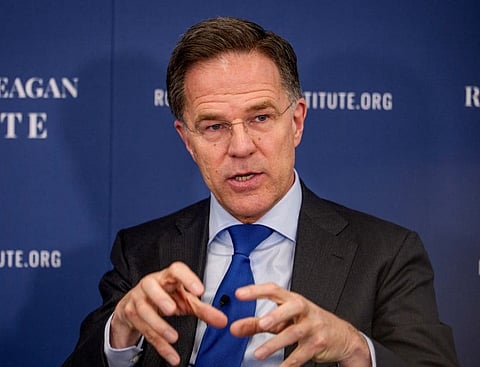
Ankara: The overnight strikes on Iran by US forces were "absolutely necessary", Nato chief Mark Rutte said on Wednesday as the alliance began a key summit in Ankara.
Rutte's strong defence over the overnight US military strikes on Iran, came as he arguing that Washington had little choice but to respond after what he described as Iranian violations of a fragile ceasefire.
Speaking to reporters as Nato leaders gathered for a summit in Ankara, Rutte said the US was justified in using force following renewed attacks on commercial shipping and what Western officials say were repeated breaches of the US-Iran memorandum of understanding aimed at reducing hostilities.
"I think it was absolutely necessary because when you have a ceasefire and Iran is basically violating the ceasefire — we see what happened yesterday with ships being attacked — I think it is totally crucial that the US forcefully react," Rutte said.
Get updated faster and for FREE: Download the Gulf News app now - simply click here
Ceasefire unraveling?
His comments marked one of the clearest endorsements by a senior European leader of the latest US military action, underscoring growing concern among Nato allies that the ceasefire framework negotiated after months of conflict is rapidly unraveling.
The overnight strikes came after United States Central Command announced a new wave of attacks against Iranian military targets, saying the operations were intended to impose "heavy costs" following renewed threats to regional security and commercial navigation.
The strikes followed an attack on a commercial tanker near the Strait of Hormuz, a strategic waterway that carries roughly one-fifth of global oil consumption.
Iran accuses US of repeatedly violating MoU
Iran has rejected US accusations and instead accused Washington of repeatedly violating the memorandum of understanding.
Earlier Wednesday, Iran's chief negotiator, Mohammed Bagher Ghalibaf, alleged that the United States had breached the agreement by interfering with Iranian operations in the Strait of Hormuz, threatening further military action, reimposing sanctions on Iran's oil sector and carrying out attacks in southern Iran.
He also cited continued Israeli military operations in Lebanon as evidence that diplomacy had failed.
"The era of bullying and extortion is over. It leads nowhere. We don't fold," Ghalibaf wrote in a post on X.
The competing narratives highlight the increasingly fragile state of the U.S.-Iran memorandum, brokered after months of conflict that disrupted energy markets, drove oil prices sharply higher and brought commercial shipping in the Gulf to a near standstill.
Latest escalation
Although tanker traffic through the Strait of Hormuz has gradually resumed and oil prices have retreated from wartime highs, military exchanges and diplomatic recriminations have continued.
The latest escalation is expected to dominate discussions at the NATO summit, where leaders are also debating higher defense spending, Europe's long-term military readiness and the future role of US forces on the continent.
While alliance members have broadly backed efforts to safeguard freedom of navigation in the Gulf, they have also urged both Washington and Tehran to prevent the conflict from expanding into a wider regional war.


