Sea of hopelessness: Uncertain future in refugee mega-camp in Bangladesh
Bangladesh seeks international pressure on Myanmar regime to take back Rohingya citizens
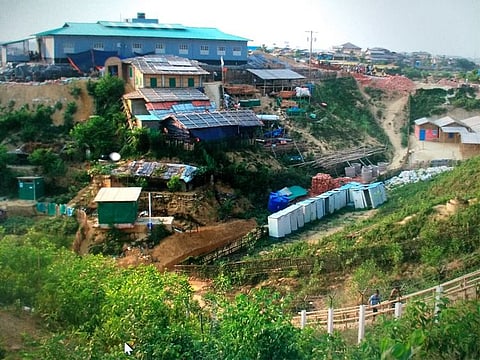
Rohingya Refugee Camp, Cox Bazar: Fariza Begum doesn’t exactly know how old she is, but guesses she could be 17. In 2017, her mother was shot dead by Myanmar soldiers, as was her baby brother. Walking through jungles and mountains, and braving numerous rivers and ravines, she entered Bangladesh territory in September 2017 along with her father and five surviving siblings. Like hundreds of thousands of others, she was escaping the Myanmar regime’s genocide against its Rohingya Muslim minority that left morethan 10,000 dead in 2017 alone.
Almost all who arrived during the 2017 influx sought shelter near the refugee settlements of Kutupalong and Nayapara in Bangladesh’s Cox’s Bazar district. Fariza even got married here, and now has a baby of her own. She also takes care of her five surviving siblings.
The total Rohingya population in Bangladesh now exceeds 1.1 million (comprising 222,852 households) making the refugee settlement near Cox Bazar the fifth largest city in the country. The mega camp is divided into 34 units, and managed from a ‘coordination house’ located in Unit 17, run by Bangladesh’s Refugee Relief and Repatriation Commission (RRRC). The commission coordinates the humanitarian response while working with the UNHCR and other international aid agencies.
The scale of the camp is staggering. All the 34 subdivisions together cover an area of 6,200 acres, with a 25,000 to 50,000 people living in each subdivision. While the Rohingyas in Bangladesh’s refugee camps face no threats or persecution, they are eking out a grim existence. The hopelessness on the faces of the children is palpable, as is the grinding boredom and monotony of adults. These refugees face a very uncertain future: They can’t leave the camp, and they cannot return home until such time as the regime in Myanmar changes its policies. Which looks very unlikely.
Mohammad Mizanur Rahman, Additional Commissioner of the RRRC

Mohammad Rahim is educated but whiling his life away in the camp. He used to work worked as a school teacher in a government school in Myanmar until the regime told him he has to leave. He was badly beaten, and his house was set on fire by soldiers and their local collaborators. He fled for his life. Now, inside the camp, he is clear about what needs to happen is clear.
Mohammad Rahim


