Brotherhood divided on how to tackle protests
Mohammad Mursi backs compromise solution but ideological core takes strident stand
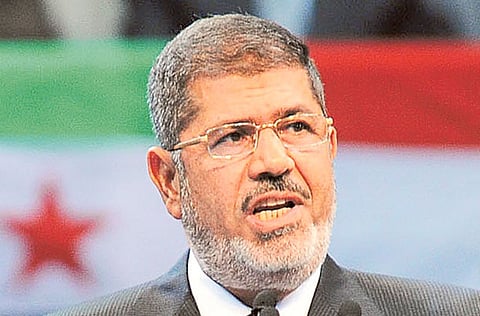
Cairo: Leaders of the Muslim Brotherhood are divided on how to tackle the impending mass demonstrations by the opposition on June 30 and its various demands, an organisational insider told Gulf News. Observers indicate that the Brotherhood’s leaders may be viewing with growing consternation the likelihood of losing the presidency if the events prompt the military to take centre stage once again.
The source said that President Mohammad Mursi and Sa’ad Al Katatni, secretary-general of the Freedom and Justice Party, along with others are on one side and favour a compromise solution on the opposition demands, including amending the constitution, putting acceptable rules for the next parliamentary election and changing the government.
Mursi and Al Katatni accept replacing Hesham Qandil’s cabinet with a ‘national unity’ government presided over by a popular personality like Amr Mousa, the source said. The ideological section in the organisation, including Mohammad Badi, the supreme guide of the Brotherhood, his deputy Khairat Al Shater and some other leaders have adopted a more radical stance. They see that Mursi, as an elected president, holds legitimate power to push ahead with decisions. The Tamarod campaign, which has gathered more than 15 million signatures demanding Mursi’s resignation and calling for early presidential elections, will not affect the president, the latter group believes.
Badi and Al Shater expect that the military will not intervene in the political situation under any circumstances. Such a procedure couldn’t be internationally justified or accepted, according to the source who preferred not to be named.
Meanwhile, Mustafa Bakri, a political analyst and writer close to the military, predicts that “Countdown for Brotherhood’s exit from Egypt politics is nearing its last day”.
Bakri told Gulf News that he has information to support the view that the military will back the people and force the Brotherhood back underground if millions of Egyptians flood the streets and stage sit-ins over three or four days. “They [military and police forces] are waiting for this moment to get rid of the Brotherhood. If they commit violent acts, the police forces will beat them up,” Bakri said.
“Brotherhood would not dare to confront millions of Egyptians. They will escape to save their lives. The ability of their supporters and allied groups, like Al Jamma Al Islamia, to confront peaceful people backed with police and military is very limited,” Bakri said, ruling out the possibility of a civil war. He expressed optimism about the June 30 demonstrations, suggesting that the Brotherhood regime will fall before the end of Ramadan.
“In case of Brotherhood’s removal, a transitional council under the chairmanship of Abdul Fatah Al Sisi, defence minister, will be set up. Its membership will include the president of the Supreme Constitutional Court and a number of other national figures. The council will take 6 months to do its mission,” the columnist predicted.
Dr Sameh Saif Al Yazal, a retired general, who is a strategic and security expert heading the Al Gomhereya Centre for Political and Security Studies predicts that the army is unlikely to tolerate prolonged police withdrawal from the street, and the destruction of public and security infrastructure. “The army would therefore only intervene against the Muslim Brotherhood if it assessed that the state was about to lose control of the security situation. The army’s red lines are likely to include key infrastructure — including ports, airports, electricity generation — and railroads closing for several weeks, police withdrawal from the streets and currency shortages leading to food shortages and bread riots,” Al Yazal added.
The security expert concluded that if the army found itself forced to step in and seize power, it would likely receive legal cover from the judiciary. It would also probably appoint a technocratic government, as it did in 2011, rather than rule directly. It would also probably establish a presidential council where the opposition and the Islamists were represented, and where it retained a swing vote, he added.
— Ayman Sharaf is a journalist based in Cairo


