World's 'ugliest' city finds allure in decay
Urban exploration has grown into a global movement over the past two decades
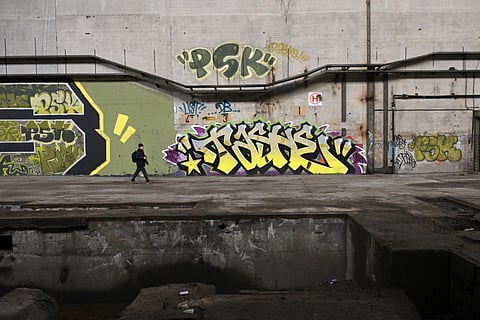
Belgian artist Nicolas Buissart started doubling as a tour guide as a joke after a newspaper in the neighbouring Netherlands named his city the ugliest in the world.
Some 15 years later, he is still arranging tours of Charleroi for visitors seeking beauty in dilapidated factories and rundown warehouses -- the remnants of the city's industrial past.
"Wallonia used to be prosperous; it's a cradle of capitalism of sorts," he says of the surrounding French-speaking region.
Get updated faster and for FREE: Download the Gulf News app now - simply click here.
"The problem with capitalism is that it leaves a lot of waste behind".
Yet that's exactly what the dozen pensioners from the northern French city of Lille he's driving around Charleroi have come to see on a dreary March day.
Urban exploration, or "urbex" for short -- the underground pastime of exploring abandoned places, at times skirting the law in the process -- has grown into a global movement over the past two decades.
Haunting complexes with shattered windows and moulded ceilings draw amateur photographers, selfie takers and thrill seekers from as far away as Berlin or Detroit.
Buissart's "city safari" takes visitors up close to the slag heaps and giant ruins of steel and concrete that shape Charleroi's landscape.
"There's an aesthetic here that I really like," Veronique Moussu, a member of the Lille expedition, tells AFP.
"These spaces are enhanced by the play of light, shadows and street art," adds the retiree, who is on her second visit to Charleroi in four years.
The southern city was once a coal-mining hub.
More than 40 years after the last pit shut down, it is now mainly known for its airport -- a major European hub for low-cost airline Ryanair.
Dead' but attractive
For the first stop of his tour, Buissart takes the group to an abandoned 1930s swimming and leisure complex that has become a playground for graffiti artists.
Built by a Belgian industrialist, the "Solvay Pool" aimed to provide workers with relaxation and entertainment a stone's throw from a 19th-century manufacturing site for soda ash that is no more.
The pool's old roof no longer holds water; rain and wind rush into the building, and the tiled floor is now an ankle-spraining, cracked mess.
Buissart, 46, a former design student, issues safety instructions as he guides visitors inside, giving them half an hour to explore and snap photos.
The same happens at the second stop on the route, a massive warehouse that was used for treating stainless steel sheets but is now also falling into ruin.
Once owned by steel giant ArcelorMittal, the site has been closed for about 15 years.
"You can imagine all the workers who toiled here and brought these places to life; now it's dead, it's destroyed," says Pascale Dufour-Floor, who lives on the French-Belgian border and joined the Lille group on the tour.
Tourism promoters are hoping to turn these vestiges of a bygone era into an asset.
"This heritage is what sets us apart and attracts tourists," said Valerie Demanet, director of the Charleroi Tourist Office.


