Trial of anti-Islam lawmaker Wilders resumes
Defence lawyers seek to discredit appeals judge who ordered Wilders to stand trial
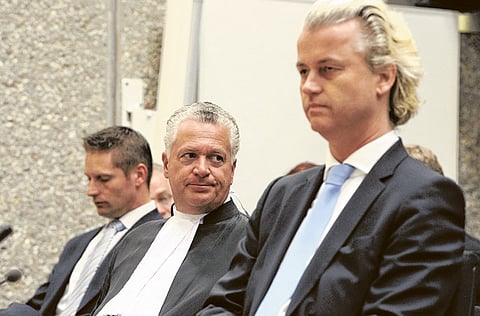
Amsterdam: The hate speech trial of Dutch anti-Islam politician Geert Wilders resumed on Wednesday, with defence lawyers seeking to discredit a judge who ordered the lawmaker to face trial on charges of inciting hatred against Muslims.
Wilders, leader of the country's third-largest political party, says he has done nothing wrong by expressing his opinions that Islam is a violent ideology comparable with fascism, and the Quran should be banned.
Defence witness Hans Jansen, a retired professor of Arabic and Islamic studies, testified that he had been approached at a private dinner by appeals judge Tom Schalken to discuss the case shortly before the trial was to start.
Inappropriate contact
Defence lawyers argue that contact was inappropriate and grounds for dismissing the case.
Schalken sat on the panel that ordered Wilders' case to proceed, even after prosecutors had declined to press charges and a trial court had endorsed that decision.
"Do you think that he [Schalken] tried to influence your testimony?" defence lawyer Bram Moszkowicz asked Jansen.
"Yes. I think he did," Jansen answered.
Moszkowicz is expected to demand the case be dismissed as a result. Wilders says the trial is about his right to free speech.
Dutch Muslims who pressed for the trial say it is about their right to practice their religion freely. They say his strident anti-Islam tone has led to increased discrimination and even attacks on mosques.
He is charged with inciting hatred against Muslims based on their religion or race, and for "making statements insulting to Muslims as a group."
Each charge carries a maximum sentence of one year imprisonment, though a fine would be more likely if he were found guilty.
Nearly 100 public remarks by Wilders have been entered into evidence.
His legal case has taken unusual twists. At the first trial the prosecution asked for an acquittal, saying Wilders' comments were part of legitimate political debate.
However, before the judges could rule, the defence accused them of appearing to be biased after Jansen published an account of the dinner party with Schalken on a website. Moszkowicz asked to reopen his case to question Schalken.
When judges declined, an appeals panel dismissed them, returning the case to a pretrial phase with a new set of judges.
The new presiding judge, Marcel van Oosten, agreed to hear Jansen and Schalken.


