Philippines: 100% discounts in electricity bills for 3 million Filipinos
People power: Move simplifies electricity aid and solar 'net metering' across the country
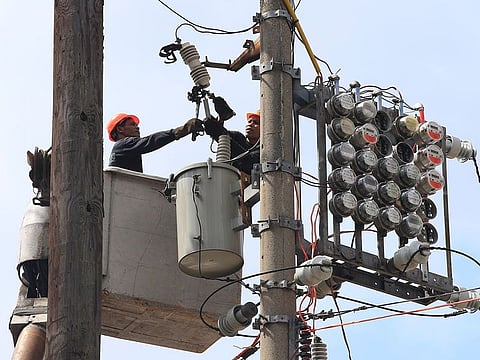
Manila: In a game-changing move, the government has unleashed a major policy tweak allowing a 100% electricity subsidy for poorest Filipino families.
Philippine President Ferdinand "Bongbong" Marcos recently unveiled the "auto-enrollment" scheme for millions of target beneficiaries -- families under the conditional cash transfer (CCT) scheme known as 4Ps ("Pantawid Pamilyang Pilipino Program") -- into the Lifeline Rate Subsidy Program (LRSP).
Auto-enrollment system: How it works
The auto-enrollment system automatically includes millions of poor households under 4Ps into the Lifeline Rate Subsidy Program (LRSP) — without requiring them to go through the trouble of applying separately.
Previously, many poor households failed to apply for the lifeline rate due to lack of awareness, documentation requirements, or time constraints. Auto-enrollment removes these friction points.
Marcos noted that over 334,000 consumers were registered under the LRSP, equivalent to only 11% of the 3 million 4Ps beneficiaries.
The move was coordinated with key state agencies, power utilities like Meralco and more than 120 electricity distribution cooperatives across the country.
What does it mean?
In practical terms, the automatic enrollment for 100% electricity discount cuts paperwork for 4Ps beneficiaries which in the past prevented millions from qualifying for the lifeline electricity rate.
If they are already certified as poor under 4Ps, they are automatically granted discounted electricity rates, subject to consumption thresholds (usually low monthly kWh usage).
The new policy eases access for this low-income homes to electricity as the auto-enrollment system helps bost social protection, in a move that integrates welfare and electricity.
Instead of asking the poorest families to navigate multiple systems, the state aligns them — turning a conditional cash transfer database into a gateway for broader public service support.
For millions of households, it means one less form to fill out — and one lighter electricity bill each month.
Who qualifies and what discounts apply?
4Ps families using ≤50 kWh/month get 100% discounts
Non-4Ps poor households below poverty lines with minimal use can register.
As of Nov 2025, 334K (11% of 3M 4Ps) are enrolled — aiming for equity.
Who are the parties involved?
Several institutions coordinate this move:
Department of Social Welfare and Development (DSWD)
The DSWD administers 4Ps and maintains the list of qualified beneficiaries. It provides validated data for auto-enrollment.Department of Energy (DOE)
The DOE oversees power policy and implements reforms related to the lifeline subsidy structure.Energy Regulatory Commission (ERC)
The ERC regulates electricity distribution utilities and approves lifeline rate mechanisms.Distribution utilities and electric cooperatives
This includes private distribution utilities such as Manila Electric Company (Meralco), as well as 121 electric cooperatives across the country. They are responsible for implementing the discounted rates in actual billing statements.
Role of the government and utilities
While the government agencies handle eligibility and policy; the utilities execute the subsidy on the ground.
Meralco and electric cooperatives are directly involved because they apply the lifeline discounts to customer bills.
What is net metering in the Philippines?
Under Philippine law (Renewable Energy Act of 2008), net metering is a billing mechanism that allows customers with qualified renewable energy facilities (e.g., solar) up to 100 kW to export surplus electricity back to the grid.
The distribution utility (DU, like Meralco, or any one of the 121 power cooperatives across the country) credits these exports against the user's future consumption.
This helps reduce electricity bills for customers, promotes energy self-reliance, aids in reducing greenhouse gas emissions. The Energy Regulatory Commission, the industry watchdog, oversees the implementation.
How is the 'net-metering program' (NTP) being simplified?
Under the new policy unveiled Saturday, households and businesses in the Philippines can now install solar panels and sell surplus power back to the grid faster, i.e. cutting bureaucratic snags.
For one, a joint DOE-DILG-DPWH circular mandates standardised forms and LGU compliance.
Specifically, the ERC requires utilities to interconnect applicants in 20 working days following a complete application filing.
Why the changes?
Past frustrations from unclear rules and coop capacity stalled net-metering.
Now, it lowers bills, boosts renewables, and shares nation-building via easier participation. The government has also praised the of utilities in solar projects and remote electrification.
Immediate financial relief
Electricity bills consume a meaningful share of income for low-income households. Even modest percentage discounts can help families redirect money toward food, education, and health.
The DSWD stated that by linking the electricity subsidy database with 4Ps records, the government improves targeting accuracy — reducing "leakage" and ensuring that only qualified low-income families receive the benefit.


