Delhi killing of Manipuri musician Chongtham Vikram Singh sparks protests, Rahul Gandhi demands justice
Manipuri community outraged as veteran musician’s killing raises safety fears
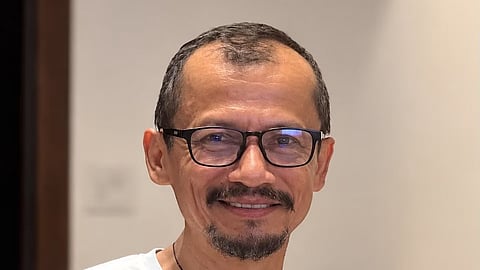
A guitarist who had spent four decades on stage, and two of them living in a Delhi neighborhood, went downstairs one night to ask a group of men to keep the noise down. Hours later, he was dead.
Chongtham Vikram Singh, 54, died early on September 7 after being attacked outside his home in Kilokari, southeast Delhi. His killing has triggered public outrage over safety in the capital and drawn a pointed rebuke from opposition leader Rahul Gandhi toward the Modi government's home ministry.
What happened that night
According to multiple reports, including PTI, police say the trouble began around 11:30 p.m. on September 6, when Singh went down to his building's entrance to object to a group of delivery workers and dhaba staff who were drinking and being loud outside. According to his family, he came back upstairs, but the men followed him up and attacked him there before running off.
Singh started struggling to breathe soon after. His 20-year-old son, a law student named Yaiphaba, rushed him to Holy Family Hospital. His blood pressure crashed, and he died around 6 a.m.
Police have since arrested seven men and detained a minor in connection with the assault, after a distress call came in to the Sunlight Colony station.
A family asking for accountability, not vengeance
At a press conference held at Manipur Bhawan in Delhi, Singh's wife, Joshna Chongtham, as quoted by the New Indian Express, described her husband as a devoted father and a fixture of family and community life who was taken from them without warning. She framed the family's demand: A fair investigation and dignity for her husband's memory, rather than retaliation. As she put it: "We are not seeking revenge. We are seeking justice."
Singh's body remains at the AIIMS mortuary and is expected to be flown to Manipur on Wednesday, according to the family.
The life behind the headline
Singh had built a career as one of the founding figures of Manipur's rock scene. He first played with a band called Ultra Vires, then rose to prominence as lead guitarist for Phoenix, a band widely credited as pioneers of Manipuri rock in the early 1980s, before later joining the group Eastern Dark.
After relocating to Delhi in the mid-2000s, he shifted into teaching, running music classes and workshops while working across Hindustani classical, jazz and rock traditions. He spent roughly a decade collaborating with singer Mame Khan and had ties to the Coke Studio project.
Community response
The killing prompted a swift show of grief and anger from Delhi's Manipuri and wider Northeast community. Residents and community members held a candlelight march demanding strict action against those responsible, and the North East Students' Society, Delhi University issued a statement mourning Singh and calling for a fast, impartial investigation. Protests and candlelight marches were also held in Delhi.
At the press conference, a representative of the Northeast India Forum Against Racism, also present, raised concerns that the attack fit into a broader pattern of discrimination the community says it has faced in the capital.
The case has quickly taken on a political dimension. Rahul Gandhi posted on social media accusing the government of presiding over "growing lawlessness," and asked pointedly what Home Minister Amit Shah's ministry and the Delhi Police intended to do about it. He argued that incidents like this one were raising real questions about safety in the capital.
Community leaders remain cautious about what comes next. Laishram Kangleinganba, who heads the Manipur Students' Association in Delhi, has said that even with the accused already arrested, many in the community aren't confident the case will end in real accountability.


