What the Supreme Court’s latest rulings mean for Trump
From agency firings to mail ballots and the Carroll case, here’s what changed
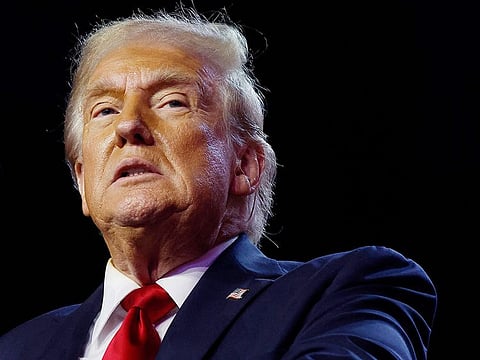
Dubai: A series of landmark rulings by the US Supreme Court on Monday significantly strengthened President Donald Trump’s authority over the executive branch while also placing limits on his power in key areas, including the Federal Reserve and election law.
According to media reports, including CNN, the rulings are expected to have lasting implications for presidential authority and the functioning of independent federal agencies.
The decisions, delivered across several high-profile cases, reshaped the balance between the White House, independent federal agencies and the courts. Together, they expanded presidential control over much of the federal bureaucracy, allowed states to continue counting certain mail-in ballots after Election Day, and let stand a $5 million sexual abuse and defamation judgment against Trump.
Expanded power over agencies
The court’s biggest ruling came in a 6-3 decision allowing presidents to dismiss leaders of many previously independent federal agencies without having to show cause.
Writing for the majority, Chief Justice John Roberts said officials exercising executive power must remain accountable to the president.
Key takeaways
Presidential power expands: Trump—and future presidents—can remove leaders of many independent federal agencies more easily.
1935 precedent overturned: The court largely discarded the long-standing Humphrey’s Executor ruling.
Fed protected for now: Lisa Cook stays on the Federal Reserve Board while her legal challenge continues.
Mail ballots upheld: States may count ballots arriving after Election Day if postmarked on time.
Carroll wins: Trump’s appeal was rejected, clearing the way for E. Jean Carroll to receive $5 million in damages.
More battles ahead: The future independence of the Federal Reserve and the scope of presidential authority remain unresolved.
The ruling effectively overturned much of the protection created by the court’s 1935 Humphrey’s Executor v. United States decision, which had allowed Congress to shield leaders of independent agencies from removal except for specific reasons such as misconduct or neglect of duty.
The decision is expected to give presidents greater control over agencies such as the Federal Trade Commission and could reshape how future administrations manage the federal government.
Federal Reserve remains protected — for now
In a separate ruling, however, the Supreme Court blocked Trump’s immediate attempt to remove Federal Reserve Governor Lisa Cook.
The justices ruled that Cook was entitled to due process before being dismissed over allegations of mortgage fraud, which she strongly denies.
Chief Justice Roberts wrote that she should first receive an explanation of the allegations, an opportunity to respond and judicial review before any removal could take effect.
The ruling allows Cook to remain on the Federal Reserve Board while lower courts examine the case. However, the justices left open the broader constitutional question of whether a president may ultimately remove a Federal Reserve governor for cause, meaning the dispute could return to the Supreme Court.
Justice Brett Kavanaugh warned that uncertainty over the Federal Reserve’s independence could unsettle financial markets and risk broader economic instability.
Mail-in ballots survive challenge
In another closely watched decision, the court upheld state laws allowing election officials to count mail-in ballots that arrive after Election Day if they were postmarked on time.
The 5-4 ruling rejected Republican arguments that the practice violated federal election laws.
Justice Amy Coney Barrett wrote that federal statutes establish Election Day but do not require ballots to be received by that date.
The decision represents a setback for Trump’s long-running campaign against mail-in voting, which he has repeatedly criticised without providing evidence of widespread fraud.
Carroll verdict stands
The court also declined to hear Trump’s appeal in the civil case brought by writer E. Jean Carroll, leaving intact a jury verdict ordering him to pay $5 million for sexual abuse and defamation.
The justices offered no explanation for refusing to hear the appeal, following their usual practice. Trump had argued that errors during the trial warranted a new hearing, but the decision means Carroll can now collect the damages awarded by the jury.
Broader constitutional impact
Legal experts say Monday’s rulings could have lasting consequences beyond Trump’s presidency.
By weakening long-standing protections for independent agencies while preserving safeguards around the Federal Reserve, the court has drawn a distinction between agencies exercising executive authority and institutions viewed as essential to economic stability.
The decisions also underscore the Supreme Court’s increasingly influential role in defining the limits of presidential power, with several of the issues—including the future independence of the Federal Reserve—likely to return before the justices in the years ahead.

