Startup raises $200 million to bring back the woolly mammoth
The woolly mammoth mostly became extinct 10,000 years ago
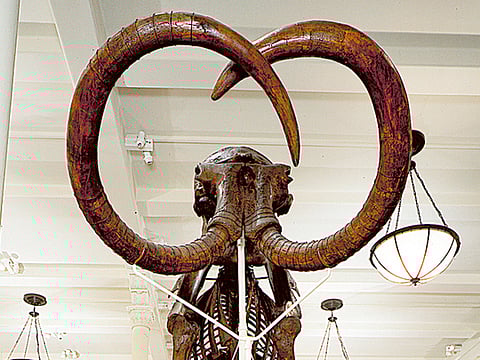
A biotechnology startup working to bring back animals from extinction has raised $200 million at a valuation of $10.2 billion, more than six times its valuation just two years ago.
Colossal Biosciences Inc. is using DNA and genomics to try to resurrect the dodo, Tasmanian tiger and the woolly mammoth. Co-founder and Chief Executive Officer Ben Lamm says the company is on track to produce a woolly mammoth calf born to a surrogate elephant mother by late 2028.
Dallas-based Colossal Biosciences said it raised the new funding round from one investor, TWG Global, bringing its total cash raised to $435 million.
"We're not going to do anything until we get the genomes right," said Lamm in an interview, adding that the company was in the project's cell-editing phase, meaning it has identified target genes to work on. Colossal is attempting to create the calf by editing mammoth genes, obtained from ancient samples found in frozen tundra, into genes in Asian elephant cells.
Outside of the obvious allure of a Jurassic Park-style scientific feat, the company's de-extinction efforts aim to expand biodiversity, help restore balance in ecosystems and benefit other animals.
But many scientists are skeptical of the efforts, questioning their validity and whether re-introduced animals could survive today "- particularly given the changed climate, reduced habitat and greater numbers of invasive species. The woolly mammoth mostly became extinct 10,000 years ago, although some populations survived until 4,000 years ago.
Because of Colossal's use of Asian elephant cells, Karl Flessa, a paleontologist at the University of Arizona, questions whether the result will truly be a woolly mammoth. He also takes issue with releasing such an animal into a woolly mammoth's natural habitat of Arctic tundra, which is shrinking.
"It's better to prevent extinctions in the first place, rather than bring back bio-replicas whose 'reintroduction' may have a host of unintended consequences," he said in an email.
Colossal says that the animal will be closely monitored and live inside an expansive bio-secure preserve. The startup also points to the reintroduction of the wolf to Yellowstone National Park as a success story.
While working on the woolly mammoth project, Colossal says it has developed technologies that help preserve endangered elephant species, such as a vaccine for elephant endotheliotropic herpesvirus, a disease that kills Asian elephant calves. Its work on the dodo has led to avian genetics tools that could benefit threatened bird species.
Lamm founded Colossal with Harvard University geneticist George Church in 2021. The company's backers, which include the CIA-affiliated In-Q-Tel as well as celebrities like Paris Hilton, say it's not just the company's progress in de-extinction that excites them. In the process of resurrecting long-gone animals, the company is making breakthroughs in related areas that could create additional revenue.
Last year, Colossal spun out a startup, Breaking, that raised $10.5 million to work on plastic-waste degradation. In 2022, it spun out computational-software company Form Bio Inc., which has raised $64 million to date.
Its next spin-out is likely to be based on its genetic- engineering technology, Lamm said. The company is also working on technology that could help fertility clinics.
Colossal investor TWG was impressed by the company's "significant technology innovations and impact in advancing conservation" TWG CEO Mark Walter said in a statement. TWG is an investment vehicle run by Walter, who is also the CEO of investment firm Guggenheim Partners, and financier Thomas Tull.
Last year, Colossal raised $50 million for a nonprofit organization, the Colossal Foundation, to work on animal conservation. It is working on species preservation plans for animals including the endangered Sumatran rhino, the ivory-billed woodpecker and a type of porpoise called the vaquita.


