Guatemalan journalist who investigated graft released from prison
Ruben Zamora spent 3-1/2 years in jail on what he claimed were trumped-up charges
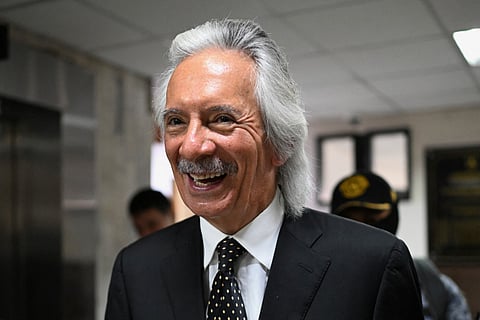
Guatemalan veteran investigative journalist Jose Ruben Zamora, imprisoned since 2022 after covering corruption scandals implicating former president Alejandro Giammattei, was released on Thursday and placed under house arrest.
Zamora, 69, is the founder of the now-shuttered newspaper Periodico.
He spent three-and-a-half years behind bars on what he claimed were trumped-up charges of money laundering and document forgery.
Rights groups accused the state of trying to silence him.
"I've spent more time in prison than I should have. I've experienced torture, psychological repression. I've been a kind of living corpse, but I think it's been worth it," Zamora told reporters after his release on Thursday, clad in a black suit.
He was arrested on July 29, 2022, after publishing accounts of corruption cases implicating Giammattei, a close associate of current Attorney General Consuelo Porras, who has been sanctioned by the United States and European Union for corruption.
In June 2023, he was sentenced to six years in prison. That sentence was overturned and a new trial ordered, which he was made to await in prison.
A judge in Guatemala City ordered that Zamora be released into house arrest, without surveillance.
The judge said that Zamora had already served his sentence for forgery.
He is however forbidden from leaving the Central American country.
The Committee to Protect Journalists hailed his release as "an important step towards justice" and called on the state prosecutor's office to "end the use of criminal law to silence the press."
Giammattei was accused by rights groups of overseeing a crackdown on anti-graft prosecutors and journalists during his term, which ended in January 2024.
He was succeeded by President Bernardo Arevalo, an underdog anti-corruption campaigner who overcame attempts by the political establishment to prevent him from assuming office.
Zamora was for a while held in a military penitentiary, and kept in solitary confinement in near total darkness for months on end.
His imprisonment drew condemnation from the United States, United Nations and Amnesty International as well as Arevalo, who said the case against him represented an "abuse of power."
ec/cb/sla
© Agence France-Presse


