Uganda elections percentage: Museveni 'leads' in initial ballot amid concerns over 'rigging', internet blackout
Initial polls show Museveni, 81, set for 7th term amid reports of voter suppression
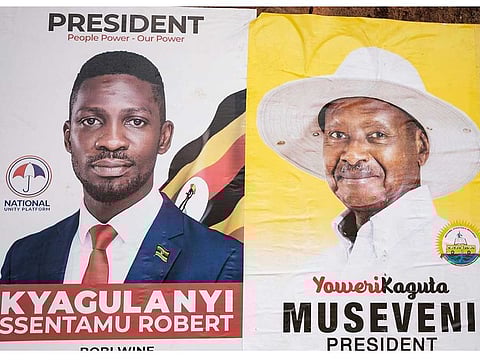
The 2026 Ugandan presidential election, held on Thursday (January 15, 2026) amid heightened tensions and an internet blackout, appears poised to extend President Yoweri Museveni's four-decade rule, amid concerns over technical snags that caused delays, allegation of ballot stuffing, voter suppresion, arrests and vote rigging.
Snapshot
A widely shared national snapshot, based on data from 91.6% of polling stations (46,465 out of 50,739), shows Museveni of the National Resistance Movement (NRM) securing a commanding victory with 7,054,838 votes, equating to 70.5% of valid votes.
While this positions the 81-year-old leader for a seventh term, building on his long tenure since 1986, these figures cannot be immediately verified amid reports of technicial snags, voter suppression, ballot stuffing and an internet blackout.
Delays reported
AFP, citing local sources, reported that polling stations in several parts of Uganda were not open almost two hours after voting was due to start.
In several parts of the capital Kampala and the border city of Jinja, AFP reporters noted that voting had yet to begin by 9 am (0600 GMT), with reports that ballot papers had not been delivered and biometric machines used to check voters' identities were not working.
UBC Uganda, the official X handle of the Uganda Broadcasting Corp, repoted: "The process has not been free and fair, as voters in certain constituencies have been denied their right to participate."
Opposition candidate Bobi Wine frequently appeared in public wearing a bulletproof vest and helmet due to repeated violence, including tear gas, arrests of supporters, and attacks on events.
Security forces reportedly disrupted rallies, injured supporters, and arrested hundreds.
He accused authorities of repression, ballot stuffing, and abducting polling agents on election day, amid a nationwide internet blackout intended (in his view) to facilitate "rigging".
He urged Ugandans to "rise to the occasion" and resist peacefully if results were manipulated.
Main challenger
"Bobi Wine" (Robert Kyagulanyi Ssentamu) of the National Unity Platform (NUP), has emerged as the main opposition.
Voter turnout stood at 47.4%, with over 10.2 million votes cast out of 21.7 million registered voters.
Invalid votes
Invalid votes total 287,912, representing 2.8% of ballots.
This snapshot highlights Museveni’s strong rural support base, while Bobi Wine draws from urban youth frustrated with economic challenges, corruption, and repression.
Full results expected
The EC anticipates full results by January 17, 5pm EAT (2pm GMT).
The election has been marred by opposition claims of ballot stuffing, arrests, and voter suppression, with Bobi Wine rejecting early tallies as “rigged”.
International observers note concerns over transparency, but Museveni dismisses cheating allegations, projecting an 80% win. As counting progresses, Uganda's political future hangs in the balance, potentially sparking protests if disputes escalate.
Opposition campaign
Ssentamu (Bobi Wine), the charismatic pop star-turned-politician and leader of the National Unity Platform (NUP), mounted a determined opposition campaign in the Ugandan presidential election.
This marked his second challenge against incumbent President Yoweri Museveni, who has ruled since 1986.
Bobi Wine’s campaign emphasised youth empowerment, economic reform, ending corruption, and dismantling what he described as “family rule” and decades of repression.
Drawing massive crowds, especially among urban youth frustrated with limited opportunities in a nation where the average age is around 16, he framed the election as a #ProtestVote2026 — a call for citizens to reject the status quo non-violently.
His rallies featured high energy, with slogans like “A New Uganda Now” and “People Power Our Power”, often shared via social media despite restrictions.


