Congo says number of confirmed Ebola cases rises to 3,200, 1,400 deaths: Why the outbreak is spreading quickly
Ebola outbreak in DR Congo reaches 3,200 cases and 1,405 deaths
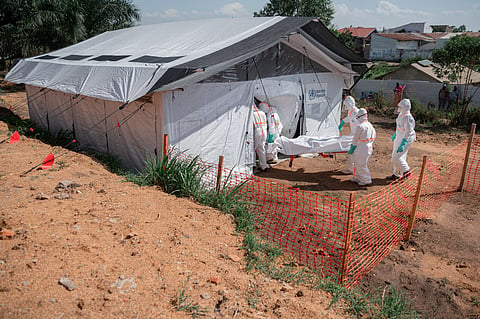
KINSHASA: The number of confirmed Ebola cases in the Democratic Republic of Congo has increased to 3,200, including 1,405 deaths, government data showed on Sunday.
Ebola infections have so far been recorded in five of the country's 26 provinces, with the north-eastern province of Ituri identified as the centre of the outbreak.


The outbreak has added nearly 1,000 confirmed cases in just 10 days, highlighting the virus's accelerating spread despite ongoing containment efforts.
Health authorities say the epidemic is now affecting five eastern provinces, where armed conflict, population displacement and limited access to healthcare have complicated the response.
Outbreak: Bundibugyo strain
The current outbreak is caused by the Bundibugyo strain of the Ebola virus, a less common species for which no approved vaccine or specific treatment currently exists.
That has made containment considerably more difficult than during previous outbreaks caused by the Zaire strain, for which licensed vaccines are available.
The outbreak was declared a global health emergency earlier this year as infections spread rapidly in eastern Congo and crossed into neighboring Uganda.
Health officials have warned that many new infections are emerging outside known chains of transmission, suggesting the virus is circulating undetected in some communities.
Why the outbreak is spreading so quickly
Several factors have fueled the surge:
No licensed vaccine for the Bundibugyo strain.
Delayed identification of the virus early in the outbreak, allowing wider community transmission.
Conflict and insecurity in eastern DRC, limiting access for health workers.
Weak contact tracing, with many new cases having no known epidemiological links.
Public mistrust and misinformation, which have hindered testing, isolation and safe burial practices.
Healthcare shortages, including strikes by medical workers over unpaid salaries in some affected areas.
Fatality rate
Based on the latest official figures, the outbreak has a case fatality rate of about 44% (1,405 deaths among 3,200 confirmed cases), underscoring the disease's high lethality despite supportive medical care.
How it compares with previous Ebola outbreaks
While the 2014–2016 West Africa epidemic remains the deadliest Ebola outbreak in history, claiming more than 11,300 lives, the current outbreak is spreading far more quickly. Public health experts note that it surpassed 1,000 deaths in just over two months, compared with roughly eight months during the West African epidemic.
What is Ebola?
Ebola virus disease is a severe hemorrhagic fever that spreads through direct contact with the blood or bodily fluids of infected people or contaminated materials. Symptoms include:
Sudden fever
Severe headache
Muscle pain
Vomiting and diarrhea
Internal and external bleeding in severe cases
Without prompt supportive care, Ebola can be fatal, although early diagnosis and intensive treatment improve survival chances.
Outlook
The World Health Organization and international aid agencies continue to support Congolese authorities with surveillance, laboratory testing, treatment centers and community outreach.
However, officials warn the outbreak remains difficult to contain because of insecurity, limited healthcare infrastructure and the absence of an approved vaccine for the Bundibugyo strain. Experimental vaccines are under development but are still undergoing clinical evaluation.


