Eats from the streets
Trying the local gastronomic specialities is an important part of travelling — and all the more better when it's done quickly.
When hunger strikes while travelling, most of us just want to eat quickly to make the most of our holiday. That said, there is no excuse for searching out the nearest multinational fast-food chain to satisfy your appetite with a burger and fries. Eat-on-the-run meals have been around for centuries, and trying the local gastronomic specialities is an important part of immersing yourself in the local culture. These snack foods are fun, tasty and won't break the bank. Watch what the country's denizens do and take your cue from them.
Italy: Arancini
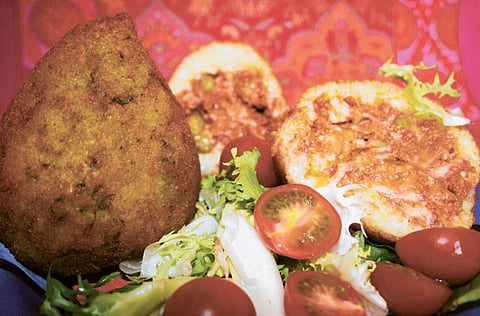
Locals on the Italian island of Sicily have been enjoying these saffron-hued rice balls, which resemble an orange, since the 10th century, when Arab traders began cooking them. Today you'll find them all over Italy, sold warm, straight from vendors in parks and pedestrian streets who fry them in situ. With Arancini it's a case of "get em while they're still hot". Once cold, they lose their appeal and turn stodgy. For some of the best arancini, enjoyed along with a sea breeze, take a stroll along Via Umberto I in Taormina, Sicily, in the late afternoon and buy them from the mobile stalls. About the size of a tennis ball, the savoury rice snacks hide at their core either rich meat ragu or stringy mozzarella cheese and smoky-flavoured meat. Eaten with the hands, they are all pleasure, from the first crunch of the crispy fried breadcrumbs on the outside, to the tasty risotto-style rice which makes up the bulk of the arancini, and finally its heart, with its soft, melted cheese and meat-and-tomato filling.
South Africa: Bunny Chow
This bread and curry dish was traditionally the fare of the local, working-class Indians living in the coastal city of Durban. Today bunny chow is still a popular way to have a quick, and very filling, meal. It has been around since the early 1900s, and many say it was a result of South Africa's apartheid laws which made it difficult for Indians to eat in restaurants. To make bunny chow, a loaf of bread is scooped out, leaving just the crust. It's then filled with spicy curry, which may feature its main ingredient — lamb, chicken or vegetables. Be warned, the residents of Durban like their curry with copious amounts of chillies, making the dish fiery hot and not for the faint-hearted. In this well-thought-out dish, the bread becomes the container and, as the rich gravy soaks into it, a vast array of textures and aromas make it a unique gastronomic experience.
South Africans will often be heard saying that they are going out to "catch a bunny" when they plan on enjoying this take-away. A bunny is eaten with the fingers: Pieces of bread are torn off and used to scoop the curry straight up into the mouth.
In keeping with tradition, the meal is presented wrapped in the past day's newspapers.
Vietnam: Bò Bía
The exact origins of this stuffed rice paper roll have been lost in time, but many believe that the recipe was brought in by the Chinese from Fujian province. Today they are regarded as one of Vietnam's national dishes, and you'll find Bò Bía all over the country. These crunchy snacks are essentially softened rice paper sheets filled with fresh vegetables, including jicama — a white root vegetable — carrot, lettuce and steamed Chinese sausage. Hoisin sauce is either drizzled over the filling inside the roll or served separately as a dipping sauce. Once all the ingredients have been carefully wrapped in the rice paper to make a neat parcel, all you have to do is eat it with your hands and enjoy the fresh, crunchy texture of the raw vegetables contrasting with the soft meat in the sausage. But beware, Bò Bía needs to be eaten soon after it has been prepared so that the rice paper doesn't dry out and go hard. Ho Chi Minh City is a Bò Bía lovers' paradise and Nam Bo food market in the Pham Ngu Lao area serves some of the best variety.
India: Chaat
Many say that this versatile Indian fast food originated in the northern province of Uttar Pradesh, but its popularity has seen stalls serving it pop up across the subcontinent, and even in many parts of South East Asia. Chaat's main ingredient is a thick potato cake studded with diced green chillies, peas and onion. It's then deep fried in oil until golden brown, making it crunchy on the outside and velvety soft inside. These delicious little patties are then served with a number of accompaniments, which might include spicy tomato chutney, cardamom-rich dahl, tangy tamarind and coriander sauce, and cool cucumber raita. The chaatwallah will place the potato cakes, along with your selected side dishes, on a fresh, green banana leaf to be taken away, or, at food stalls with tables, these colourful snacks are piled on to small silver trays. As with most Indian food, fingers are the only utensils you need. For visitors to Mumbai, a visit to Chowpatty beach to enjoy the excellent local variety of chaat topped with crunchy chilli peanuts is a must. You'll see the brightly lit stalls placed all along the sand.
Puerto Rico: Empanadas
The perfect eat-on-the-run food, empanadas are small, savoury-filled pastries about 10cm across in the shape of a half-moon. Essentially, there are two ways of cooking these popular snacks, which have their origins in Spain's northern region of Galicia. Once stuffed with spiced, minced beef, red kidney beans, spinach or cheese, the pastries can be fried in hot oil or oven baked. Traditionally, the pastry is made using a recipe of beef lard mixed with wheat and cornflour. Bite through the firm golden-hued pastry, savouring the silky texture of the lard on your tongue, before allowing your taste buds to enjoy a treasure trove of meaty, cheesy flavours inside. You'll find these filling treats just about everywhere across Puerto Rico, from street stalls to restaurants, and prepared lovingly by housewives in their kitchens. Although best eaten warm, they can be taken away cold to the beach or a picnic to be enjoyed later.
— Scott Adams is a Madrid-based freelance writer


