Beirut: the beat goes on
It’s a hip city break destination with everything on offer from eccentric nightlife to fabulous food
‘We don’t really talk about politics,’ sighs my guide Michelle wearily, while using perfectly manicured talons to furiously punch a text message into her mobile phone. As we hurtle in a taxi through the bustle of Beirut’s downtown, past the charred but intriguing cinema (known locally as The Egg), ad hoc hotels and buildings perforated with bullet holes, it’s hard not to ask questions.
Still, you can forgive the Lebanese for wanting to steer clear of the subject. But in reality, the stereotype of a no-go, war-torn capital belongs to a different era. The people here have suffered their fair share of hardship: the Lebanese Civil War raged from 1975 to 1990 and more recent troubles erupted in 2006. But now they’re ready to get on with their daily (and most importantly, nightly) lives and enjoy the good times.
Beirut is one of the most culturally diverse cities in the world. After the wars, many Lebanese returned from abroad (particularly France), bringing with them international influence and expertise. It’s not uncommon to hear people jumping from French, to English, to Arabic in conversation.
This coincides with the city’s efforts to rebuild its reputation as the Paris of the Middle East. Boutique hotels, glamorous bars and St Tropez-style beach resorts are all part of a drive to resurrect the hedonistic carefree spirit of the Sixties when an international jet set would descend. But what’s great is that even with all of these influences, the city’s spirited identity couldn’t be stronger.
The five-star Phoenicia Hotel, which celebrates its 50th anniversary this year, is one of the few older generation buildings and is now a popular haunt for visiting dignitaries and celebrities: Brad and Angelina, and superstar DJ David Guetta have been guests.
The hotel has an important past, but it’s also one of the driving forces securing Beirut’s status as an exciting city break destination. Arriving at the Phoenicia in time for sunset I’m taken to the terrace, past an outdoor pool with a large screen playing black and white Hollywood classics.
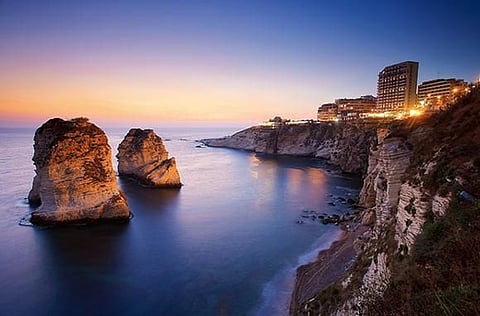
‘Look how incredible this is!’ says Michelle, gesturing towards the corniche. This wide promenade winding along the coastline is one of Beirut’s best-known beauty spots.
In downtown, boutiques selling international designer labels fill the plush newly built shopping arcades in Beirut Souks.
Two people right in the delicious chaotic melting pot of Beirut are Kamal Mouzawak and Christine Codsi from culinary collective Souk El Tayeb. Their aim is to let the world know about Lebanon’s culinary potential, and every Saturday they organise a farmers’ market with stallholders selling organic and even macrobiotic produce sourced from far-reaching corners of the country – from za’atar farms and olive groves in the south to fresh breads hot from local bakeries.
He decided to channel his energies into music. He now runs the popular Music Hall venue, an 800-seat converted cinema where up to 17 ‘world fusion’ acts perform in one night, with the first venue of its kind outside of Beirut now in Dubai and a third planned for Covent Garden in London.
‘I’ve had Sting cook here,’ says Elefteriades, before he takes us on a tour of his private room above the venue, decorated with gothic thrones, self-portraits and bizarre Robocop figurines. It’s all very surreal and I wonder what Hilary Clinton – who he claims has paid a visit – made of it all.
I leave Music Hall understanding just why Elefteriades created this unusual venue. In its simplest terms it celebrates national song and offers the perfect excuse for a night out. But it is also symbolic of the carefree mentality that runs through the veins of this city.
Beirut has a tangled story to tell. It’s true the city is like no other with no obvious landmarks and no one ‘look’ or single language. But there really is no reason to dwell on the past when living in the moment is so much fun.
Stay another day
Beirut’s first design hotel Le Gray is the hot place to book, says Anthea Ayache
Le Gray’s flawless attention to detail is obvious on stepping into this super-sleek property. Beirut’s first purpose-built design hotel centres on a circular glass-domed atrium and is enchantingly located on Martyrs’ Square in the Central District next to Al Amin Mosque and five minutes walk from the Corniche.
The lobby is intimate and extremely white, packing a pristine punch thanks to a large illuminated wall of LED flowers and dragonflies – one of over 500 works of contemporary artworks owner Gordon Campbell Gray collected over four years during his travels in Beirut, Damascus, Cuba, Paris and London, and now shows off throughout the hotel.
The beautiful, ultra-sleek interiors in my bedroom blend nicely with modern minimalism, bold sweeps of dusky pastel shades and wood panelling. Hi-tech facilities are in abundance. There’s a huge flat-screen TV, iPod docks and deluxe espresso machines. A rain shower in the dark-grey opaque tiled bathroom, a central mosaic on the floor and generous stocks of Ren toiletries.
The airy stylish interiors come courtesy of interior designer Mary Fox Linton who has expertly woven in details like a purple glass rooftop swimming pool and glass elevator that allows you to watch floors cascade away like water on our way up to the rooftop.
I dined up there at Indigo enjoying spectacular views out to sea and beyond and a Mediterranean menu that’s helped the restaurant win it respect as one of Beirut’s best. Expect to pay around Dh220 per head for three courses.
Room rates from Dh 1,043 per room based on two people sharing.
Getting there
Take FlyDubai to Beirut direct from about Dh900 return.


