The Kurator’s London Fashion Week autumn/winter 2026 roundup
Designers didn’t just show clothes; they staged moments
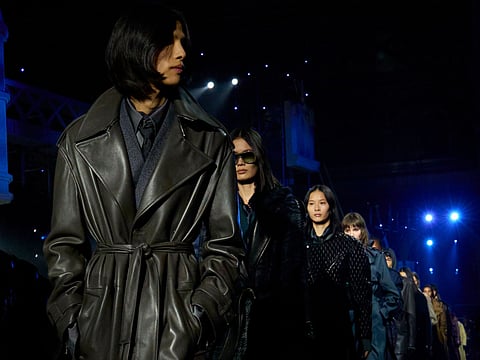
London Fashion Week AW26 has wrapped, and as always, Burberry closed the week with full-on British bravado. The city itself felt layered, unpredictable, and intimate. Crowds pressed into the streets, stars slipped through side entrances, and everywhere you looked, London was participating in the week’s current. Designers didn’t just show clothes; they staged moments, gestures, and stories - each collection asking you to step inside, watch, and feel the city itself through fabric and movement.
This season saw Erdem celebrating a milestone twentieth anniversary with garments that felt like fragments of memory remade into something new, while Malone Souliers presented its Autumn/Winter 2026 collection in a jewel-like installation at the Royal Academy, where crystal and metallic shoes caught every beam of light and made the room shimmer. Richard Quinn brought gesture, drama, and tension, Liberowe offered rooms of clothes to study and inhabit, and Simone Rocha conjured mythic youth, movement, and volume that felt alive on every model.
Burberry
There was something in the air on the day of the show, and whatever it was, it felt like it should happen more often. Days have passed since Burberry unveiled its Winter 2026 collection, To Going Out in a Particularly London Way, and the energy is still with us. The show embodied what it feels like to move through London after dark - the streets alive with movement, light bouncing off wet pavements, and the city itself folded into every detail. Each garment reflected that vitality, from the sculpted line of a trench to the gleam of a cuff, making the capital itself feel present in the room.
Burberry has long occupied a central place in London fashion, a house that carries heritage, sophistication, and effortless cool. Winter 2026, however, exceeded a conventional runway: it felt as though the city had been invited inside. Architecture, audience, and clothing engaged in constant conversation, each amplifying the other, creating a space alive with presence, energy, and intention.
Outside Old Billingsgate, the streets crackled with expectation. Fans pressed forward, voices colliding, camera flashes flickering like fireflies. Celebrities arrived amid the throng: Kate Moss, electric in presence; Olivia Dean, luminous and alert; and a constellation of other icons, stepping into a space that already felt like the coolest room in the city. Every shout, every glance, every glint of light became part of the show before the doors even opened.
Guests were welcomed with silk scarves bearing a bespoke Winter 2026 print - a map of London stamped with the show date, they acted as both keepsake and prelude to the meticulous care of the collection.
Inside, a Tower Bridge reconstructed in scaffolding, glittering under light, dominated the space. Resin puddles reflected its shimmer, cameras, and spectators. The ironwork of Old Billingsgate framed the set with austere elegance, the past and present coexisting in one vast, living room.
The clothes inhabited this space with intent. Trench coats slid over satin dresses, their pleats and fluidity balancing elegance with urban edge. Overcoats and tuxedos in double-faced cashmere and grain de poudre wool carried structure, accented with leather-peaked lapels and shearling collars. Leather bombers and hoodies translated the city’s essence, while silk faille, coated jacquard, and satin added depth, reflection, and tactility. Knitwear in mohair and silk fringes traced movement across the body, while hand-stitched beads, ruffles, and embroidery glimmered like rain-soaked streets.
Accessories punctuated the collection with droolworthy precision and wit: Pillar pumps, Windermere Oxfords, caged Linton sandals, mini chain-strap bags, Bridle-inspired shoulder bags, and whip-stitched leather flowers all contributed to the narrative.
Erdem
Erdem’s twentieth anniversary collection was a meditation on archival memory, reassembled with imagination and care. Jacquard scraps, collaged offcuts, and tweeds with exposed linings became garments that carried histories in fragments, each piece a story waiting to be inhabited. The collection had that rare quality of making you feel inspired, exhilarated, and almost desperate to step inside a piece, to move within its textures, volume, and gesture.
Collaborations with Barbour introduced a subtle counterpoint of utility into romance: waxed cotton coats lined with intricate embroidery and crystal fragments balanced structure with playfulness, giving weight to the narrative without compromising poetry. Feathered Bloom bags punctuated skirts and coats, adding scale, movement, and narrative punctuation, while mini Bloom bags injected a mischievous intimacy.
Silhouettes nodded to the 1920s and 1940s, but never as pastiche; rather, they appeared as memory filtered through invention, where the past informed but did not dictate the present. Collaged mini dresses, hourglass jackets, and tailored coats collided, tumbled, and harmonised across the runway.
As always, Erdem AW26 was a reminder that fashion is not just worn - it is experienced. Every piece invited engagement, curiosity, and admiration, leaving the audience excited, enchanted, and longing to become part of the story themselves.
Liberowe
At the Bernheim Gallery, Liberowe transformed presentation into contemplation. Divided across four rooms - tailoring, colour and materiality, eveningwear, and bridal - the space allowed garments to breathe. They were not rushed past; they were encountered, examined, absorbed.
Velvet shifted from dense and enveloping to airy and almost translucent through devoré techniques. Tweed unraveled into fringed, fur-like textures and metallic surfaces that caught the light with quiet drama. Chiffon, organza, and silk crêpe de chine layered delicately against hand-braided trims and embroidered buttons, each detail insisting on proximity. Peplums unfolded into architectural gestures, extending beneath skirts and opening negative space around the body, reshaping silhouette without overwhelming it.
The modular set, developed with Simon Costin, underscored the idea that these garments exist beyond spectacle and beyond the tempo of a single season. There was something arresting in the balance: the collection felt entirely wearable - coats you could imagine reaching for, dresses that seemed to move with ease - yet each piece retained a sculptural authority that bordered on the improbable. You could see yourself wearing it, and yet the artistry made it feel almost too precious, considered, and composed to belong to the everyday.
Simone Rocha
Simone Rocha’s AW26 collection, titled Tír na nÓg, conjured legend, youth, and movement with a sense of theatrical intimacy. Drawing on the Irish myth of the land of eternal youth, the collection did not attempt literal storytelling; instead, it translated folklore into gesture, fabric, and silhouette. Myth became atmosphere rather than costume.
White lace dresses drifted down the runway with a suggestion of motion, as if mid-narrative, their hems catching air and light. Crinolined skirts collided unexpectedly with track tops and athletic references, creating a friction between delicacy and defiance. Rosettes punctuated shoulders and hips like emotional markers, moments of emphasis within otherwise fluid forms. Volume was never static: skirts swayed, tulles shifted, layers revealed and concealed with each step.
Garments moved between sportswear and eveningwear without hesitation. Lingerie elements were exposed yet dignified, bomber collars abstracted into sculptural frames, and sheer fabrics layered to create depth rather than fragility. There was a tension between innocence and assertion - lace paired with utility, satin disrupted by structure. The result felt deliberate, not decorative.
This was a ritual enacted in the present. Silhouettes carried energy and poise, but also unpredictability. Fabrics spun, layered, and met one another in soft collisions - tulle against nylon, lace against athletic striping - alive with narrative and a slight rebellion.
Malone Souliers
At the Royal Academy of Arts, Malone Souliers presented its Autumn/Winter 2026 collection as part of the official London Fashion Week calendar, framing shoemaking within one of the city’s most historic artistic institutions. The setting was intentional: a dialogue between heritage, architecture, and contemporary design.
Oversized transparent perspex beams fractured light across the room, while sculptural floral forms softened the geometry. The installation created an immersive but intimate atmosphere, allowing each shoe to be examined closely rather than rushed past.
Guests including Alexa Chung, wearing the metallic Raquel sandal, Alva Claire in the black Cecile mule, and Amber Anderson in the crystal-embellished Maureen pump, animated the presentation. Their presence reinforced the collection’s balance between polish and modernity.
For AW26, Malone Souliers drew inspiration from London itself, with a nod to the graphic boldness of the Sixties mod era. Geometry, material experimentation, and intricate embellishment underscored the brand’s commitment to shoemaking as an art form. Crystal mesh, sculpted straps, and controlled silhouettes demonstrated technical discipline while maintaining playfulness.
Noon by Noor
Strength came sharply into focus at Noon By Noor this season. For Autumn/Winter 2026, the label doubled down on tailoring as a language of control - elongated lines, sculpted shoulders, and outerwear that carried presence without excess.
Shirting remained central: crisp cotton poplin and Oxford stripes cut oversized, layered under navy Melton wool or paired with flecked tweed trousers. The palette stayed disciplined - ocean blues, warm browns, charcoal - interrupted by flashes of Tomato red. Technically coated wool spoke to utility; Shetland tweed grounded the collection in heritage.
Evening arrived without drama. Oyster satin and metallic voile introduced sheen, while chocolate and midnight lambskin lent depth and tactility.
Photographed on London’s streets, Malgosia Bela embodied the season’s proposition: clothes designed not for performance, but for momentum. In a week of amplified statements, Noon By Noor made its case through control.
Richard Quinn
At Sinfonia Smith Square, Richard Quinn presented a collection alive with gesture, movement, and theatrical force. The setting amplified the mood, framing the runway with a sense of ceremony and scale.
Corsetry fused with the body, sculpting posture and contour. Peplums twisted and flared; hems cut through space like sharp punctuation. Florals - a Quinn signature - softened outlines without reducing the tension running through each look. They appeared saturated and immersive, shifting between romance and something more commanding.
Each model’s passage felt charged. Fabrics caught light as they moved, sequins shimmered, and prints oscillated between clarity and abstraction. Victorian collars and draped chiffon nodded to history, yet the collection resisted nostalgia. Instead, the past was sharpened and pulled forward.
Quinn’s strength lies in emotional intensity balanced by structure. AW26 embraced opulence and control in equal measure, creating garments that felt immediate, assertive, and unapologetically expressive.


