Tiara Wehbe: The Dubai-based singer taking Middle Eastern music global
Tiara’s live shows are immersive experiences, demanding both physical, emotional presence
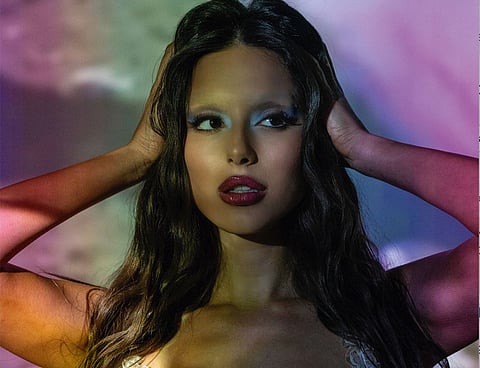
Music, even across linguistic divides, is bringing audiences together worldwide, and Lebanese singer-songwriter Tiara Wehbe stands at the forefront. Based in Dubai, Tiara moves effortlessly between Arabic, English, French, and more, refusing to confine herself to a single language or style. Her upbringing and multicultural experiences shape every note, producing a sound that is both anchored in tradition and strikingly universal.
“Middle Eastern artists are not just having a moment in the region, the whole world is tuning in,” she said. “I want my music to be for everyone. I know people connect with my work here—the language, the beats—but music is a soulful act. It reaches who it reaches. I don’t want to force it into communities; the audiences it belongs to will find it. That’s really how I discovered my creative flow in the region, with no limits on who it can be for.”
Her recent singles, including Weili and Nawi Aaleih under MDLBEAST Records, are more than catalogue entries; they mark a personal and artistic rebirth. “Everything I released before this—I don’t consider it my work. It wasn’t truly mine,” she explained. “Finally, I can produce and release music that is entirely my own, and with new management I have complete creative freedom.”
Tiara’s journey has been shaped by years of exploration and international training. From workshops in Orlando, Los Angeles, and New York to performance competitions, she absorbed lessons that refined her craft and deepened her understanding of the music industry. “I spent years learning how labels, management, and distribution work, how producers operate, and how people behave. It was all part of discovering my artistic cadence,” she said. This foundation allows her to weave multiple languages effortlessly into her music. “I love mixing whatever feels right. English? French and English with Arabic or Spanish? Whatever suits the song,” she added.
Her career pivoted decisively with MDLBEAST Records, granting her the freedom to release music entirely of her own making. “Once I started attracting the right people, everything changed. Signing with MDLBEAST finally let me release music that feels genuinely mine,” she said. This opened doors to high-profile performances, from the MDLBEAST Soundstorm main stage with Steve Aoki to the Jeddah E-Prix, where she shared the stage with Future. “Performing with Future was incredible. I listen to so much rap—sharing that stage was just wow. An experience I’ll never forget.”
Tiara’s live shows are immersive experiences, demanding both physical and emotional presence. “Performing is intense; your heart races, and you have to be fully engaged,” she explained. Her meticulous attention to choreography, visuals, and energy ensures audiences experience her music as she envisions it. “I want my performances to be a complete experience—to make people move and feel every lyric and melody.”
Stylistically, Tiara defies categorisation. “Commercial pop isn’t really my world. I prefer R&B with elements drawn from different genres,” she said. Her forthcoming single, Shatara, embodies this hybrid approach: Arabic lyrics, reggaeton rhythms, and themes of female empowerment. “My songs are about self--assurance and strength. I want women to feel empowered, to know they don’t need external validation,” she explained. “Shatara means smart—it’s about my intelligence. I want this song to inspire self-belief, and be clear: if you cannot handle this brain, that’s on you. I don’t have time for anything else.”
Her musical palette reflects a profound appreciation for cultural diversity. “I love Moroccan music, North African sounds, Western music with Arabic elements. Music is a universal language,” she said. This pluralistic approach positions her among a generation of Middle Eastern artists whose identities are defined by global dialogue rather than geographic limits.
Tiara also prioritises authenticity online. “People can be quick to judge, but showing my true self is far more rewarding,” she said. This transparency strengthens her bond with fans, fostering trust and loyalty.
On her creative philosophy, she added: “I’m very spiritual. I believe you attract the right audience and the right collaborators—they will gravitate toward you if they connect with your music.” For younger artists, her guidance is straightforward: “Care about who surrounds you. Your body is your compass. Listen to it. Don’t let anyone interfere with your creative process. Do what you love—that’s the point.”
Even her earliest work hints at her trajectory. “The first song I ever made myself, at 18, recorded in my room—I don’t like it, but many people loved it. It was my first real step toward understanding what music I wanted to create,” she said. Combined with her officially released singles, these experiences trace her evolution from a young musician seeking direction to a confident artist shaping her own voice.
At a moment when the Middle Eastern music scene is no longer peripheral but central to global rhythms, Tiara Wehbe is transformative. Her music demonstrates the creative potential of hybridity—linguistic, cultural, and sonic—proving that songs can be regionally grounded yet resonate universally. Artists like Tiara are not just part of the conversation; they are defining it, showing that music without borders is music without limits.


