Sony’s shock move to end PlayStation discs hints at PS6 future and potential launch timing
Sony’s surprise move has set off a wave of speculation about the future of the PS-6.
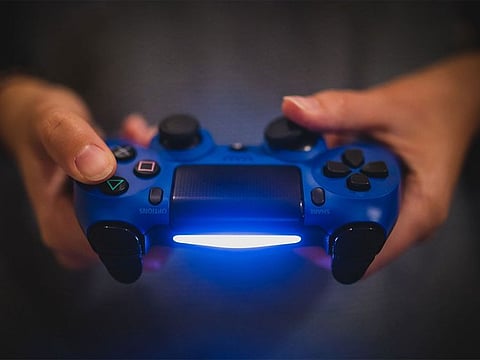
What do you mean, no more physical game discs? What will we show our grandchildren?
Such is the outcry in the gamer world.
Sony’s surprise move to phase out physical game discs on PlayStation consoles from January 2028 has done more than stir nostalgia for boxed games, it’s also set off a wave of speculation about the future of the PlayStation 6.
The company hasn’t officially revealed the PS6 yet, but between analyst chatter and Sony’s own hints, the outline of the next generation is starting to take shape. And if the signals are right, players may need to settle in for a long wait.
The 2028 clue
Industry analyst Piers Harding-Rolls of Ampere points to Sony’s 2028 disc cut-off as a major breadcrumb, in a tweet.
In his view, ending physical releases that year “almost certainly guarantees” that a PS6 won’t arrive before 2028 at the earliest, and more realistically, it could land at the very end of that year.
That timeline also supports a growing expectation: the PS6 may launch without a disc drive entirely, pushing PlayStation further into a digital-first future. Cost savings are part of the equation, especially as rising memory prices dubbed the “RAMpocalypse” continue to squeeze hardware budgets across the industry.
A PlayStation you might not 'stay' in the living room for
Sony’s own leadership has been feeding the speculation.
Hideaki Nishino, CEO of Sony Interactive Entertainment, recently described the company’s vision for next-gen PlayStation as something that breaks away from the idea of consoles being tied to a single room. “PlayStation has long been strongly associated with the idea of playing in the living room,” Nishino said a recent Q&A with Sony Interactive Entertainment. “However, in recent years, more users globally have been using personal monitors. In response, we are selling peripherals such as monitors and speakers to break away from the fixed perception that ‘PlayStation equals the living room’ and to broaden usage scenarios.”
Traditionally, PlayStation has been synonymous with the living room sofa setup. But Nishino suggests that identity is changing, pointing to new accessories like monitors and speakers that support more flexible play styles.
Then came the key line: a “seamless experience that can be enjoyed naturally beyond the living room.”
And in gaming terms, it opens the door to a much broader kind of PlayStation experience.
Is Sony building a hybrid console era?
That idea naturally raises one question: is PlayStation moving toward portability?
Several possibilities are now being discussed:
A dedicated PS6 handheld
A hybrid console that docks at home but travels with the player
A cloud-first evolution of the PlayStation Portal, acting more like a streaming gateway than a traditional console
Cloud gaming becomes Sony’s power move
Cloud gaming is also becoming a more important piece of Sony’s long-term strategy.
Nishino has previously stressed that Sony isn’t trying to push PlayStation onto every possible device. Instead, the focus is on maintaining a consistent, high-quality experience, something smartphones and keyboards don’t always guarantee.
That’s why Sony appears to be leaning toward more controlled environments, such as the PlayStation Portal, which prioritise stability over mass accessibility.
In simple terms: cloud gaming only works if it feels seamless. For Sony, reliability matters more than reach.
The timing
Sony’s disc announcement also arrives at a moment of wider industry tension.
Rockstar Games recently confirmed that some physical editions of GTA 6 will ship as download codes in a box, a small but symbolic shift that normalises a more digital-heavy future, even if it won’t please collectors.
Meanwhile, reports of major restructuring and layoffs across Microsoft’s Xbox division have added further pressure to the console landscape, casting Sony’s rival in a far less stable light.
A strong business doesn’t rush a new generation
Beyond speculation, Sony’s actual numbers tell another story.
Recent financial analysis suggests the company is performing strongly across gaming and beyond. PlayStation’s software ecosystem remains healthy, engagement is high, and players are still spending heavily on PS5 games and subscriptions.
In other words, Sony isn’t under pressure to hit a reset button.
Why the PS5 might stick around longer than expected
According to an analyst report by David Gibson of MST Financial quoted by IGN, the PS5 lifecycle could stretch further than previous generations, potentially pushing the PS6 into 2029 territory.
That timeline lines up uncomfortably well with what Sony has been doing, not what it’s been saying. Over the past year, Sony has doubled down on the PS5 rather than winding it down. There have been targeted price cuts, including a reduced-price Japan-only model, Black Friday discounts in major markets, and a renewed push to keep the PS5 accessible well into its fifth year.
For now, the PS5 doesn’t look like it’s being packed away for retirement. It could be getting extra life and that keeps the PS6 firmly in the realm of “not quite yet.”


