ChatGPT Health explained: how OpenAI’s new tool uses your health data
Feature offers tailored insights on tests, appointments, diets without replacing doctors
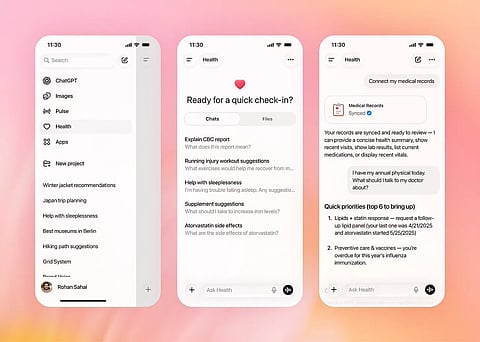
OpenAI this week introduced ChatGPT Health, a dedicated health-focused experience within its popular AI chatbot that allows users to bring their own health data into conversations and get more relevant, context-aware responses to medical and wellness questions. The feature builds on ChatGPT’s existing use for health inquiries — with the company saying hundreds of millions of people ask health and wellness questions every week — and aims to provide a more structured environment for those discussions.
Rather than mixing health queries with general ChatGPT conversations, ChatGPT Health creates a separate space where users can optionally connect medical records and wellness apps such as Apple Health, MyFitnessPal, Function and others. This allows the assistant to interpret information like test results, fitness data, recent activity and chronic conditions in context, giving users insight into their health data and guiding preparations for doctor visits, diet decisions or insurance comparisons.
OpenAI says the feature was developed with input from more than 260 physicians across 60 countries and specialties and is designed to help users better understand patterns over time, not to replace clinical care or give medical diagnoses. The company stresses that ChatGPT Health is meant to “support, not replace medical care,” and is not intended as a diagnostic or treatment tool.
To protect sensitive information, ChatGPT Health operates in a segregated environment with enhanced privacy controls, purpose-built encryption and isolated memory that keeps health conversations separate from other interactions. OpenAI has also said it does not use health data from ChatGPT Health to train its foundation models.
Initially, access to ChatGPT Health will be via a waitlist for users on ChatGPT Free, Go, Plus and Pro plans in most regions outside the European Economic Area, Switzerland and the UK, with broader availability on web and iOS expected in the coming weeks.
The rollout reflects growing interest in integrating AI and personal health information, as more people turn to digital tools to better understand medical information and manage wellness outside traditional clinical settings — even as experts emphasize that such tools cannot substitute professional medical advice.


