iPhone Duo's folding animation is a feature no other foldable phone have
The transition even retunes the phone's audio as the distance between speakers changes
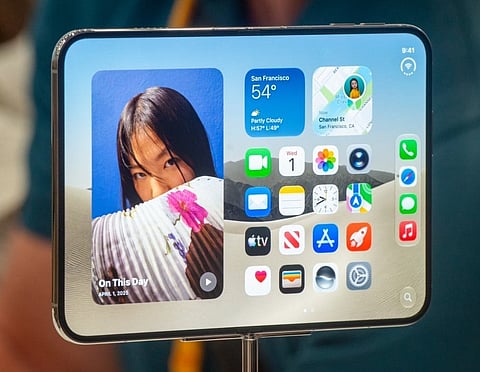
Dubai: Apple has unveiled its first foldable phone, and named it the iPhone Duo, ending months of speculation over whether it would be called the Fold or the Ultra. Among its confirmed features is something that sounds small but has already drawn attention in hands-on demonstrations: the animation that plays when you open and close it.
What the animation looks like
When iPhone Duo is opened or closed, the software doesn't simply cut between the outer and inner displays the way other foldables do. Apple built a dedicated transition effect that makes the interface appear to blur and stretch as it moves between the two screens, so the change in form factor feels continuous rather than abrupt.
Early hands-on impressions have described it as unusually polished. One reviewer called the transition "a work of art," noting the subtle gradient and depth-of-field effects that sell the illusion as the phone unfolds.
Apple has paired the visual effect with matching audio work. Because the distance between the phone's speakers changes depending on whether it's folded, unfolded, or propped at an angle, the system automatically retunes the sound in real time to match.
Why this is genuinely new
Foldable phones from Samsung, Google and others switch between their cover and inner screens, but the handoff is typically an abrupt cut. Apple's approach treats the fold itself as part of the interface, animating the software as if it is physically responding to the hinge.
That said, the idea of a folding transition isn't entirely unprecedented. Samsung experimented with a version of this back in 2021 on the Galaxy Z Fold 3, though nowhere near as refined as what Apple has now built.
The hinge underpinning it is a considerable piece of engineering in its own right. Apple says it uses more than 100 precision components, with a multi-layer lamination design and viscoelastic adhesives that let the display's internal layers glide against one another as it folds, intended to prevent the screen distorting over repeated use. A titanium base plate and carbon fibre support layers add structural rigidity.
The features that come with it
The animation isn't the only camera and interface trick unique to the folding design. Apple has built several features specifically because the phone has two displays rather than one.
Duo Preview shows a live camera preview on the outer display, so a subject being photographed can check their own framing and pose before the shutter goes off. Kid Cue, similar to a feature already found on Google's foldables, plays Peanuts animations on the outer screen to hold a child's attention during a photo. Duo FaceTime lets someone standing nearby join a video call using the outer display and its camera, without everyone needing to crowd around a single screen. A related Dual Capture mode shares both the front and rear camera feeds in a FaceTime call simultaneously.
There's also a Smart Take feature that uses an on-device model to judge when everyone in a group photo is ready and posed, then captures the shot automatically.
The rest of the hardware
Opened flat, Apple says iPhone Duo is the thinnest iPhone ever made, built around a 7.6-inch inner display with a nano-texture finish designed to cut glare. The outer display measures 5.4 inches. The camera system uses a 48-megapixel main sensor paired with a 48-megapixel ultrawide, skipping a telephoto lens entirely, a genuine trade-off against rival foldables that do include one.
It runs on Apple's A20 chip alongside the C2 modem, and comes in blue and silver.
iOS itself has been adapted for the format rather than simply stretched to fit it. The status bar and Dynamic Island have been redesigned to sit correctly on both the folded and unfolded display, content repositions itself away from the crease when the phone is used partially folded, since taps are harder to register right on the fold line, and users can run two apps side by side or open the same app twice at once.