What to know after FIFA lifts suspension of US star Folarin Balogun
Trump call to Infantino fuels claims of political sway in Balogun reprieve
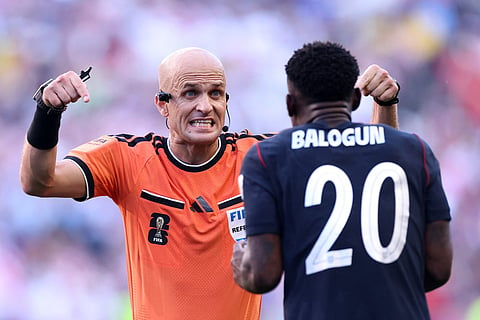
FIFA’s surprise decision to lift the suspension of US forward Folarin Balogun sparked controversy ahead of the World Cup match against Belgium, with critics questioning whether political influence played a role in the rare ruling.
Hours before Monday’s kick-off, FIFA rejected Belgium’s challenge against the decision to allow Balogun to play. The forward had been handed an automatic one-match ban after receiving a red card in the US team’s previous game, but the suspension was lifted following a call US President Donald Trump made to FIFA president Gianni Infantino.
Balogun started for the US against Belgium, though the team suffered a 4-1 defeat in Seattle.
Get updated faster and for FREE: Download the Gulf News app now - simply click here.
Here is a look at the controversy surrounding the decision.
Why Balogun’s red card became a major issue
Born in New York to Nigerian parents and raised in London, Balogun chose to represent the US despite also being eligible for other countries. The French league striker has been a key player for the national team, scoring three goals at the World Cup.
The controversy began when Balogun was sent off during the US team’s 2-0 win over Bosnia-Herzegovina in the round of 32 after stepping on Tarik Muharemović’s ankle.
The red card decision was disputed, with many arguing the challenge appeared accidental rather than deliberate. However, a sending-off normally results in an automatic suspension for the following match.
Had the ban remained, US coach Mauricio Pochettino would have faced a major selection challenge. While the squad had several attacking options, few offered Balogun’s combination of strength and finishing ability in the central striker role.
FIFA’s explanation behind the decision
Automatic one-match suspensions for red cards usually cannot be appealed, with challenges generally reserved for longer bans involving serious offences such as violent conduct or racism.
FIFA said it used Article 27 of its disciplinary code, which allows a judicial body to fully or partially suspend the implementation of a disciplinary measure.
The disciplinary committee later said Balogun was found guilty of two breaches: the red-card offence and celebrating with teammates on the pitch after being sent off. He was fined $40,000, while the one-match suspension was suspended for a one-year probation period.
The ban will only be activated if Balogun commits a similar offence during that period.
Infantino said FIFA’s disciplinary committee acted independently and based its decision on regulations and the facts of the case.
Trump’s role and FIFA’s response
Trump celebrated FIFA’s decision on social media, calling the original suspension a “great injustice”. He later said he only raised concerns about what he believed was an unfair refereeing decision.
Trump and Infantino have developed a close relationship, with the FIFA president making several visits to the White House as the US prepared to host the tournament.
However, FIFA rules prohibit governments from interfering in the independence of football bodies, and the organisation has previously suspended federations over government interference.
Pochettino welcomed the decision, saying the original red card ruling was “completely unfair”.
Belgium reacts to FIFA ruling
Belgium’s football federation said it was “astonished” by FIFA’s decision, while coach Rudi Garcia compared the situation to an April Fools’ Day joke.
Belgium’s legal challenge was rejected by a FIFA appeals judge less than eight hours before kick-off, with FIFA saying the Belgian federation did not have the standing to appeal because it was not a party to the proceedings.
The decision also triggered reactions from football figures across Europe.
Football world divided over Balogun decision
European football body UEFA criticised FIFA’s decision as “incomprehensible and unjustifiable”, warning that “the integrity of the game is at stake”.
Norway coach Ståle Solbakken questioned what the ruling could mean for future red-card incidents, asking whether similar appeals could now become possible.
Former England captain Wayne Rooney also criticised the decision, saying the issue raised concerns over fairness and sportsmanship.
Former Sweden striker Zlatan Ibrahimović backed Balogun, saying the forward should not have received a red card and welcoming the decision.
England coach Thomas Tuchel warned that the ruling could lead to more appeals over refereeing decisions involving key players, questioning where the line would be drawn.


