Morocco’s AFCON success shows it’s ready for 2030 World Cup
Hosts prove their strength and organisational skills ahead of co-hosting the tournament
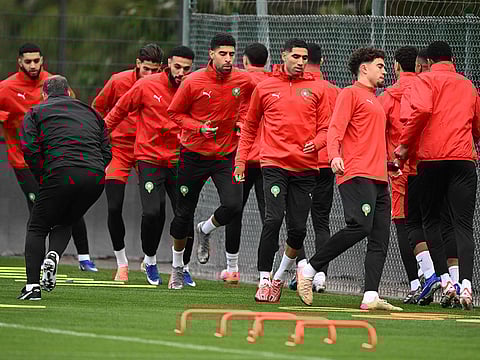
Rabat: The Africa Cup of Nations which concludes in Morocco this weekend has showcased a country now firmly established as a leading footballing force on the pitch and one determined to be a successful co-host of the 2030 World Cup.
On the field, the Atlas Lions have lived up to their billing as favourites and Africa's top-ranked nation by reaching a first AFCON final in 22 years, against Senegal on Sunday.
That was the natural next step for Walid Regragui's side after they became the first ever African and Arab country to reach the World Cup semi-finals in 2022.
"Our objective is to be back here in two years, and again in four years. To do this on a regular basis," said Regragui before the final.
The recent performances by the side captained by African player of the year Achraf Hakimi and ranked 11th in the world add to a long list of successes for other Moroccan teams.
Over the last year they have also won the Arab Cup, the Under-20 World Cup, the Under-17 AFCON and the African Nations Championship.
There was also the men's Olympic bronze medal won in 2024, and there can be optimism about the upcoming World Cup, where Morocco share a group with Brazil, Scotland and Haiti.
But the World Cup after that, in 2030, is the really big one for the North African country as it will co-host that tournament with Spain and Portugal.
They will aim to make a big impact on the pitch, with several members of the current team likely to still feature prominently.
Off it, the evidence of the past month is that Morocco should be ready to host the world.
The Africa Cup of Nations has struggled with organisational issues in the past, not least the 2022 tournament in Cameroon.
The Central African country was initially due to host in 2019 only to be stripped of that edition due to delays with preparations.
When it did go ahead there three years later, a crush at a stadium in Yaounde caused eight deaths. Matches were also moved away from another stadium due to pitch issues.
This time, Confederation of African Football president Patrice Motsepe has boasted of the "world-class" quality of the facilities in Morocco.
Even after losing to the hosts in the semi-finals, Nigeria coach Eric Chelle was full of praise for Morocco's organisation of the tournament.
The pitches have been magnificent, despite heavy rain lashing large parts of the country for much of this rare AFCON to take place in winter conditions.
Construction projects
Infrastructure is in place, notably the Al Boraq high-speed rail network linking Casablanca with the port city of Tangiers - almost 350 kilometres to the north - in barely two hours.
Among the six proposed venues in Morocco for 2030 are the 69,000-seat Prince Moulay Abdellah Stadium in Rabat and a 75,000-capacity ground in Tangiers.
Then there is the new Hassan II Stadium under construction 40 kilometres outside Casablanca.
When AFP visited, the enormous site was closed off by a perimeter wall, with construction workers coming and going outside mixing with agricultural workers on donkey-pulled carts.
Soon a gigantic 115,000-capacity stadium will stand there, a clear sign of Morocco's footballing ambitions.
"We would love to have the (2030) final in Morocco," Motsepe told the Gazzetta dello Sport this week.
Work on the six stadiums will cost around 15.5 billion dirhams ($1.68 billion) according to official figures.
Even more is being invested in improving the rail network, airports and 5G coverage in an attempt to ensure the country is prepared for an avalanche of visitors for the World Cup.
Moroccan media reported FIFA president Gianni Infantino saying last September that the country "could practically host the World Cup today".
One blemish on the AFCON was the issues over ticket sales which led to gates being opened and fans being allowed to flood in for free at certain group games.
And Fouzi Lekjaa, Minister in charge of the Budget and president of the Moroccan Football Federation, warned before the AFCON of the difference in scale of a World Cup.
While the country was expecting at least one million visitors for the Cup of Nations, "for a World Cup it will be more than 10 million", he said.


