England vs Argentina: The story behind one of football's fiercest rivalry
The history behind this World Cup semi-final stretches back decades
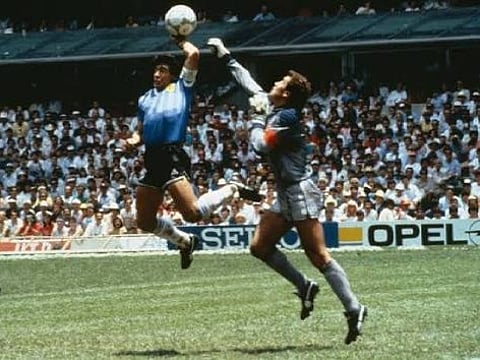
Dubai: England and Argentina will meet for the first time in over two decades in the 2026 FIFA World Cup semi-final on Wednesday night in Atlanta.
With a place in the World Cup final at stake, this fixture could hardly be any bigger, yet the long-standing rivalry between England and Argentina adds an extra layer of intrigue.
The start of a rivalry
The roots of the football rivalry between England and Argentina lie not on the pitch, but in the South Atlantic.
In April 1982, Argentina invaded the Falkland Islands, a British Overseas Territory known in Argentina as the Islas Malvinas, triggering a 10-week conflict with the United Kingdom. The war claimed the lives of more than 900 people before Argentine forces surrendered in June 1982, leaving a lasting political and emotional legacy in both countries.
Although football matches between the two nations had been competitive before then, the Falklands War gave every subsequent meeting far greater significance.
Encounters between England and Argentina came to be viewed through the lens of that conflict, with heightened emotion among players, supporters and the media. More than four decades later, the war remains the defining backdrop to one of international football's most intense and enduring rivalries.
The Hand of God
Just four years after the Falklands War, England and Argentina were drawn together in the quarter-finals of the 1986 World Cup in Mexico.
Given the recent conflict between the two nations, the match carried enormous significance beyond football and quickly became one of the most watched and talked-about games in World Cup history.
It was a contest forever defined by the iconic Diego Maradona. The Argentina captain first scored the infamous "Hand of God" goal, punching the ball into the net with the officials unable to spot the clear infringement.
Just minutes later, he produced what is widely regarded as the greatest goal in World Cup history, weaving past five England players before finishing brilliantly. Argentina claimed a 2-1 victory and went on to win the tournament, while Maradona's two contrasting goals ensured the rivalry would forever occupy a unique place in football folklore.
David Beckham sees red
The rivalry was reignited 12 years later when the nations met again in the round of 16 at the 1998 World Cup in France.
In another fiercely contested encounter, the two sides played out a 2-2 draw before Argentina edged through 4-3 in the penalty shootout. Yet, despite the drama of the match itself, the moment that dominated headlines came midway through the second half.
England midfielder David Beckham, then one of the country's brightest young stars, was sent off after kicking out at Argentina captain Diego Simeone following a foul. Simeone went to ground dramatically, and Beckham's dismissal left England to play with 10 men for more than 70 minutes.
Although England pushed Argentina all the way to penalties, Beckham's red card became the defining image of the match, with the midfielder receiving intense criticism at home before eventually rebuilding his reputation in the years that followed.
More than two decades apart
While history has often favoured Argentina on the biggest World Cup occasions, England head into this latest showdown having won the last two meetings between the sides.
David Beckham gained a measure of redemption for his infamous red card at the 1998 World Cup by scoring the only goal from the penalty spot in England's 1-0 group-stage victory at the 2002 tournament.
More than two decades have passed since England and Argentina last faced each other, with their most recent meeting coming in a friendly in Geneva in November 2005.
That 3-2 victory for the Three Lions remains the last chapter in one of international football's greatest rivalries, meaning this World Cup semi-final will mark the nations' first encounter in over 20 years.


