The Philippines doesn't just vote for policies — it votes for a show
Industrial policy falters when technocrats ignore the theater of Filipino politics

There is a strange disconnect in the Philippines today.
The country's economic elite can spend hours debating corruption, industrial policy, Pax Silica, freeports, the Luzon Economic Corridor, whistleblower protection, semiconductor supply chains, energy security and how to move the economy up the global value chain.
And all of those conversations matter.
But somewhere outside the conference room, another Philippines is scrolling through TikTok, Facebook and YouTube — watching the latest political fight, celebrity controversy, scandal, insult, meme or outrage.
That Philippines will eventually vote: it does not necessarily vote for the person with the best anti-corruption rhetoric or industrial policy.
It votes for the person who makes people feel something.
That is the uncomfortable political economy of the Philippines.
Get it: Fast, verified news for FREE ... download the Gulf News app — simply click here
The Filipino elite is talking about factories: The masses are watching theatre
Consider the current economic conversation.
The government is positioning the Luzon Economic Corridor (LEC) as a platform connecting Subic, Clark, Metro Manila and Batangas through investments in transportation, energy, digital infrastructure and advanced manufacturing.
The objective is not merely to build roads or rail; it is to make Luzon (especially central Luzon and Metro Manila) a more competitive node in global supply chains.
Then comes Pax Silica.
And OMG: One only has to tune in to all the noise, FB posts/replies and crass-mageddon language people use to debate this thing.
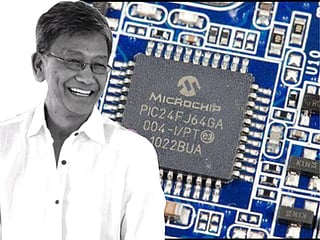
The proposed advanced manufacturing and technology hub in New Clark City has drawn a different level of conversation, from extreme sides of the Filipino elite — activists, policy makers, stars of the academe, OFWs, a Cardinal, a bishop, and policy wonks.
They're all talking above the heads of the common Filipino.
Government officials say the project could attract $40 billion to $70 billion and eventually create more than 130,000 high-quality jobs, particularly in semiconductors, AI, critical minerals and advanced manufacturing.
These are serious ideas.
So is the debate over electricity.
The OECD has identified high electricity prices and recurrent outages as significant constraints on Philippine businesses.
This is the stuff that determines whether a chip factory chooses Clark over Vietnam, Malaysia or Thailand.
It determines whether a Filipino engineer stays in the Philippines or leaves.
It determines whether a manufacturing company can actually compete.
It determines whether a Filipino household pays ₱8, ₱12 or ₱18 for a kilowatt-hour.
Yet none of this is particularly exciting on Facebook.
"Government announces strategy to reduce industrial electricity costs" is not exactly a viral headline.
"Politician X DESTROYS politician Y!" is.
And therein lies the problem.
The Philippines has two political economies
One Philippines thinks in terms of productivity. The other thinks in terms of personality.
One talks about supply chains. The other talks about scandals.
One worries about power transmission. The other worries about who insulted whom.
One asks how to create 130,000 skilled jobs. The other asks: "Ano ang sinabi niya? (What did s/he say?)"
Neither Philippines is imaginary. The second one is simply much larger.
And democracy, ultimately, listens to the larger audience.
This is why Robin Padilla matters
It is tempting for the educated class to look at politicians such as Robin Padilla, the actor-with-bad-boy-image-turned-top-Senator, and wonder how someone whose political persona is built largely around entertainment, controversy and populist rhetoric can command such electoral power.
But perhaps that question is being asked backwards.
The more interesting question is: What does Robin Padilla understand about the Filipino electorate that the technocrats don't?
He understands attention. He understands identity.
He understands emotion. He understands the power of a recognisable face.
He understands that politics is not a PowerPoint presentation.
It is a story.
The same principle applies to Sara Duterte, whose political strength cannot be explained simply through policy positions.
Her political brand is tied to family identity, loyalty, grievance, confrontation and the Duterte political narrative.
Whether one supports or opposes them is almost beside the point.
They understand that politics is theatre before it is economics.
And the Philippine electorate is an enormous audience.
The elite made a category mistake
The Filipino elite can talk all they want about big ideas: Hegel, Marx, Gransci, Renaissance, industrialisation, energy security, economies of scale, etc.
They assume that if voters understood the economic facts, they would make different political choices.
That is a dangerous assumption.
People aren't stupid because they don't spend their evenings reading policy papers.
A minimum-wage worker worrying about rent, food, school fees and electricity bills has a completely rational reason for not caring about the technical architecture of a semiconductor supply chain.
The problem is not that ordinary Filipinos don't understand economics.
They experience economics physically.
They experience it when the electricity bill arrives.
When rice becomes expensive. When a child needs medicine.
When the jeepney fare rises. When there is no decent job nearby.
When the overseas employment agency offers a salary that is five times what a local employer can pay.
For the ordinary Filipino, "industrial policy" is meaningful only when it eventually becomes:
A job.
A cheaper electricity bill.
A higher salary.
A better road.
A factory that doesn't require leaving the country.
This is why Pax Silica faces a communications problem
Pax Silica may be economically significant. But the Latin name sounds like it's something invented by Rome or a Washington think-tank.
"Advanced manufacturing ecosystem." "Critical minerals." "AI value chain." "Supply-chain resilience." "Semiconductor capacity." "Hyperscaling".
These are all technically meaningful, and potential game-changers, but none emotionally compelling.
And critics can easily frame the same project in much simpler terms: Foreigners are coming, farmers/Aetas may lose land, they will use our water, they will consume our electricity. Who really benefits?
Some of those concerns are legitimate and deserve serious answers.
The government itself has acknowledged questions around water, environmental impacts, indigenous rights, mining and regulation.
But notice what happened.
The technocrats have a 20-page economic argument. The Bishop (of a lofty city safe from floods) issues a pastoral letter extolling theological virtues and pronouncing summary execution against "Pax Silica", citing water, electricity, environmental issues. Essentially, a philosopher trying to solve an engineering problem.
Then comes the critic, who rolles out a 15-second TikTok.
Guess who wins the attention war?
The same problem applies to freeports
Freeports and economic zones are another example.
To an economist, they are instruments for attracting capital through infrastructure, tax incentives, streamlined regulation and proximity to ports.
To an ordinary worker, the question is simpler: "May trabaho ba?" (Is there a job for me?)
If the answer is yes, the freeport matters. If the answer is no, the tax incentives to "locators" (dismissed by leftists as crass "capitalists") mean almost nothing.
And if the community sees investors receiving privileges while ordinary people remain poor, resentment follows.
This is why industrial policy cannot simply be pro-business. It has to be visibly pro-Filipino people.
The public must see the connection between the factory and the family.
Between the port and the paycheck. Between the power plant (especially hydro or nuclear) and the electricity bill. Between the economic corridor and remote towns.
Otherwise industrial policy becomes another elite project discussed by people who already have good jobs.
Anger travels. Humiliation travels. Romance travels. Conflict travels. Nationalism travels. Technical policy does not. And here's one reality communicators must get today: the algorithm does not care whether a policy increases 'total factor productivity'. It cares whether people stop scrolling. And that changes politics.
The whistleblower question reveals the same disconnect
The elite can debate whistleblower legislation as an institutional reform.
And it should. Countries cannot build sophisticated economies on corruption, elite capture and fear of retaliation.
Investors need predictable rules. Employees need protection when they expose wrongdoing.
Government agencies need mechanisms to detect corruption before it becomes systemic.
But again, the ordinary Filipino may not think: "We need a stronger institutional architecture for protected disclosures."
He thinks: "May nakulong ba?" (Did anyone go to jail?)
"May ninakaw ba?" (Did someone steal?)
"May nabawi ba?" (Was there anything recovered?)
"May naparusahan ba?" (Was anyone penalised?)
A reform that is technically excellent but politically invisible can lose to a politician who simply points at an enemy and says: "Magnanakaw!" (thief/plunderer!)
Theatre wins because theatre compresses complexity. One-liners and troll farms win because they weaponise simplicity.
Filipinos are angry about the complex web of corruption. They're angry about high electricity rates and low-paying jobs.
They feel humiliated by their passport's lack of power compared to neighbours like Singapore, Malaysia.
Theatre gives complexity a face. One-liners and troll farms win because they give anger a target (even if that anger is sometimes misdirected).
One-liners and troll farms win because they hijack attention before facts can catch up.
Social media has changed the political battlefield
This is perhaps the most important part of the story. Politics used to require news printed on dead trees, TV networks, rallies and political machinery.
Now a politician needs a camera and a provocative sentence.
The political unit is no longer the speech: Rather, it is the clip, a short reel. A one-liner.
A 20-second video can travel farther than a 200-page economic strategy.
Anger travels. Humiliation travels. Romance travels. Conflict travels. Nationalism travels.
Technical policy does not.
And here's one reality communicators must get today: the algorithm does not care whether a policy increases "total-factor productivity", or is driven by "whole-of-nation" approach.
It cares whether people stop scrolling. And that changes politics.
The politician who understands attention can crush the leader who understands infrastructure.
This doesn't mean Filipinos are incapable of serious politics
That would be an insulting conclusion. Filipinos are perfectly capable of discussing serious issues.
They care deeply about corruption, jobs, inflation, education, national sovereignty, crime and government efficiency.
But attention is scarce.
And politicians compete for it.
A citizen may spend 10 minutes watching a video about a political feud and then spend 10 seconds reading about an economic corridor.
That does not mean the citizen doesn't care about jobs. It means the political system has learned how to package emotion far more effectively than it packages policy.
This is why Gen-Z and Gen-Alpha socmed whiz kids matter in any campaign today — and the Philippines has no shortage of them.
The technocrats have to learn the language of the street
This is where the Philippine elite needs to change.
Don't explain Pax Silica as: "An advanced manufacturing ecosystem integrated into strategic global value chains."
Explain it as: "How do we create Filipino jobs that pay enough so your children don't have to leave the country?"
Don't explain the Luzon Economic Corridor (LEC) as a "geopolitical infrastructure initiative".
Explain it as: "How do we make it cheaper and faster to move products and people from Batangas to Clark — and back — and therefore make Philippine factories competitive?"
Don't talk about electricity reform as "market architecture" or "bolstering energy security".
Say: "Why does your electricity cost so much, and what are we going to do about it?"
Don't sell whistleblower protection as "institutional reform".
Say: "If an employee exposes corruption, will the law protect him from being fired, harassed or killed?"
Now you have politics.
The deeper problem is that the Filipino elite has sometimes treated communication as an afterthought. It assumes good policy will eventually speak for itself. It won't.
The real failure is not populism
The deeper problem is that the Filipino elite has sometimes treated communication as an afterthought.
It assumes good policy will eventually speak for itself. It won't.
A semiconductor plant doesn't vote. A freeport doesn't vote. A hydropower plant or electricity "grid" doesn't vote. An economic corridor doesn't vote.
People vote. And people need to understand why these projects matter to them.
If the government cannot make that connection, someone else will make the connection for them — usually through fear, anger, tribalism or conspiracy.
That is how a complicated economic project becomes a culture-war issue.
The Philippines cannot industrialise by technocracy alone
This is the uncomfortable truth. The country needs industrial policy. And it needs one badly.
It needs infrastructure. It needs cheaper and more reliable electricity. It needs competitive ports and logistics. It needs investment. It needs better institutions.
It needs freeports that actually generate broad-based employment. It needs stronger protection for people who expose corruption.
It needs the Luzon Economic Corridor.
And potentially, if properly governed, it needs Pax Silica.
But none of those things will survive politically unless ordinary Filipinos feel the benefits.
And that means the technocrats need to enter the arena where the people actually live: Facebook. TikTok. YouTube. Radio. Barangay halls. Jeepneys. Marketplaces. Conversations over coffee.
The answer isn't to dumb down policy.
It is to translate policy into everyday life.
Because democracy is not a seminar
The Filipino elite — academics, entertainers, leftists, rightists, clergy, policymakers — can continue debating whether Pax Silica is brilliant or dangerous.
It can debate whether freeports create market distortions.
It can debate whether the Luzon Economic Corridor is transformative or overhyped.
It can debate industrial policy versus free markets till the cows go home. It can debate whistleblower legislation.
Meanwhile, someone will upload a 30-second video of a politician shouting at another politician. Millions will watch.
And tomorrow, that may matter more to the ballot box than the finest economic strategy ever written.
That is not because Filipinos are stupid.
It is because politics is ultimately about attention, identity and emotion — not just policy efficiency.
The Filipino elite has to accept that reality.
You cannot lecture people into supporting industrialisation. You have to make them see themselves in it. Give them the factory. Give them the job. Give them reliable electricity. Give them a reason to believe their children can build a future at home. Then tell the story.
You cannot lecture people into supporting industrialisation. You have to make them see themselves in it.
Give them the factory.
Give them the job.
Give them reliable/affordable electricity.
Give them a reason to believe their children can build a future at home (insetad of fleeing for better-paying jobs overseas).
Then tell the story.
Because until the Filipino worker can look at Pax Silica, the Luzon Economic Corridor, a freeport or an energy project and say "May pakinabang ako rito" ("There's something in it for me"), the policy will remain an elite conversation.
And the people will keep scrolling — looking for the next fight, the next scandal, the next celebrity, the next political drama, the next viral video.
The elite may have the better arguments. But the populists have learned the better language.
And in a democracy, the person who controls the conversation eventually gets a say in who controls the country.