Why countries change their currency — and what Syria’s move really means
Currency reform can send powerful signals, but stability depends on deeper economic policy
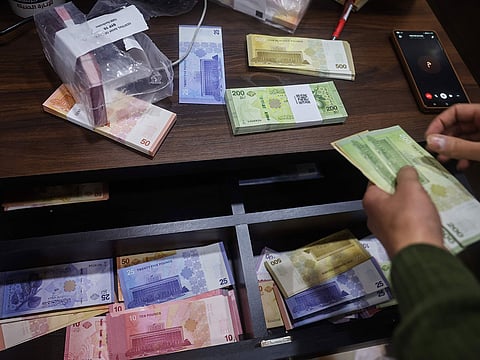
Money is a tool for citizens, institutions, and governments. It facilitates buying and selling within a country and enables transactions in foreign markets. However, it may fail to perform this role when its value collapses and people turn to stronger, more widely accepted currencies in international markets. For this reason, countries sometimes resort to changing their currency, replacing old notes with new ones to restore value or to mark the beginning of a new political phase and the end of a previous one, as is currently the case in Syria.
Around the world, many countries have experimented with currency changes, with varying degrees of success. Economically, governments often take this step when monetary conditions deteriorate and inflation accelerates. Currency change has also been used to combat counterfeiting, terrorism financing, and tax evasion, since criminal groups are usually unable to exchange old currency through official channels. Once a currency is withdrawn, illicit cash loses its value. In other cases, currency change reflects the adoption of a new monetary standard, whether within a unified currency framework of an economic bloc or following separation from one. At times, currency change is primarily a political decision, signaling the start of a new era after major crises, wars, or political transitions, with the currency symbolising the beginning of a different phase.
Combating crime
Some experiences have benefited from currency change, particularly in combating crime, strengthening monetary unity, and exposing tax evasion. It can also support a shift toward a less cash-based economy by slowing the circulation of physical money and encouraging greater use of digital financial options. However, when deciding to change a currency, governments must consider the costs of printing banknotes and minting coins, the expense of withdrawing old currency from circulation, and the feasibility of implementing the change efficiently.
Currency change alone is not sufficient to eliminate crime. It may fail to curb criminal activity if criminals hold assets other than cash. It is also important to consider the potential disruption to citizens and general confusion if the process is not carefully planned and professionally executed. This includes managing spending during the transition to the new currency, limiting the flow of old currency without harming daily life or economic activity, and establishing mechanisms to convert existing financial contracts into the new currency framework.
Technical requirements
The design of a new currency carries political messages and reflects the country’s ideological orientation at a given moment. Banknotes must meet technical requirements that make counterfeiting difficult and costly while ensuring ease of identification, clear denomination, and the inclusion of dates and serial numbers. Central banks may choose to retain the same currency while changing banknotes or to replace it entirely with a new currency, a new exchange rate, and possibly a new name. This process is regulated through laws governing foreign exchange reserves to strengthen economic confidence and address domestic and international challenges to achieve stability.
Issuing a new currency does not inevitably lead to financial stability. It requires sound fiscal policies and a supportive economic environment alongside the new currency. Without such policies, the new currency may quickly lose credibility. Central banks’ ability to achieve stability depends on overall macroeconomic conditions, not only on a technical or cosmetic change in currency. The credibility and strength of a new currency depend on a flexible and unified exchange rate, convertibility into other currencies, and easing restrictions on international transactions to enable integration into the global economy. This, in turn, requires efficient management of the foreign exchange market by the central bank, oversight of exchange offices and banks, clear principles for market intervention and international reserve management, and political and security stability.
Syria’s new currency
As part of a broader effort to restructure politics and the economy and usher in a new phase, the Syrian administration sought to reflect this shift in the design of the new currency. It avoided historical and cultural symbols, instead featuring flowers, butterflies, trees, birds, animals, and crops, referencing Syria’s agricultural and natural identity while setting aside other heritage and archaeological elements.
The Syrian economy has suffered for years and faces challenges that are difficult to resolve in the short term. The country confronts obstacles that will require years of funding and a sustained reconstruction process. The administration points to Syria’s geopolitical position and the regional and international acceptance of the changes that took place in December 2024. Replacing the currency and removing zeros are steps toward economic improvement, but they do not in themselves mean a serious beginning. Even if an old phase has ended, trust in the new administration will require time and tangible results. Likewise, the new form of the Syrian pound requires confidence and economic policies that boost production and reduce unemployment.
Limited tools
Under normal circumstances, replacing the old currency and removing two zeros is an attempt to simplify transactions and move into a new phase in which the economy may improve, after confidence in the Syrian pound was lost. The central bank is responsible for Syria’s monetary policy to stabilise the economy, but its tools for managing crises are limited. The new administration is therefore relying on external assistance or investment across various sectors of the country’s economy.
Changing the appearance of the currency is essentially a ‘technical process.’ It does not alter the value of the pound but only removes zeros to facilitate transactions. This step aims to overcome challenges and enter a banking system that keeps pace with global financial developments, eventually moving toward a digital payments system. The goal is a monetary policy focused on price stability, a balanced and transparent foreign exchange market, and integration into the global economy.
Manage liquidity
Through the currency redesign, the Syrian administration seeks to manage liquidity and absorb hyperinflation by controlling the volume of money in the market. This process forces financial disclosure, potentially dismantles networks of influence through oversight, and limits illicit and criminal funds. However, delaying the currency change for a full year after the political shift in Syria may prevent it from fully achieving its goals, especially if various influential actors have already invested their funds in fixed and movable assets during that period.
The Syrian administration has completed a year marked by international openness toward the new leadership and the lifting of sanctions. But reality cannot be fixed through currency change alone. The path to combating inflation and weak agricultural and industrial production is long and requires deep reforms to address the effects of previous monetary policies and to mitigate the disruptions caused by currency transition. At the core of Syria’s economic crisis are low production and weak investment. The political message behind currency change must be accompanied by economic policies that signal a new phase, restore citizens’ trust, and ease living pressures. This is particularly important at a time of slowing economic activity, stalled reconstruction efforts, and ongoing security instability that continues to hinder both citizens’ lives and investment.
Hessa Abdulla AlNuaimi is Assistant Researcher at TRENDS Research & Advisory


