When holidays meant leaving everything behind
There was a time when switching off wasn't a choice - it was simply life
When I was growing up, holidays did not begin with a boarding pass.
They began in the last few days of school, when nothing in class really mattered anymore. Something would shift. Books still being packed, signatures exchanged, classrooms noisier than usual, as if the year had already loosened its grip. The final day was often a ruckus — desks banging, shouting, laughter spilling everywhere. Not great behaviour, perhaps, but nobody really minded. It felt like release.
After that, holidays fell into two simple patterns. Some stayed back at home — long, unplanned days where neighbours drifted in, cousins appeared, and nothing needed to be arranged. Time just unfolded.
Others travelled.
Suitcases came out — old canvas holdall’s softened by years of use. Bedding, pillows, sheets pressed down until everything fitted, slippers tucked into corners. The same ritual every year. Alongside it came the small essentials: Anacin, a thermometer, a few bandages , mercurochrome. No phones, no tablets, no internet. No sunscreen bottles or multivitamins either. Just the basics. And it was enough.
Once you left, you were gone.
Travelling light
We travelled light. A rubber or tennis ball, Ludo, a chessboard, cards, badminton rackets, a few books we told ourselves we would read. Some boys always carried a catapult. Keds — what we now call sneakers — and rubber slippers. T-shirts, shorts, wash and wear. Everything else was already waiting outside — friends, open spaces, games that began the moment someone turned up.
Holiday homework existed, but it never weighed much. A few essays, some sums, tables, a book to read and summarise. Most of it was done before the holiday had even properly begun.
The adults had their own rhythm — books instead of screens, knitting, recipe notes, food wrapped and carried for later sharing. Even the preparation felt like part of the break.
Then came the train.
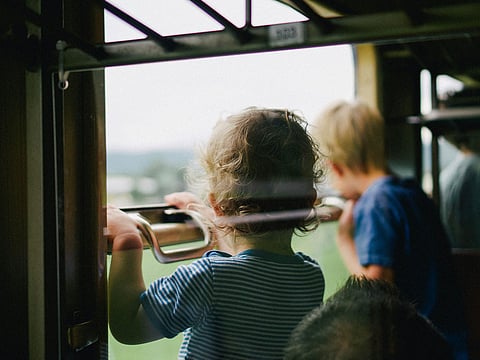
Not just travel, but transition. The rush for seats, the slow pull out of the station, the whistle and the black smoke, and then hours of changing views outside the window — fields, small stations, stretches of light and dust. Inside, everything moved together: tea sellers calling out, snack vendors passing through, toy sellers, the occasional beggar, and the ticket collector moving quietly along the aisle. Just the noise of people, movement, and time passing.
No headphones, no screens, no private world to slip into. Just the compartment, the delays, and everyone in it together. It never felt like something to escape.
Holiday begins
Only after that journey did the holiday properly begin.
Pound parties where everyone brought food and there was always too much. Potlucks with no planning. Picnics by rivers, parks, anywhere with shade and space. Food was never the concern.
At home, there was always a box of games — Ludo, chess, snakes and ladders, draughts. Monopoly that could swallow an afternoon. Carroms with talcum powder dusting the board and fingers. Days moved slowly. Afternoons ended in sleep, newspapers slipping from laps. Conversations came and went. A radio somewhere. Sometimes a guitar.
Evenings arrived without announcement. Children played with whoever was around. Friendships formed quickly, faded just as easily. Summer romances too — brief, intense, and gone without ceremony. It was also a time when you met family or grandparents after a year or more and noticed, almost without comment, how everyone had changed. Time had done its work quietly.
There was no need to stay connected to anything. No pressure to respond. No sense of being elsewhere. We didn’t call it switching off. It was simply life.
Even electricity would give way at times — on trains, during holidays—and nobody thought much of it. It belonged to the rhythm.
No structured programmes
There were no summer camps or structured programmes. No schedules shaping the break. You simply figured it out as you went along.
Today, everything travels with us. We arrive, but rarely arrive empty. And perhaps that is what has changed. Not the places, not the journeys — but the fact that we are never fully where we are. Nobody was performing their holiday or taking photos for Instagram - they were just living it.
And what lingers now is simpler than memory itself — the feeling of being nowhere else, needing nothing else, and not even thinking about it.
Michael Guzder is Executive Vice-President ‑ Education at GEMS


