US must stay the course in Afghanistan
Obama may think pulling out would help him win re-election, but in the long run this will hurt his country
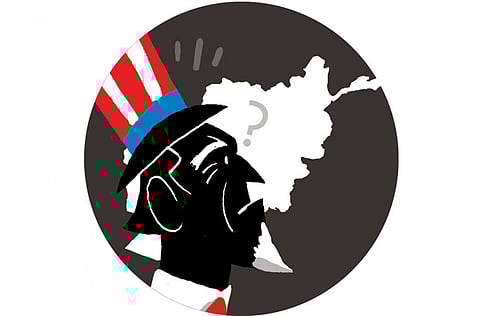
The US prides itself on having a democratic political structure, with checks and balances and a system in place to allow citizens to exercise their voting rights. Yet this same political structure has at times proven detrimental to the country's interests.
This becomes the case when policymakers take decisions, both at the domestic and foreign level, not based on rational calculations to advance the interest of the country, but based on what is ‘popular' among the public.
Throughout history, US presidents have made crucial political and military decisions with far-reaching implications to advance their chances of being elected. It is widely believed that George H.W. Bush won election by pledging not to tax the American people.
The now famous phrase, "Read my lips: no new taxes", has became infamous and resonated with the public consciousness, helping him get elected. This left his successor, former president Bill Clinton, to inherit a budget deficit.
Similarly, current President Barack Obama may be eager to hastily withdraw from Afghanistan in order to fulfil his campaign pledge and get re-elected. The war is indeed becoming increasingly unpopular, and the American public is growing resentful as the war drags on.
The US involvement in Afghanistan has now exceeded the time spent in Vietnam, becoming the longest-running war in US history. According to a Washington Post/ABC News poll, 53 per cent of respondents said the war is "not worth fighting", and 39 per cent believed that Washington is losing the war.
Growing discontent
The public's perception is correlating with a worsening situation on the ground. June was the bloodiest month for coalition forces since the beginning of the conflict, with nearly 100 Nato soldiers killed.
The rising death toll, a draining $7 billion (Dh25.7 billion) a month budget and signs of internal division between top-level US policymakers on Afghanistan is increasing the sense of uncertainty among Americans.
US General Stanley McChrystal, sacked for racy remarks published in the Rolling Stone article ‘The Runaway General', may have gone too far by mocking top officials, but that does not diminish his credentials. McChrystal devised the Afghan strategy and was one of the few US military officials with ‘open access' to Afghan President Hamid Karzai.
Early in June, McChrystal presented ministers from Nato and the International Security Assistance Force with a frank assessment of the situation in Afghanistan. The presentation signalled that the US war in Afghanistan is close to failing. According to the presentation, both the Afghan police and the army lack adequate training and suffer from a critical shortage of manpower.
The Afghan government has no control over 15 districts and is weak in 74 others. The Afghan government's grip on the country overall was described as "ineffective", leaving over half of the residents of key areas at risk. Corruption was identified as the main hurdle to stability, while the justice system in the country, which the US State Department described as "chronically corrupt", also lacked transparency.
The assessment clearly illustrates the difficulties in maintaining a general sense of stability in Afghanistan, let alone creating a situation conducive to an orderly transition of power. Sadly, however, in his re-election campaign in 2012 Obama will likely use ‘we will bring the troops home' as a slogan to secure a political victory, abandoning Afghanistan and its corrupt government, fragile leadership and broken economy.
General David Petraeus, who took over as commander of US forces in Afghanistan, has emphasised the need for a cautious and "responsible" exit. Overall, he has not veered far from McChrystal's position. Regarding the US campaign in Afghanistan, McChrystal had warned that there is "a low level of confidence that positive trends will be sustained over the next six-month period".
Similarly, when asked by the Senate Committee to give his assessment of the situation, Petraeus warned: "My sense is that the tough fighting will continue; indeed, it may get more intense in the next few months". He went on to describe the security situation in the country as being "tenuous, with instability fuelled by a resilient and still confident insurgency, tribal tensions, political challenges, and competition for influence in the future".
Ironic position
Given this assessment, it appears starkly contradictory for the same general to endorse a July 2012 troop drawdown.
The fact that the American public is tired of the war in Afghanistan is understandable, particularly when the war's allocated budget could be used domestically to fund educational, employment and health-care projects, as well as other social initiatives that have been cut or greatly reduced as a consequence of the Afghan and Iraq wars and the financial crisis.
However, the fact remains that the US has invaded Afghanistan and its leadership has a moral and political obligation to follow through and take responsibility for their actions.
Obama should not rush to make decisions based on immediate political gains, because a strong US commitment in Afghanistan will ultimately serve US interests and strengthen its legitimacy abroad. This would boost his legacy.
Dina Khanat is an Arab-American writer currently residing in Dubai.


