UAE needs Emirati journalists
Media should work with country's colleges to encourage students
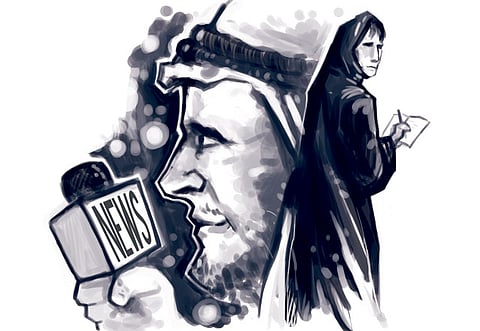
Last week an important debate at the Federal National Council (FNC) focused on the importance of having more Emiratis working in the media. Several FNC members spoke of their concerns, including the "meagre" number of Emiratis working in the media, a dominance of foreign content, and the importance of promoting the UAE's cultural and national identity. There is no doubt that the proportion of Emiratis is low, and there is no doubt that this is wrong. The challenge facing the media is how to solve this problem.
A very large part of the answer is in working with the country's colleges to produce more students who have studied journalism. The problem is that all the journalism courses in the country are producing only a few tens of journalism graduates, while the UAE has about 1,000 editorial jobs in the main newspaper companies, and if there is a 10 per cent turnover, there will be about 100 vacancies a year. The supply does not meet the demand.
In addition, there is no getting away from the fact that media companies compete for those few students with some in-built disincentives which cannot be wished away. Working in the media requires long hours, often unpredictable timings, in a profession that does not pay as well as many others. This is why media companies need to start better graduate recruitment programmes, with mentoring and specialised training (that probably many non-Emiratis could also benefit from as well).
When I came back to the UAE 15 years ago as editor of Gulf News, I spoke at a career seminar in Dubai Women's College, and was asked by the Emirati students that as a foreigner working in the UAE what would I feel if a UAE national was to take my job as editor. My reply was politically correct: I said that I would be delighted when one of the students in front of me was ready for the task, and that as a professional in a fast growing economy I would be able to find another job.
My correctness was tested much later when I was moved from the editorship, but I am still here and enjoying my work.
The point of that story is that the present majority of foreign journalists and editors working in the UAE media should not feel threatened by Emiratis coming into the profession. The UAE has the fortune to be a successful economy and there is a lot of work for all to do, so the real challenge is not preserving the existing staff, but how to encourage more Emiratis to come into the media.
It is important that the communication faculties in the colleges and universities attract more students to study journalism. It is only through journalism that the writer defines the story whether it is written for a newspaper or the internet, or spoken on the radio, or told to a TV camera, does not make a difference. The words tell the story.
The journalist defines the debate. The reporter and the news editor define news every day by writing or ignoring something. They can make a story a major splash and have the whole country talk about it, or they can bury it as a small afterthought. They can pursue an issue till they get a change, or they can drop it. It is important that Emiratis are part of that process.
But progress is being made. In 15 years at Gulf News, I have seen hundreds of young Emirati students pass through our offices, making important contributions to the newspaper while also learning vital life skills. It has been an essential part of what we do as a large media house, and even if many reporters take their new skills and move on to new jobs.
Staff leaving may not help our emiratisation numbers, but these skills are not lost to the country: alumnae of Gulf News have gone into all sorts of professions, carrying with them the professional journalistic training that they acquired at the newspaper.
One example was 12 years ago when Gulf News had a very determined student from Dubai Women's College who worked as a photographer in the evenings when her course work was over. One night there was a drama at the Dubai Chamber of Commerce and Industry, when Saeed Al Naboodah wanted to resign as president. The press converged on the Chamber, but the meeting moved to Al Naboodah's private majlis to discuss what to do, and the press waited outside till late into the evening.
When the news was about to be announced, the young Emirati photographer froze in horror at the thought of entering a man's majlis. But when Al Naboodah heard of this, he stopped the meeting, invited the photographer in, and complimented her on her profession. She was received with great respect by the leaders of her own community, who welcomed her choice of work. Gulf News might have got the picture that night, but the young student got a life-changing boost to her confidence, which she will never lose.
It is inevitable and right that more Emiratis come into the media. They have to be part of defining the news agenda and the social debate. We all have to work to help this happen, without fear, and with great confidence.


