Thailand: In search of a middle ground
A minority cannot win legitimacy by repeatedly disenfranchising the majority
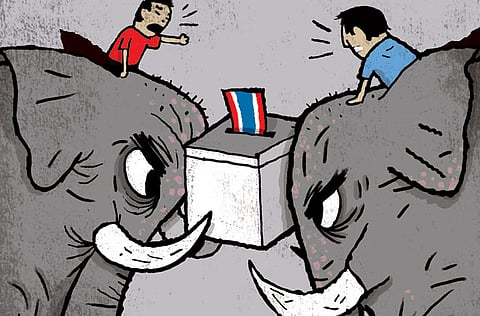
By boycotting and disrupting last Sunday’s elections in Thailand, opposition protesters made sure that Prime Minister Yingluck Shinawatra could not form a new government. Now it is time they admitted that they cannot either.
Last Sunday’s vote was over before it started. Demonstrators had earlier blocked candidates from registering in 28 constituencies — enough to prevent any new Parliament from achieving a quorum. The largest opposition party, the Democrats, boycotted the polls entirely, thus casting doubt on the legitimacy of any victory for Shinawatra’s Pheu Thai party. On last Sunday itself, protesters disrupted voting in 11 per cent of polling stations, which means months of bye-elections may be required before a full parliament can be seated.
That appears to be the opposition’s primary, if nihilistic goal: To drag out the process of certifying the election as long as possible. In the meantime, various anti-corruption bodies are rushing ahead with politically inspired corruption and impeachment charges against Shinawatra and her party’s lawmakers. If those agencies toss out Pheu Thai, protest leaders say they will form a caretaker government of “wise men” to institute unspecified political reforms and then will hold new elections.
This is a fantasy. While turnout was low, partly because no races were run in certain constituencies, more than 20 million Thais voted last Sunday. Some probably supported one of the many smaller parties that agreed, unlike the Democrats, to put forward candidates. Others no doubt voted “none of the above” (an option in Thailand that other countries may do well to emulate).
However, it is impossible to believe that the bulk of them — Pheu Thai supporters, who have seen two previous elected governments led by Yingluck’s elder brother Thaksin Shinawatra ousted in the past decade — will be content to wait around tamely with the hope that they will have another chance at the ballot box. Even if these largely poor and rural voters are dupes as the opposition claims, bribed by promises of free health care and government subsidies, they have grown accustomed to having their voice heard in national politics. They will not tolerate having those voices silenced, while Bangkok elites go back to ordering the affairs of the country.
Opposition supporters scoff at talk of widespread disturbances, even a possible north-south civil war. And it is true that Pheu Thai’s popularity has softened due to the government’s mismanagement of the economy and a multibillion dollar rice-subsidy scheme. Regardless, any undemocratic ouster of the existing government will only redouble its support. It will certainly not take much for angry Shinawatra loyalists to gin up at least as much chaos as opposition protesters have in the last few months.
The truth is that any judicial “victory” for the opposition that does not result in stability and widely shared confidence will be no victory at all. Investors — who have yanked nearly $5 billion (Dh18.39 billion) out of Thai equities and bonds in the last three months — will continue to flee, perhaps even faster as the Federal Reserve tapers its easy-money policy. Growth rates that have already been cut twice in recent weeks would stay anaemic. Meanwhile, neighbours like Myanmar and Vietnam will continue to race ahead.
Some have speculated that the real goal of opposition leaders may be to ensure that they and not the Shinawatras are in power when the ailing, 86-year-old King Bhumibol Adulyadej passes away, so as to influence the succession. Even that, however, will not alter Thailand’s demographic realities. Rising aspirations among rural and newly urbanised Thais can no longer be suppressed, no matter who sits on the throne.
A middle ground exists if both camps recognise the need to find a negotiated way forward. But first they need to admit — to themselves as well as to their followers — that neither side can plunge ahead on its own. A popular majority cannot rely on the ballot box to drown out the legitimate concerns of the minority. A minority cannot win legitimacy by repeatedly disenfranchising the majority. Until they acknowledge these basic and unexceptionable facts, they and Thailand can only lose.
— Washington Post


