Racism that fuels the ‘war on terror’
Perception that state violence affects only Muslims has long stopped being true
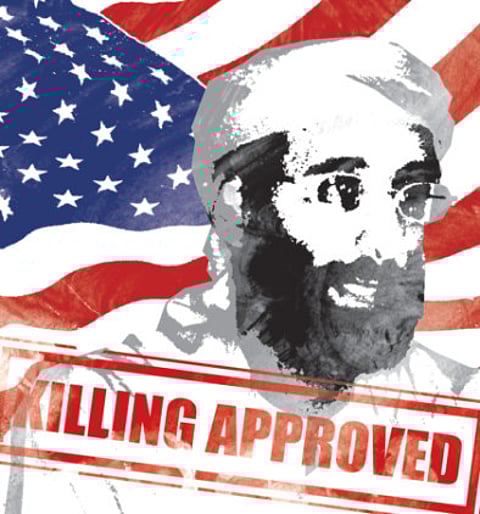
A new Gallup poll released last Monday had a surprising finding: Majority of Americans — while supporting air strikes in foreign countries against foreign nationals suspected of terrorism — opposed such air strikes when used to target US citizens, who are suspected terrorists, whether at home or on foreign soil.
The reason this is surprising is that when the US actually killed a US citizen on foreign soil on the grounds that he was a suspected terrorist — Anwar Al Awlaki — a large majority had approved it.
One poll at the time reported that “a large proportion of Americans believe the US Government made the correct decision in killing a US-born Islamist militant in a drone strike last month” — specifically, that “69 per cent of respondents think the action taken by the US Government to kill Anwar Al Awlaki was justified” (that included 77 per cent Republicans and 73 per cent Democrats approving).
Another poll at the time reported that Obama’s approval ratings on national security increased eight points in the wake of the Al Awlaki killing.
Meanwhile, Obama aides ran to Politico to boast that Al Awlaki’s corpse would be a significant asset in Obama’s re-election bid, leading to this Politico headline: What can explain this obvious discrepancy? How can it be that a policy which a majority of Americans oppose (killing Americans on foreign soil on the grounds of suspected terrorism) was so popular and politically beneficial for Obama when it was actually done to Al Awlaki?
I’m not speaking here about those who support the US Government’s right to kill US citizens on foreign soil without a trial: People who believe that and support Al Awlaki are at least being consistent. I am focusing here on how it can be that a majority of Americans say they oppose having Americans so targeted on foreign soil and yet support the Al Awlaki killing.
There are several possible factors explaining this discrepancy. It is probably easier to oppose such killings when considered in the abstract than it is when asked specifically about a person like Al Awlaki, who had been subjected to such an intense government and media demonisation campaign.
It is also possible that intervening events between these polls — particularly the Rand Paul filibuster — created unprecedented media debate about the dangers of Obama’s claimed assassination powers and caused people to re-think their wisdom (that was the ground cited by the ACLU’s Laura Murphy when she praised Paul’s protest: “As a result of Senator Paul’s historic filibuster, civil liberties got two wins: ... Americans learned about the breathtakingly broad claims of executive authority undergirding the Obama administration’s vast killing programme”).
However, it seems clear there is a much more odious factor driving some of this. Many Americans can (a) say that they oppose the targeted killings of Americans on foreign soil while simultaneously (b) supporting the killing of Al Awlaki in Yemen because, for them, the term “Americans” does not include people like Al Awlaki.
“Americans” means their aunts and uncles, their nice neighbours down the street and anyone else who looks like them, who looks and seems “American”. They do not think those people — Americans — should be killed without charges by the US Government, if they travel on vacation to Paris or go to study for a semester in London.
But the concept of “Americans” most definitely does not include people with foreign and Muslim-ish names like ‘Anwar Al Awlaki’, who wear the white robes of a Muslim imam and spend time in a place like Yemen.
Legally — which is the only way that matters for this question — the New-Mexico-born Al Awlaki was every bit as much of an American citizen as the nice couple down the street. His citizenship was never legally revoked. He never formally renounced it. He was never charged with, let alone convicted of, any crime that could lead to the revocation of citizenship. No court ever considered revoking his citizenship, let alone doing so.
From a legal and constitutional perspective, there was not a single person “more American” than he. That is because those gradations of citizenship do not exist. One is either an American citizen or one is not. There is no such thing as “more American” or “less American”, nor can one’s citizenship be revoked by presidential decree. This does not exist.
But the effort to depict Muslims as something other than “real Americans” has long been a centrepiece of the US political climate in the era of the ‘war on terror’.
When it was first revealed in 2005 that the George W. Bush administration was spying on the communications of Americans without the warrants required by criminal law, a Bush White House spokesman sought to assure everyone that this was not targeting Real Americans, but only those “bad ones” that should be surveilled (meaning Muslims the Bush administration decided, without due process, were guilty): “This is a limited programme. This is not about monitoring phone calls designed to arrange Little League practice or what to bring to a potluck dinner. These are designed to monitor calls from very bad people to very bad people who have a history of blowing up commuter trains, weddings and churches.”
Identically, when the Israelis attacked the Mavi Marmara flotilla in 2010 and killed nine people, including the US-born teenager Furkan Dogan, some conservatives insisted that he was not a “real American” because his parents were Turkish and he grew up in Turkey (“it is silly to call him an ‘American of Turkish descent’.
He, like the other members of his family, was a Turk”). The stark contrast in reactions between the sustained fury of the Turkish government over the killing of their citizens by the Israelis versus the support for those killings given by the US government was accounted for in part by the blind US support for whatever Israel does (including killing Americans), but also by the belief that Dogan was not really an American, not the “real” kind you get upset about.
This decade-long othering of Muslims — a process necessary to sustain public support for their continuous killing, imprisonment and various forms of rights abridgments — has taken its toll. I am most certainly not to suggest that anyone who supports Al Awlaki’s killing is driven by racism or anti-Muslim bigotry.
I am suggesting that the belief that Muslims are somehow less American, or even less human, is widespread, and is a substantial factor in explaining the discrepancy I began by identifying.
Does anyone doubt that if Obama’s bombs were killing nice white British teenagers or smiling blond Swiss infants — rather than unnamed Yemenis, Pakistanis, Afghans and Somalis — that the reaction to this sustained killing would be drastically different? Does anyone doubt that if his overhead buzzing drones were terrorising western European nations, rather than predominantly Muslim ones, the horror of them would be much easier to grasp?
Does it really take any debate to know that if the 16-year-old American suspiciously killed by the US Government, two weeks after killing his father, had been Jimmy Martin in Sweden rather than Abdul Rahman Al Awlaki in Yemen, the media interest and public outcry would be far more substantial and Robert Gibbs would have been widely scorned if he had offered this vile blame-the-victim justification for killing Jimmy rather than Abdul Rahman?
It is indisputably true that — just as conservatives argued that Furkan was not a Real American — large numbers of Americans believe the same about the Denver-born teenager named Abdul Rahman. This ugly mindset is not the only factor that leads the US public to support more than a decade of US killing and rights abridgments aimed primarily at Muslims, including their fellow citizens, but it is certainly a significant one.
Amazingly, some Democratic partisans, in order to belittle these injustices, like to claim that only those who enjoy the luxury of racial and socioeconomic privilege would care so much about these issues.
That claim is supremely ironic. It reverses reality. That type of privilege is not what leads one to care about and work against these injustices. To the contrary, it is exactly that privilege that causes one to dismiss concerns over these injustices and mock and scorn those who work against them.
The people who insist that these abuses are insignificant and get too much attention are not the ones affected by them, because they are not Muslim and thus do not care.
The perception that state violence, rights abridgments and expansions of government power ushered in by the ‘war on terror’ affect only Muslims long ago stopped being true. However, ensuring that people continue to believe that is the key reason why it has been permitted to continue for so long.
The New Jersey Star Ledger recently had an excellent interview with City University of New York professor Diala Shamas, who just co-authored a new report on the devastating impact of the New York Police Department’s (NYPD) shockingly invasive and indsicriminate surveillance programme aimed at Muslim communities in New York and New Jersey.
She documents in particular how this type of surveillance, aimed at innocent Muslims, creates an intense climate of fear and chills political speech. Will anyone tolerate having such sweeping surveillance programmes infiltrating Jewish or Christian communities in the US (I once asked this question of leading New York mayoral candidate, Christine Quinn, who supports the NYPD programme, and she refused to answer)? The answer is obvious: Of course not. That is the point.
Guardian News & Media Ltd


