Pakistanis need more than lip service
While the population suffers, the country's policies are not geared towards alleviating their plight
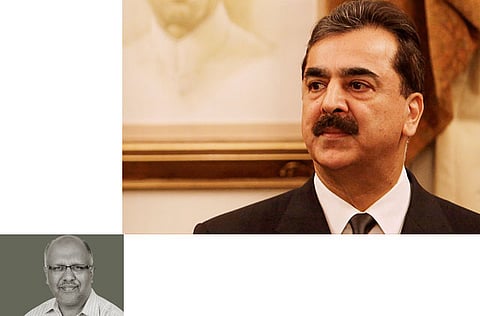
Pakistan's Prime Minister Yousuf Raza Gilani Saturday ventured to the country's flood-stricken zone, following his decision to cancel a trip to New York, ostensibly to supervise relief work for the victims of this year's monsoon-related devastation.
It would have been a truly noble effort if indeed Gilani and the ruling order that he represents had not already been caught in controversy. Yet, Gilani's decision on Friday to cancel his trip came hours after a Pakistani newspaper reported the controversy surrounding his travel plans.
According to the report, while visiting New York Gilani would have hardly seen any heads of state or governments who are consequential for Pakistan's vital interests except for Iran's President Mahmoud Ahmadinejad.
The controversy also deepened when it was reported that the prime minister planned to take up to 80 people in his contingent — one of the largest-ever to accompany a Pakistani leader on an overseas trip. For those looking at Pakistan from the outside, this would have sent out a terrible message. At a time when parts of Pakistan are deluged by floods and up to five million people are displaced, such lavish spending on an overseas trip would have been impossible to justify.
The move to cancel this latest trip follows an ill-advised decision by President Asif Ali Zardari just a year ago when he chose to visit France and the UK while Pakistanis suffered the worst-ever floods in 2010. Consequently and not without reason, the top leaders came under criticism for being blatantly insensitive to the plight of their fellow citizens.
These recent happenings on Pakistan's national political scene do not appear to be out of character with the country's ruling political class. For long, Pakistan has lived under the unfortunate legacy of its rulers who do not appear to be connected to the country's mainstream.
While democracy has been a cherished goal for the political class and for good reason, the true fruit of democracy is yet to be figured out. Gilani's decision to stay at home rather than rub shoulders with the global political elite at the UN General Assembly's annual session which he was due to attend, is indeed no more than a matter of paying lip service to what is a bigger cause.
In days to come, the prime minister will most probably travel across the country to visit flood-stricken areas, to ‘personally supervise' relief activities for the flood victims.
Reforms needed
But this will not change the fundamental reality of Pakistan — a country whose impoverished population remains badly neglected by its leaders.
At least one third of Pakistan's population of 180 million lives below the poverty line. This essentially means that up to 60 million Pakistanis live in want and need, without access to the fundamental needs of normal life. While the present flood-related emergency has prompted leaders like Gilani to take action, this is by no means evidence of a long-term change of heart among the ruling elite.
Pakistan requires major and fundamental changes to begin tackling the challenges facing its impoverished people. This will require the country's leaders to accept the need for radical and far-reaching reforms of the kind that have not been undertaken so far.
While a large segment of Pakistan's population suffers, the country's policies do not appear geared towards dealing with the needs of its people. To make a change for the better, it is vital that their plight is brought to the centre of the country's topmost policy-making considerations.
Once the floods begin to subside, Gilani will only succeed in proving that he is well-meaning in his intentions if he was to oversee a comprehensive parliamentary debate that kicks off a wide-ranging discussion on the future of Pakistan.
More vitally, it is the future of Pakistanis which is at stake, at such a difficult time. Caught in continuing domestic lawlessness, insecurity and the effects of a largely moribund economy, Pakistanis in need deserve to be supported.
Unlike the political battles that Gilani and other politicians often waged to secure their interests, the battle for the future of Pakistan will only become meaningful if it is meant to be fought in the interest of its suffering people.
Farhan Bokhari is a Pakistan-based commentator who writes on political and economic matters.


