How the Strait of Hormuz crisis is reshaping the global economy
The conflict has exposed how one waterway can disrupt energy, trade and prices worldwide
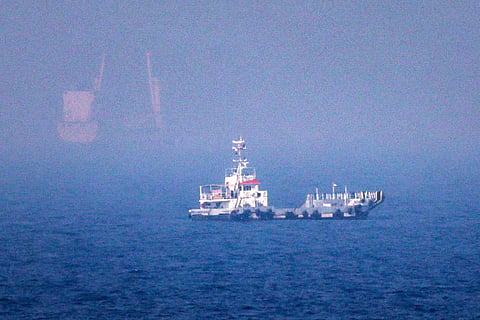
A narrow stretch of water, just 21 miles wide at its tightest point, connects the Arabian Gulf to the rest of the world. In normal times, approximately 20 million barrels of oil pass through the Strait of Hormuz every single day, around one fifth of global supply. Since 28 February 2026, those times have not been normal.
The closure of the Strait following the outbreak of conflict between the United States, Israel, and Iran has triggered what the head of the International Energy Agency, Fatih Birol, has described as “the largest supply disruption in the history of the global oil market.” Understanding what that means, for energy prices, for trade, and for ordinary people, requires looking beyond the military headlines to the economic consequences quietly unfolding beneath the surface.
The most immediate impact has been on the price of oil and gas. Brent crude surged above $90 per barrel in the early weeks of the crisis, climbing toward $120 at the conflict’s peak. Asian economies have felt this most sharply. China, India, Japan, and South Korea together account for roughly three quarters of all oil flowing through the Strait, and all four have seen energy costs rise significantly. Most Asian economies have been forced to cut their refined oil output by around 30 percent during the disruption. For countries that depend on Gulf gas for a significant share of their electricity, Taiwan being among the most exposed, the consequences extend beyond fuel prices into the reliability of basic services.
Widespread effects
What makes this crisis different from previous Hormuz scares is how widely its effects have spread. The Strait carries far more than oil and gas. Around a third of global seaborne methanol trade passes through it, a key ingredient in plastics, paints, and everyday manufactured goods. Fertiliser supplies have been disrupted, pushing up food production costs in markets far removed from the Gulf. As the Centre for Strategic and International Studies has noted, the crisis is driving up prices across multiple sectors simultaneously. UNCTAD has warned that the disruptions raise serious concerns for global trade and economic growth, with ships rerouting around Africa adding up to two weeks to delivery times and increasing costs for businesses and consumers alike.
On 14 July 2026, two oil tankers operated by ADNOC Logistics and Services, the Al Bahyah and the Mombasa B, were struck by Iranian cruise missiles while transiting the Strait. One seafarer lost his life. Eight others were injured, four seriously. ADNOC L&S strongly condemned the attack on civilian shipping and the innocent seafarers aboard its vessels. It was the most significant strike on commercial shipping since the ceasefire began to unravel and for the UAE, a reminder that the consequences of this crisis are not only economic but deeply personal.
Shipping industry under strain
The shipping industry more broadly has been under severe strain. Before the conflict, insuring a large oil tanker for a single Hormuz voyage cost roughly $250,000. Today that figure has risen to as much as $10 million for one trip, a fortyfold increase. Many shipping companies have stopped sending vessels through the Strait altogether, with traffic having plunged by as much as 90 per cent from normal levels at the height of the crisis. Around 6,000 seafarers remain stranded in the region. Those insurance costs do not stay with the shipowner; they flow through the supply chain and arrive, eventually, on the doorstep of the consumer in the form of higher prices for fuel, food, and goods.
The Strait remains effectively closed, a ceasefire has collapsed, and diplomatic efforts have stalled. The longer the disruption continues, the deeper the economic damage to energy markets, to trade, to supply chains, and to the millions of people whose livelihoods depend on goods and energy moving freely through this waterway.
Setback for global economy
The path back to stability runs through negotiation. Every week of continued disruption costs the global economy billions, and the evidence is clear that diplomacy works where military escalation has not; when Washington signaled it was pursuing a negotiated solution in March, oil prices dropped 5 percent in a single trading session. A durable settlement is not simply a diplomatic preference; it is an economic necessity for every country that depends on Gulf trade.
Yet the UAE is not waiting. Rather than standing still while negotiations stall, Abu Dhabi has moved decisively to reduce its exposure to the Strait. ADNOC’s existing pipeline already routes crude exports through Fujairah outside the chokepoint. A new West-East pipeline, nearly 50 percent complete and targeted for 2027, will double that bypass capacity. DP World is in active discussions to develop an entirely new port on the country’s east coast. Fujairah and Khor Fakkan are absorbing diverted cargo. Taken together, these are not emergency measures, they are the expression of a long-held conviction that resilience must be built into infrastructure, not borrowed from geopolitical stability.
The events of 2026 have shown, with unusual clarity, how deeply the world depends on a stretch of water that most people will never see. Diplomacy must work to reopen it. But as the UAE is demonstrating, the most durable response to vulnerability is not to wait for others to resolve it, it is to build your way around it.”
Najla Al Midfa is a Researcher at TRENDS Research & Advisory in the UAE


