Hormuz test: India’s shift from vulnerability to strategy
Strategic reserves, diplomacy and naval reach reshape energy security calculus
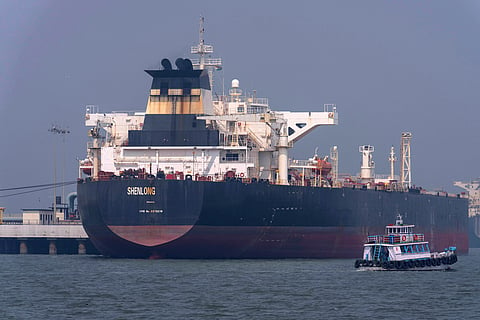
Few geographic spaces illustrate the fragility of globalisation as starkly as the Strait of Hormuz. A narrow maritime corridor only 33 kilometres wide at its tightest passage, it remains one of the most consequential chokepoints in the international system. In 2026, renewed geopolitical tensions in West Asia have elevated the Strait from a critical trade artery into a strategic pressure point capable of reshaping energy markets, trade flows, and global power calculations.
For much of the world, Hormuz represents vulnerability. For India, increasingly, it represents a test of strategic autonomy.
The geography of global dependence
Approximately 21 million barrels of crude oil and petroleum products transit the Strait daily — nearly one-quarter of global seaborne oil trade. No alternative infrastructure presently matches its capacity. Pipelines constructed to bypass the Strait provide only partial mitigation against disruption.
The modern global economy, structured around efficiency and just-in-time logistics, is uniquely sensitive to such chokepoints. Even limited instability generates cascading consequences: energy price volatility, rising freight costs, insurance surcharges, and financial market uncertainty. Hormuz therefore functions not merely as a regional concern but as a systemic risk embedded within globalisation itself.
India’s transition from vulnerability to resilience
Historically, India stood among the nations most exposed to disruptions in Gulf energy flows. That equation has changed significantly over the past decade. New Delhi’s evolving response reflects a broader shift in Indian grand strategy — from dependency management to risk distribution.
At the core of this transformation lies preparedness. Expanded strategic petroleum reserves, combined with commercial inventories maintained by state-owned refiners, now provide a buffer capable of sustaining national consumption for more than two months. This temporal cushion fundamentally alters crisis decision-making by reducing immediate economic shock.
Equally important is diversification. India’s energy imports now draw increasingly from Russia, the United States and African producers, reducing exclusive reliance on Middle Eastern supply chains. Energy security has become multidirectional rather than regionally concentrated.
Diplomacy forms the third pillar. India’s policy of multi-alignment—engaging competing regional actors without formal bloc alignment — has enabled functional cooperation across geopolitical divides. In practice, this has translated into relative operational continuity for Indian-flagged energy carriers even during periods of heightened maritime tension.
Maritime power as economic policy
If diplomacy provides flexibility, naval capability provides credibility.
Operation Sankalp, initially launched as a maritime monitoring initiative, has evolved into an active escort and deterrence mission. Indian naval destroyers now accompany commercial vessels through vulnerable waters, signaling both defensive resolve and operational reach.
The integration of surveillance aircraft, helicopters and real-time maritime intelligence has created a layered security architecture designed to counter emerging asymmetric threats, including unmanned aerial systems and covert maritime sabotage. Such measures highlight an emerging reality: economic security in the 21st century increasingly depends upon sustained maritime presence.
The mission also carries a human dimension. Nearly 20,000 Indian seafarers operate within Gulf shipping networks, making naval protection not only a strategic requirement but a responsibility toward citizens embedded within global trade systems.
The economic limits of resilience
Despite strengthened preparedness, India remains linked to global market dynamics. A prolonged crisis in Hormuz would elevate oil prices toward or beyond the $100-per-barrel threshold, intensifying inflationary pressures and expanding the country’s import bill. Currency volatility and rising logistics costs would follow, affecting sectors far removed from energy markets.
Insurance premiums for shipping — often overlooked in public discourse — represent another critical variable. Without credible security guarantees, risk pricing alone could significantly raise the cost of essential imports, embedding geopolitical instability directly into domestic economic life.
Resilience, therefore, mitigates vulnerability but does not eliminate interdependence.
Reimagining trade geography: The IMEC vision
Recognising the structural limits imposed by chokepoints, India’s long-term strategy seeks geographic transformation rather than perpetual risk management. The India–Middle East–Europe Economic Corridor (IMEC) represents an ambitious attempt to diversify connectivity through integrated port, rail and logistics networks linking South Asia with European markets.
If successfully implemented, the corridor could gradually reduce reliance on single maritime passages and redistribute trade flows across multiple routes. Beyond infrastructure, IMEC reflects a broader strategic ambition: shaping the architecture of global commerce rather than adapting to it.
A maritime moment for India
The Strait of Hormuz encapsulates a defining paradox of contemporary geopolitics. It exposes the vulnerabilities of global interdependence even as it creates opportunities for states capable of combining diplomacy, economic planning and maritime power.
India’s approach — balancing naval assertiveness with diplomatic flexibility and economic diversification — signals the emergence of a more confident middle power navigating an increasingly fragmented international order.
In an era where supply chains have become instruments of strategy and sea lanes determine economic stability, maritime leadership is no longer optional. It is foundational.
The Strait of Hormuz may remain an unavoidable passage today. But India’s evolving posture suggests a nation preparing for a future in which global chokepoints no longer dictate national destiny.
Prof Richard Hay is a former Member of the Indian Parliament and a policy commentator on energy security and maritime affairs


