Failure of western diplomacy in Syria
Regime change won’t work in Syria, and engagement with both Russia and Iran is critical
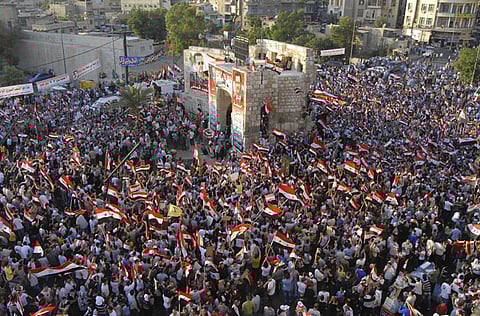
If Russia and Iran have been culpable, there has been a catastrophic failure of diplomacy by the West and its allies. UN Secretary-General Ban Ki-moon’s call for a ceasefire and an arms embargo is a welcome challenge to the West’s floundering policy. Britain, France and the US, as well as their allies, Turkey, Qatar and Saudi Arabia, need to recognise that neither side is going to win the civil war engulfing Syria. Nor will the Turkey’s call for western military intervention to halt the humanitarian disaster resolve the crisis. A political solution has to be the priority.
The Syrian leader, Bashar Al Assad, is reported to be willing to consider the proposal by the UN-Arab League envoy, Lakhdar Brahimi, for a ceasefire for the four-day Eid Al Adha holiday on October 26. The western powers and the Arab arms suppliers should urge their friends in the opposition to declare they will reciprocate if Al Assad makes good on his tentative promise.
Western demands for regime change were never going to work because this isn’t simply a conflict between a savage regime and the Syrian people. Al Assad and the ruling Shiite-aligned Alawite minority form a tenth of the population and fear being oppressed by the Sunni majority. Christians and other minorities are similarly nervous. Together, they constitute nearly a third of Syrians.
The war has also become a wider proxy for Sunni versus Shiite, and Saudi Arabia versus Iran. There is also bitter suspicion at the West’s real intentions from Russia and China and their allies. They insist that they never authorised UN backing for military force to depose Muammar Gaddafi last year, and refuse to be “tricked” again. The Iraq invasion also poisons trust of the West. Libya today — its people at the mercy of warring militias and jihadist opportunists, the US ambassador assassinated — is hardly a good advertisement for repeating that regime-change recipe.
David Cameron’s recent high-minded rhetoric at the UN general assembly ignored the presence of Al Qaida fighters among the West’s favoured rebels. If the Syrian regime was somehow toppled without a settlement being in place, the country would descend into even greater chaos.
Russia is determined not to allow that anarchy, mainly because Syria provides its only Mediterranean port in the region. Iran also has key interests, malevolent or otherwise. Syrian refugees have already flooded into Turkey and Lebanon, the latter destabilised, with its police chief assassinated, and now plunged into a political crisis.
The only way forward is to broker a political settlement, with Russia using its leverage to ensure that Al Assad negotiates seriously. Without pandering to Vladimir Putin, engagement with Russia is critical — as is consultation with Iran.
The guidelines for a political transition approved by the five permanent members of the UN security council at the Geneva conference in June still provides the best road map — but only if the US, the UK, Saudi Arabia and their allies drop their current stance and help to implement it.
However unpalatable, Al Assad may have to be granted immunity in order to get him to sign up and stop his barbarity. All state employees, including those in the armed forces, must be allowed to keep their posts, to avoid a repeat of the chaos caused by America’s de-Baathification in Iraq. A Yemen-type process may even figure. There, a hated president did not resign but did not stand for re-election. A coalition government of national unity could then prepare for Syrian elections, due in 2014.
The current British-American policy is failing on a monumental scale. Unless there is a radical change, all the hand-wringing and condemnation is either empty or hypocritical — or both.
Guardian News & Media 2012
Peter Hain MP served in Labour’s government for 12 years, two as minister for the Middle East


