Congress short of ideas
Absence of charismatic leaders and a lack of vision for the country have allowed groupism to proliferate in India's oldest political party
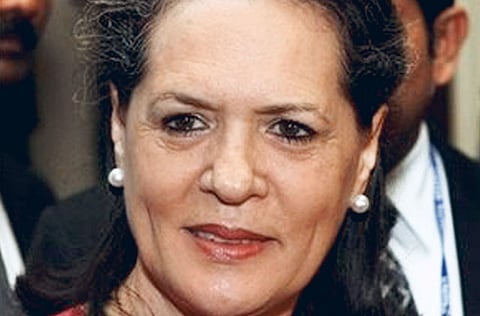
Blaming factionalism for the Congress party's recent electoral setbacks, as Sonia Gandhi has done, can be regarded as a somewhat facile explanation. Internal rifts are in the party's genes and date back a century to the clashes between Bal Gangadhar Tilak and Gopal Krishna Gokhale, between Mahatma Gandhi and Subhas Chandra Bose and between Indira Gandhi and the so-called ‘syndicate', represented by the Congress old guard.
Besides these confrontations between the heavyweights at the national level, there were also innumerable relatively minor tiffs between people such as A.K. Antony and K. Karunakaran in Kerala.
But it is necessary to remember that none of these seriously undermined the Congress. On the contrary, it became an overpowering political presence at the time of independence and for at least two decades afterwards, and also in the 1970s and 1980s.
There were two reasons for this remarkable achievement. One was the presence of charismatic leaders at the top, whose popular appeal swept away the cobwebs of groupism, and the other was the articulation of the Big Idea, which represented the party's vision.
Arguably, it is the absence of these two factors which has led to the party's present plight and, consequently, allowed the petty groupies to proliferate. It cannot be gainsaid that unless the Congress finds a sense of direction in terms of an idealistic outlook, it will continue to flounder.
However, the Congress' travails are all the more surprising because it is the only party which has been able to reorient its policies in sync with the changing times.
Neither the Left nor the Bharatiya Janata Party (BJP), its two main opponents, have been able to do so. The comrades, for instance, remain stuck in the days of Soviet hegemony. They seem to take no cognisance of communism's terminal decline.
The BJP is unable to break free of its pro-Hindu Jana Sangh past or of its servile relationship with the Rashtriya Swayamsevak Sangh (RSS), the Hindu supremacist brotherhood. As a result, it is virtually an untrustworthy alien entity so far as the country's minorities — Muslims and Christians — are concerned and also for liberal-minded Hindus.
Policy paralysis
In contrast, the Congress has undertaken major ideological changes. For a start, it is gingerly sidestepping the Nehruvian concept of socialism even if this Fabian ideal is associated with one of the party's greatest leaders.
Along with socialism, another Nehruvian policy initiative of the 1950s — non-alignment — has been discarded. The Congress has chosen market-driven economic policies and tilted towards America, the socialists' bugbear.
However, it is the continuing half-heartedness about these initiatives which is responsible for the Congress giving the impression of being unsure about its future course of action or being able to convince the people of whatever it has achieved. It is the sense of being stuck in a limbo, as it were, which is hurting the party.
Nothing showed the effect of this purposelessness than the recent Delhi municipal election results where the BJP succeeded in retaining its hold despite the achievements of the city's Congress government in making the national capital one of the country's most liveable cities.
Yet although the Congress raised its tally of seats from 67 in 2007 to 78 this time, the electorate was unwilling to repose full faith in it apparently because of its perceived governance deficit at the centre and entanglement in numerous scams that have been played up in the media.
It was the same in Uttar Pradesh where the Congress gained the most in terms of a rise in vote share, but still remains very much a marginal player.
The surge in the Congress' popularity in 2009, which took the party's Lok Sabha seats to above 200, was the result of the belief that the party was about to implement the Big Idea of economic reforms. Instead, not only is the party dithering, it is even turning to state paternalism redolent of a controlled economy by favouring dole-oriented programmes such as the rural employment scheme and the proposed hugely expensive food security bill, which will make a mockery of fiscal discipline. These are ideas which will not impress the new generation.
— Indo-Asian News Service
Amulya Ganguli is a political analyst.


