What makes Japanese skincare unique? A journey through ritual and time
Japanese skincare has always been more than skin deep—it’s a meditation
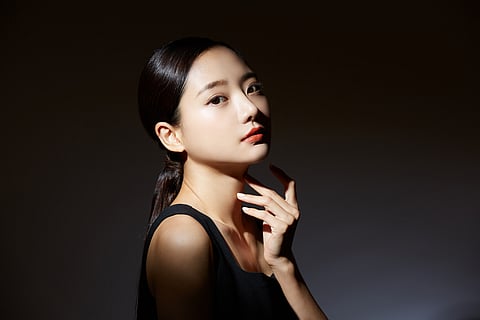
Rice water. Camellia oil. Green tea. And patience, passed down through generations.
Japanese skincare is less a trend and more a philosophy: A centuries-old ritual that honours not just the skin, but the self. To understand its present, we need to turn back time to a history, a tale painted in white powder, red rouge and quiet reverence.
Portraits of the past
In Ukiyo-e woodblock prints of Edo-era women, beauty wasn’t just for fleeting moments; it was art. As Young Won Park explains in Cosmetics Marketing Strategy in the Era of Digital Ecosystem, these portraits reveal the immaculate precision of rituals: white base powder (oshiroi), red safflower pigment (beni), and tools carved from bamboo and animal hair.
But this wasn't vanity, it was expression. These rituals were sacred, both personal and cultural.
Beauty was a quiet celebration of self-respect and social grace.
The art of white powder
The roots of this art run deeper.
As early as the 6th century, cosmetics began arriving from China. The earliest records show primitive use of cosmetics in the sixth century, which were part of the imports from China. Apparently, in 692 AD, a Buddhist priest Kanjo is said to have been the first to make lead-based face powder in Japan, and impressed Empress Jito by presenting this new invention to her.
During the Heian period (794-1185), Japan shifted from the imitation of Chinese model of beauty and crafted their own: The women wore their hair long and straight, almost reaching the floor, applied white powder, plucked their eyebrows and repainted them higher on the forehead, while also blackening their teeth.
Samurais and the rise of urban beauty
Beauty slowly moved from court to the city.
By the time Japan entered the Muromachi period (1333–1573 AD), the culture of the samurai class had truly come into its own — and so had the art of beauty. Cosmetics weren’t just a passing fancy; they were becoming part of everyday urban life. Illustrated texts from the era, like Shichiju-ichi-ban shokunin uta-awase (Poetry Contest Among People of Various Occupations in Seventy-One Rounds), even featured rouge and face powder makers, showing how well-known and respected these beauty craftsmen had become among city dwellers, cites Park.
The Edo era: Ritual and refinement
As centuries passed, beauty standards continued to evolve. The traditional makeup routine involved the oshiroi, the base layer of rice powder. It would create a flawless, porcelain-like complexion, emphasising beauty and purity. It went beyond regular beauty standards, but was also a status symbol, and later came associated with the nobility and the sophisticated class of the Edo period, later.
As Rae Nudson, explains in his book, All Made Up, for the stunning red lips, beni was a rouge made from safflower petals, applied carefully with precision. It was a detailed, painstaking process, to create a gradation effect, which was a technique that added depth and dimension to the lips.
And then there were the hairstyles, accompanied by elaborate pins and combs. Women would enjoy visiting the ‘yoshiwara’, the pleasure quarters, to observe the latest trends in fashion and beauty, from the oiran or the high-ranking women. Each element, from the makeup to the hairstyle and intricately designed kimonos were part of this approach to beauty. It played a role in the presentation of oneself.
There was a reason behind the art of beautification: It was a form of self-expression and respect for social customs. The tools used were not just tools; they were crafted with as much artistry as the makeup itself. And, they were all natural. They were made from bamboo and animal hair, meant to work with natural ingredients used in the practices.
Beauty as meditation
Beauty was a meditative act — one that honoured the fleeting nature of existence and the quiet elegance of the changing world. As Japan slowly entered the modern world, tooth blackening was outlawed by the 1870s. After concerns regarding lead poisoning arose, there was a desire to create lead-free powder, which was bought to the markets by 1904.
Gradually, face powders were sold in different colours apart from white, and new dyes began to replace the traditional safflower colours. In the swinging 1960s, beauty trends took a bold turn — all eyes were on, well, the eyes and mouth. Dramatic lashes, playful liner, and standout lips became the signature look. Fast forward to the mid-70s, and a wave of surfer-chic vibes and statement brows swept over young women, especially those in their teens and twenties, bringing with it a carefree yet curated aesthetic.
Today, beauty is less about conformity and more about individuality. From intricate nail art, medicated cosmetics, or personalised skincare, modern Japanese beauty focuses on form and function. The once-coveted porcelain look has given way to skin that glows with health, not perfection.
The real essence of Japanese skincare today
As Ichika Chiba, a Japanese makeup artist writes to us from Japan, the essential idea behind Japanese skincare is: Minimalism. You embrace your flaws. You don’t try to conceal them.
She says, “There’s grace that prioritises skin health over trends. The products are meant to be gentle, effective. We rely on heritage, centuries-old ingredients such as rice bran, green tea, seaweed and camellia oil. It’s calming and full of antioxidants.”
It’s part of the philosophy: Japanese skincare is seen as preventive, not damage control. “It’s about keeping balance,” she says. Cleansing is done slowly and mindfully, often with the famed double cleanse method: First with an oil to lift makeup and impurities, then with a gentle foam to purify. Followed by a hydrating lotion, not to be confused with Western lotions, that preps the skin for moisture, and a serum or emulsion to seal in nourishment. “Each step is purposeful. It’s not about layering as many actives as possible, but about layering intention. Even the packaging—often simple, elegant, and ergonomic—echoes this philosophy of thoughtful beauty,” she says.
Japanese skincare is about listening to our skin. It’s about slowing down, she explains. “You find beauty in the small rituals, that heals the skin and the soul.”
Here’s how to go about it:
Oil-based cleanser
Purpose: Gently removes makeup, sunscreen, and excess sebum.
Why it works: Japanese women swear by the double cleanse method, and this is step one—cleansing without stripping the skin.
Popular ingredient: Rice bran oil, camellia oil
Water-based cleanser
Purpose: Removes any leftover impurities and sweat.
Texture: Often a soft foaming cleanser that leaves the skin feeling clean but never tight.
Lotion
Purpose: Prepares the skin for moisture by hydrating and softening it.
Texture: Lightweight, watery—similar to an essence.
Serum or essence
Purpose: Delivers concentrated ingredients to target specific concerns like dullness, wrinkles, or pigmentation.
Typical ingredients: Vitamin C, fermented extracts like Pitera, hyaluronic acid
Moisturiser
Purpose: Locks in hydration and nourishment.
Types: Emulsion (lighter) for daytime or humid weather; cream (richer) for nighttime or dry climates.
Eye cream
Purpose: Delicate care for the under-eye area to reduce puffiness and fine lines.
Sunscreen
Purpose: Essential step in Japanese skincare—sun protection is non-negotiable.
Popular formulas: Lightweight, invisible, hydrating. Often doubles as makeup primer.


