Thinking out of the box
Hong Kong-based architect makes the most of his limited living space, thanks to a "domestic transformer"
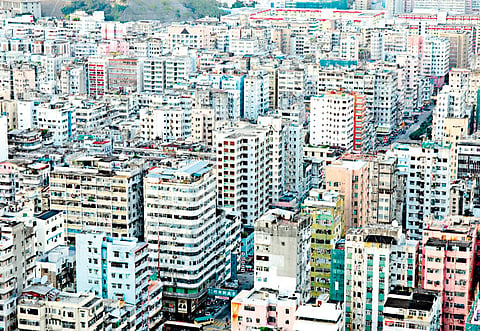
As a youngster, architect Gary Chang lived in a tiny flat with six others in Hong Kong, one of the world's most densely populated cities. No wonder, then, that the Hong-Kong based professional is obsessed by space or rather, a chronic lack of it.
A fluid home
After spending three decades in the same boxy, 32-square-metre (344 square feet) dwelling he grew up in, Chang has come up with an innovative answer to the increasingly cramped lives of many urban dwellers — the science fiction-like "domestic transformer".
"The idea is that everything is moving. This is my laundry space," Chang says, sliding away a wall filled with CDs to reveal a washing machine and dryer. By sliding another track-mounted metal wall that bears a plasma TV, a kitchen materialises. Beside that, there is a 1.9-metre bath that can be turned into a guest bed.
While people in other overpopulated cities such as Tokyo resort to drop-down beds and foldable futons, the award-winning Chang has taken the concept of space-saving to the extreme. His tiny, rectangular apartment, tucked into the bowels of an old, nondescript tenement building, has polished chrome walls that bear 24 configurations, each suited to a specific need.
Convenience matters
The space available becomes a home theatre, spa, kitchen, bedroom, bathroom and a chill-out zone rigged up with a hammock, depending on what Chang needs at the moment.
"The high intensity of use makes (it) more like a large home appliance than a dwelling," wrote Chang in his book, 32 metre square apartment — a 30-year transformation, that chronicles the origins of his innovative abode, which has undergone numerous facelifts through the years. Chang, who runs his own design and architectural firm, describes an empty space as a "luxury" and once built a "suitcase house" in Beijing, blurring the boundaries between public and private space.
"The only enclosed space is the toilet, and again, it's bigger than usual," says Chang, whose flat is surrounded by the highways and skyscrapers that embody Hong Kong's rampant urban development that have made spacious flats a pipedream for many.
At a cost of $231,700 (about Dh851,057), Chang hopes his dwelling offers a viable, life-enhancing alternative for Hong Kongers who can't afford anything bigger.
"The idea is to tune your home closer to what you really want instead of allowing the market or the allocated space to dictate terms," says Chang. The designer says he is now in talks with property developers to replicate his flat in other space-starved, costly cities across Asia and Europe, including Paris.

