Let the deadly calm take you
Don't be fooled by how simple it looks: Shavasana is the most difficult asana to master
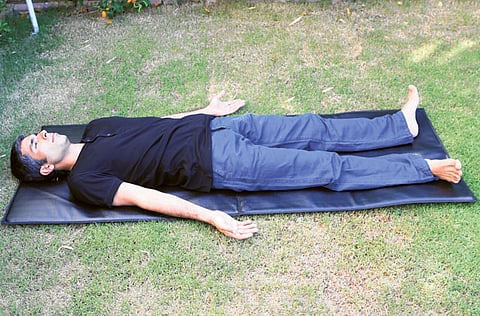
Shavasana, meaning Corpse Pose, is a posture of complete relaxation. Shavasana does have an element of death to it: When practised correctly, it is death to the endless chatter of the mind and external influences that clutter it.
But don't judge a book by its cover — Shavasana is said to be the most difficult posture in yoga to master. The idea is to relax every part of the body and empty the mind by focusing on nothing but your breath, through deep, relaxed, natural breathing. You may find that you get agitated at first, or even sleepy. Try and stay in the plane between wakefulness and sleep. This is an effective time for affirmations, or a wonderful time to do absolutely nothing. Just five to ten minutes of Shavasana every day will leave you rejuvenated in a way that even sleep cannot achieve.
Procedure
- Lie on your back with your feet shoulder-width apart. Let your feet fall away from each other.
- Keep your arms by your sides, slightly away from the body, with your palms facing upwards.
- Keep your eyes gently closed. The head and spine should be in a straight line without letting the head fall to either side.
- Become aware of the whole body and make any finer adjustments necessary so that you can lie still without any movement for the remaining duration of the practice.
- Bring your awareness to the point between your eyebrows, and observe your breathing pattern without interfering with the breathing process. Let the breathing become rhythmic and relaxed.
- After some time, bring your awareness back to your body and the surroundings. Gradually open your eyes and slowly release the posture.
Tip: If you have difficulty relaxing, try and focus on the weight of your body and the contact it has with the floor. Be aware of the pull of gravity.
Benefits
- It relaxes and rejuvenates the whole psycho-somatic system.
- It develops body awareness.
- It brings clarity of thought.
- It stimulates the pituitary glands.
Bharat Thakur guides you through practices that will connect you to the wisdom of the ancient Indian science of exercising.


