Simply scents
The world of fragrances is both simple and complex but either way it is rich with emotions.
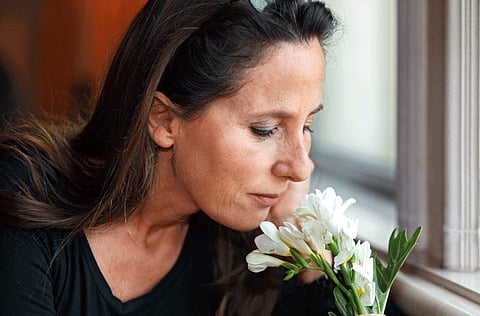
What's the best way to ensure your fragrance is long lasting? Pose this question to a layperson and he or she is likely to say, "go heavy on the perfume." Some would even go so far as to suggest using an expensive perfume because "expensive perfumes are sure to be long lasting."
Fragrance experts, however, have a different take on this. According to many, getting your fragrance to last for a long time has a lot to do with ‘layering' - where one blends compatible scents to create a signature fragrance.
We may invest in expensive perfumes, but thanks to hectic lifestyles, most of us stay passive perfume buyers all our lives. And this is where brands like Jo Malone, which are keen to draw us out of our olfactory slumber, waft in. The British perfumery's prime emphasis is on active participation from customers and this starts right from the brand's brief for their master perfumers when creating a fragrance, which is: Keep ingredients and fragrance structure simple and elegantly restrained so that anyone can easily mix and blend scents within the brand to create their own bespoke fragrances.
To many, the phrase "mixing and blending scents" would mean spritzing the skin with a cologne, allowing it to dry, then sprayinga different cologne over it. Or using one product from a certain bath-and-body collection over another product from a different range. For instance, applying a luxurious body butter from one range after a bath with a deliciously scented bath oil or shower gel from another scented line.
In a way, this resonates with the conventional wisdom of Jo Malone which is of trusting the therapeutic power of touch over reliance on technologically advanced equipment. According to Debbie Wild, Jo Malone's global fragrance and lifestyle director, "Layering scents is akin to accessorising a simple and elegant black dress one [feature at a time]. You may wear a rose in your hair, a single piece of jewellery, lavender as your main scent, and so on. Our fragrances are clean, simple, transparent and light scents and [so] lend themselves to layering easily. It's all up to your creativity but, yes, we do offer ‘layering suggestions' as well."
Simplicity in perfumes
Pre-preparation for layering scents begins with the brand's focus on simplicity in raw materials. "Simplicity does not mean a poor formula,'' says Christine Nagel, the award-winning master perfumer behind the brand's newly launched Cologne Intense collection. "All it entails is that a perfumer conjuresa formula which has a limited number of raw materials."
In perfumers' parlance, each fragrance is structured such that it can either stand alone or lend itself to mixing and layering with other fragrances to create a new scent.
"The challenge in such a formula is that you cannot hide any flaws in the ingredients - and for that you have to look for the finest of raw materials," says Nagel.
The idea of entrusting the task of blending a perfume to the customer may appear revolutionary but the brand does not think this DIY concept will in any way dilute the essence of its own laboriously created fragrances. Says Wild: "Layering fragrances may be a new concept to many people, but to us, that's what drives our brand."
Nagel says: "Favourites may change, but, in general, I like to focus and work on one ingredient, one texture and focus on ‘taming' and transforming it. For example, if I take wood, I will work it up to be something soft and liquid." Her favourite ingredients are amber, woods and resins. "But sometimes I also like the lighter notes that are green or fruity."
She does enjoy going back to fragrances with a strong and singular, olfactive print, and that means some of her fragrances won't please everyone. Nagel's not averse to experimenting with ingredients ina daring and bold fashion. "Very often, I fall in love with a certain ingredient and then want to work on its reinterpretation. For example, I like to work with soft and tender patchouli, but patchouli generally is not a soft and tender ingredient. [The point is] when working with ingredients I look for the not-so-obvious aspects."
The new Cologne Intense collection
Born in 1994, fragrance and lifestyle brand Jo Malone is still a young market entrant. Estée Lauder acquired it in 1999. A quintessentially niche brand, it has only one or two doors in 22 countries. Yet within a short span of time, the signature cream-and-black label has managed to make inroads into the fragrance market as a classic choice.
For master perfumer Nagel, known for her exciting, original, even experimental compositions, Cologne Intense is one of her first creations for Jo Malone.
Cologne is rarely associated with intensity but this collection is made of intense contrasts.
"I chose to take potentially opposing ingredients of very high quality to create unexpected yet harmonious fragrances," says Nagel, "Each ingredient has a reason for being." Nothing is superfluous. It'sa bold approach, but I wanted to take risks to create fragrances with impact, heart and soul."
This new collection comprises four distinctively modern fragrances, hugely inspired by the Middle East and the traditional ingredients of the region. "We found our muse in the age-old Middle-Eastern rituals of blending and layering scents, incenses and oils," says Wild.
Nagel's brief for the collectionwas to create a set of fragrancesbased on some of the most classic and time-honoured ingredients in perfumery. "Yes, we wanted intense fragrances, but they had to have a certain restraint and simplicity. And we asked for each scent to be unexpected - an original modern interpretation," says Wild.
For Nagel, the brief was ideal, as it sat perfectly with her own style of working. "About three years agoI received a gift from the Middle East - a box of oud," says Nagel. And guided by her love for newer interpretations of revered raw materials, she burnt that oud and worked with it for two weeks to find her own interpretation of it.
The result of her experiments is a range of fragrances for Jo Malone. Oud & Bergamot Cologne Intense, one of her favourites, has the rich scent of oud combined with the crispy notes of bergamot, a popular raw material in European scents. Then there is the Amber & Patchouli fragrance - an intriguing, spicy scent that brings together two opulent, yet very different raw materials. A special distillation process creates a modern patchouli note with a supple, suede-like finish. The other two: Iris & White Musk and Rose Water & Vanilla are equally modern interpretations of classic ingredients like iris, musk, rose and vanilla.
Of tasting bars and workouts
Tasting bars
In-store services in the world of fragrance are getting more interesting by the day. Hand and arm massage, fragrance-combining consultation, fragrance personality analysis, ‘art of gift-giving' consultation and even home delivery of gifts are now common.
‘Tasting bars', a concept now present in 22 countries, are inspired by coffee bars and the first was designed in 2003 for Jo Malone's Sloane Street store in London. It proved to be an instant success and took customer service to a new level. Here you can discover how to wear your cologne and combine it with other fragrances to make an individual scent.
The in-store tasting bars were designed to create a moment where coffee and conversation went together and customers could ‘taste' the notes by having a beautiful hand and arm massage with complimentary scent spritzing. It was originally designed to support the launch of Black Vetyver Cafe Cologne, a boundary-pushing scent that was inspired by founder Jo Malone's trip to Broadway's famous Dean and Deluca's delicatessen in New York City. Says Wild, "Creating a service experience to remember adds a ‘wow' factor. We are not trying to sell here, rather we are trying to help our customers experience scents better. We try different fragrances on you and talk to you [to know] more about you and your profession in order to suggest something that might suit you.
"[Using a] fragrance is a very emotive experience so it is very important for us to talk to potential buyers. What I may like, you might dislike as the notes might remind you of something unpleasant. [In our taste bar], customers get a warm welcome, a chat anda pampering hand and arm massage and they go back feeling ‘wow'!"
Nose workouts
According to Wild, there are ways in which we can learn to be more sensitive tothe various scents around us. All we need to develop our olfactive sense is a bit of practice.
"The more you discover fragrances the more your sense of smell is heightened. Our sense of smell is like a muscle and needs to have a workout regularly! In this industry, everyone does nose workouts. We can smell and recognise up to a thousand different scents but use only half the capacity in our lifetime. Encourage yourself to discover new and exciting scents. Sniff around [and learn to recognise] different smells. Smell flowers and leaves, smell the spicesin the kitchen, smell the wood of the chair you are about to sit on, smell the food at the restaurant - all this is a kind of workout for your nose."
According to Nagel, about 90 per cent of a perfumer's olfactive memory develops through work; 5 per cent of it develops through taste while the remaining 5 per cent is all about talentand chance.
Top nose
Master perfumer Christine Nagel holds a clutch of prestigious awards from the fragrance industry. In 2009 she bagged the industry's Oscar, the ‘Perfumer of the Year' award from CosmetiqueMag. In 2007, she had won Cosmetic Valley's ‘International Fragrance Prize' (formerly Prix François Coty) and the ‘Fifi Award' (for Armani Privé - Ambre Soie) in 2006, as well as a ‘Fifi Award for Women's Nouveau Niche Fragrance' (for Narciso Rodriguez for Her) in 2004.
Nagel's stint with fragrances began on a scientific note, namely chromatography, which is a highly technical process of deconstructing finished compositions to find their formula and the origin of their ingredients. An insight into the inverted perspective of ingredients gave her an added edge.
"The perfumer's test lies in how much innovation he brings through blending of even simple and authentic ingredients," she says. Her Swiss-Italian genes added another defining factor to her approach as a perfumer. She boasts a happy balance of spontaneity and abandon with rigour and discipline. "Creating fragrances is such a great art, it's a silent communication all right, but it's something that touches the hearts of a million people. A beautiful feeling for a perfumer," says Nagel.


