Replenish and nourish
Friday finds out how to improve and guarantee skin radiance after bathing
Let’s recap...
Limit the length of your bath time. Hot water and long showers or baths strip oil from your skin. Use warm, rather than hot, water. Steer clear of harsh soaps, as these also have an excessive drying effect on your skin. Opt for mild cleansers.
Nourish it
Moisturise dry skin. Pick a moisturiser that suits your skin type to help it look and feel soft. Moisturising corrects imbalances in the pH of your skin as a result of exposure to soap and water. Depending on how dry your skin is, your moisturiser can either be a heavy, dense formulation or a light one. An instant check that will help you gauge the degree of your skin’s dryness is to pay attention to its appearance and examine its feel.
Very dry skin looks lacklustre, feels rough and tight. It could also turn itchy. If you gently pinch the skin and see fine criss-cross lines on the area, it means that your skin is dehydrated. Well hydrated skin will remain smooth and plump if pinched.
Dried and tested
One of the most common mistakes we make after a bath is to rigorously towel dry our body. This makes skin dry seconds after a bath, requiring more moisturising. To maximise the effect of a bath, pat your skin dry in gentle movements. By doing so, you are allowing it to absorb small amounts of moisture. Skin that is slightly damp is easier to moisturise and stays soft and supple for longer.
Having said that, a moderate amount of force while towelling off stimulates blood circulation which in turn nourishes your skin cells. After which, a liberal application of a moisturiser will help restore softness.
Allowing your body to dry naturally (air drying) minus the use of a towel is also a good alternative. This allows for natural evaporation without drying out the skin.
The truth about
- Cellulite creams Unfortunately, there is no miracle cream to banish cellulite. Cellulite is a build-up of fat enveloped by toxins. The only way to reduce its appearance is to exercise regularly, maintain a healthy diet, detox at regular intervals and improve blood circulation through regular exfoliation.
- Stretch mark creams Stretch marks are a result of sudden expansion and shrinkage of skin as a result of a crash diet, after pregnancy or a drastic reduction in weight due to an illness. External applications of creams or lotions will not affect the appearance of stretch marks, especially if they are white in colour.
- Pregnant women or those on a severe weight loss diet, need to pre-empt stretch marks by working on a prevention plan. A rich moisturiser applied in the morning and at night will keep skin hydrated and nourished so its elasticity is maintained, allowing it to stretch with the changing shape of the body.
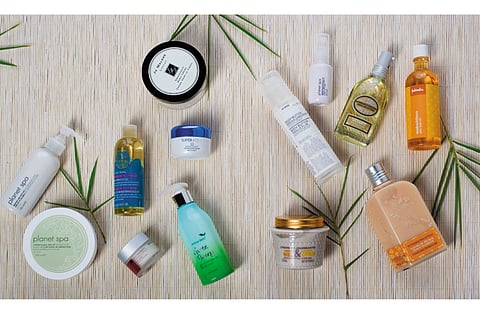
- Body butters, lotions and oils When it comes to choosing from these types of products, formulations are the only consideration. They have different textures and depending on what feels most comfortable on your skin and your skin’s needs, you can pick any that is suitable for you. For instance, body butter is great for pampering the skin but it calls for extra time as you need to massage it in to achieve complete absorption. A lotion, on the other hand, is more easily absorbed and is a better choice if you have less time for your morning skin pampering routine.
Good riddance
The epidermis is quite resilient and will withstand a bit of neglect which can be reversed. But you still need to be careful in the way you treat it on a daily basis. When it comes to exfoliation, body scrubs are usually a safe bet. But if you have localised redness, sensitive skin or other skin-related problems, lay off scrubs till skin condition is restored to normal. When using scrubs, do so in gentle circular movements. Do not apply too much pressure.
*Note: exfoliation is not recommended for those taking Accutane and other powerful medicines. Consult a physician if you’re on medication.
Combat humidity
Humidity causes you to sweat more. Sweat can transfer bacteria and aggravate acne. It also makes skin greasy and blocks pores.
Loss of water through sweating results in overall dehydration for the body and you need to drink a lot of water to compensate for this loss. If your skin is looking dry as a result of sweating, a medical problem could be at the root of it. However, sweating can aggravate existing dryness. Drink plenty of water and ensure your skin is well nourished with a rich moisturiser after your bath.
The effects of air conditioning
Being in an air-conditioned environment for too long also leaves the skin dry. Air conditioners dry and cool the skin thus causing dehydration. In order to protect the skin, you can introduce a humidifier or place a bowl of water in front of your AC unit. Keep a spritzer close at hand and spray your face and dècolletè every two hours or so. If you are going to spend all your time in air-conditioned environments, whether at home or work, daily moisturising, in the morning and at night, is a must.
After-bath treatment for
- Dry skin Thick moisturising cream, body butter or oil.
- Oily skin Oil-control lotion or lightweight oil-free moisturiser.
- Combination skin Medium-weight moisturiser or body butter.
Information courtesy of Caroline Kirk and Lindi Higginbotham, educators,
Dermalogica, Dubai


