The UAE on top
As the rest of the Middle East faces up to various challenges, Dubai remains planners' first choice. But don't write off Bahrain or Oman just yet
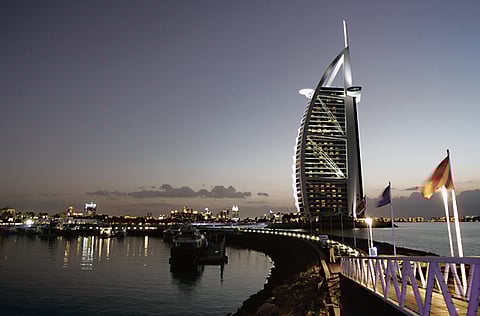
The recent political upheaval in the Middle East and North Africa (Mena) region has left the UAE in an ever-stronger position to attract incentive groups and corporate travel. With its stable climate, the country still reigns as the number one choice for travellers from traditional markets in Europe, and is now welcoming groups from developing markets including China and Russia. Dubai continues to remain the top choice in the region, with a range of activities, accommodation and professional companies available to supply services.
Alexander John, Director - Business Development at events organisers MCI Dubai, says, "There are many things keeping Dubai at the top. It is politically stable. It has fantastic connectivity around the world and flight connections are excellent. It has a mature infrastructure offering convention centres, resort and business hotels, and good transport facilities.
"There is also a buzz about Dubai. There is a ‘can do' attitude, fostered by the DTCM [Department of Tourism and Commerce Marketing], Emirates airline and the city's hotels."
Abu Dhabi on the ascendant
The second favourite is Abu Dhabi, hot on the heels of Dubai. The city has worked hard to diversify its tourism industry and the combined promotional work of the Abu Dhabi Tourism Authority (ADTA) and Etihad Airways has spread the message around the world.
The emirate has ensured a diverse range of activities with the high profile launch of the Yas Island development, home to the Ferrari World theme park and the Abu Dhabi Formula One Grand Prix, alongside the upcoming cultural crop of branches of the Guggenheim and the Louvre museums, and natural attractions such as the Sir Bani Yas and Lulu islands.
"Abu Dhabi has had a lot of positive play in the media over the last 18 months and this has really got people talking about the city. Etihad is rapidly expanding its network, making the capital more accessible," says John.
"The different players in Abu Dhabi work well together to promote the city. In the last 24 months we have really seen the plan pushed forward. Currently, the only disadvantage is a shortage of hotels, but many are under construction and the next two years will seethat problem solved."
The solution is in hand, as ADTA figures state that around 4,000 new hotel rooms have been created in the city between 2007 and 2010, and an additional 13,000 rooms are due to be completed by the end of 2015.
"Dubai is still better known, and currently has a larger number of attractions, but Abu Dhabi has become the choice of those looking for new destinations," agrees Nancy Power, General Manager at the event management consultancy BSL Middle East.
"With the additional hotel rooms there is room to negotiate on price, which was not possible when hotel stock was short. I think Abu Dhabi will go from strength to strength as its infrastructure develops further and the new attractions open from 2012."
Qatar, the rising star
Power also sees Qatar as a rising star in the region. "The awarding of the FIFA World Cup 2022 has put the spotlight on Qatar. The country has undertaken a great deal of promotional work, which has generated interest. Currently, there is a limited number of hotel rooms and activities, but in the long run it will be a strong competitor. Doha is where Dubai was ten years ago; hungry for development and expansion."
Anwar AZ Abu Monassar, Board Member, The Vision Destination Management, believes the whole region is filled with each defining its own niche market with different attractions and great product variety.
Current events notwithstanding, he says each of the region's nations have their appeal. "Bahrain, historically the financial gateway of the Gulf, targets all the banking and corporate galaxy, while Oman is also growing considerably, investing in the wide tourism industry and the international events linked to the environment. Saudi Arabia, by far the biggest economy, holds almost 60 per cent of regional meetings related to intergovernmental gatherings, and hosts the vast field of training related to the oil industry."
Elsewhere, possibly overlooked destinations are working to break into a lucrative market and may be future rising stars. "To look at the region in a wider context, Syria, Lebanon and Jordan are investing heavily, not only in tourism as a vital industry, but also in the meetings segment. Yemen represents a unique paradise in terms of culture, archaeology, landscapes and beaches, but needs to improve its international reputation challenged by the internal political instability," Monassar says.
The current wave of political instability has hit markets in the region. While business in the UAE and Qatar remain stable, some developing areas have been hard hit.
John says: "Two months ago I would have said that one of the growing destinations in the region is Cairo. The Egyptian resort of Sharm El Sheikh in Egypt has been popular for some time, but Cairo was rapidly gaining in popularity. The hotels have been developed, the rates were good and there are businesses based there. However, that has now come to a stop."
Events have been cancelled and many corporations will be waiting for the new government to be installed before considering Cairo again, despite its many attractions.
The same is also true for Bahrain and Oman. With the Grand Prix cancelled, ongoing political protest has set Bahrain's growing incentive market back, and unaccustomed unrest in Oman may hit the MICE market.
"Oman was rapidly building its market, with new conferences and new facilities, but recent events will begin to affect the growth of the incentive travel market. International groups want to travel to Oman, but will be put off by any hint of discord," says John.
Monassar accepts the expected reaction: "Due to the latest political instability in Egypt, Tunisia, Libya and Bahrain, which we hope and consider as short term, the year 2011 will see some business shifting from one part to the other of the Mena region. Perceived safer destinations such as the UAE and Qatar are benefitting, with up to 30 per cent increase in revenues in recent months. We consider Oman, where we do have an active and growing strategic presence, on a different level."
Power believes planners must factor in the region's heterogeneity. "The challenge for the region is the world's limited knowledge of the Middle East. There is a tendency to view the whole area as one, which means that all the destinations could find this a testing time."


