RAK Rising: What drives Ras Al Khaimah's real estate boom
Ras Al Khaimah property market booms on luxury and waterfront demand
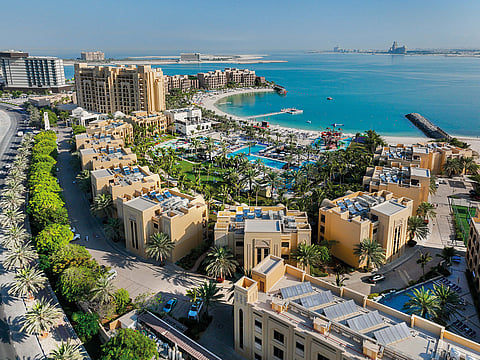
Whether it’s first-time buyers, seasoned investors adding a holiday home, or international buyers seeking steady gains, Ras Al Khaimah ticks every box. The emirate has moved from quiet contender to serious real estate play, offering beachfront luxury villas, branded residences, design-led apartments, and well-planned townhouses at prices still competitive within the UAE.
Infrastructure upgrades, hospitality expansion, and landmark projects have lifted demand and strengthened capital appreciation prospects. Rental yields remain attractive, while lifestyle appeal, from coastline to mountains, broadens its buyer base. For investors balancing value, growth potential, and quality of living, Ras Al Khaimah now stands out as a clear choice.
Market momentum holds
After a record setting 2024, Ras Al Khaimah’s property market has moderated slightly, but remains active. Transaction volumes and sales values continue to post healthy numbers across key freehold zones, supported by overseas capital and a steady pipeline of launches.
Matthew Green, Head of Research at CBRE MENA, says the pace has eased from its peak in 2024 but fundamentals remain intact.

“Demand remains supported by the huge ramp up in overseas investor interest, helping to sustain the ongoing boom in off plan launches across masterplan communities such as Marjan Island, Mina Al Arab, and Al Hamra Beach.” He adds that as legacy plots within established masterplans are absorbed, investor attention is widening across the emirate, even towards new freehold communities such as RAK Beach District and RAK Central.
From a developer perspective, performance data reflects the same momentum. Sameh Muhtadi, CEO of RAK Properties, describes a marked acceleration over the past two to three years.

“In recent years, real estate in Ras Al Khaimah has experienced a steep and accelerated growth trajectory with sustained momentum. RAK Properties’ full-year 2025 financial results vividly underscore this, recording Dh3.36 billion in total sales value – a 142 per cent year-on-year increase. Our revenue also saw a robust 31 per cent growth, reaching Dh1.84 billion.”
He positions this growth within Ras Al Khaimah’s expanding role as a tourism, investment and MICE destination under Vision 2030.
Luxury leads
The surge in luxury, branded residences has defined the current cycle. High-end beachfront apartments and villas, particularly those close to major hospitality anchors, are drawing both investors and lifestyle buyers.
Green explains that recent launches reflect this premium focus.
“Over the past 12 months, there has been a significant number of new branded residence launches, including the Janu Marjan Island which will see the Emirate’s first Aman Residences built, as well as a range of other luxury apartment offerings. This is broadly reflective of the demand profile in RAK, oriented towards high-end beachfront properties, many within benefitting from proximity to the Wynn Resort which is set to open next year.”
At the same time, other segments are strengthening alongside the luxury market. “While the luxury market clearly makes most of the headlines, other more structural segments, such as staff accommodation appear to have very strong underlying fundamentals given the huge growth in hotel workers that is expected over the next five years, without sufficient dedicated staff accommodation facilities to house them,” Green adds.
Muhtadi confirms sustained interest in the premium segment, alongside more discerning buyer expectations.
“The luxury and branded residential segments are experiencing some of the highest levels of market interest. Today’s buyers are highly discerning, seeking property that can deliver a complete lifestyle experience, often within integrated, ultra-lux, master-planned communities.”
Within Mina, branded villas and resort-style homes are performing strongly, with villa inventories already sold out. “Projects like the world’s first Armani-branded beach villas, the upcoming Four Seasons Private Residences, and our Anantara branded residences, of which the villas are now sold out, are actively meeting client demand,” says Muhtadi.

Data from Property Finder further highlights strong demand at the premium end.
“In January 2026, properties priced above Dh3 million recorded an impressive 40 per cent year-on-year increase in demand, making luxury properties the clear outperformer across all property segments,” says Cherif Sleiman, Chief Revenue Officer at Property Finder.
He says that while mid-market homes between Dh1-2 million saw steady growth of 6 per cent, demand below Dh1 million softened by 8 per cent over the same period. According to Sleiman, this reflects buyer priorities in Ras Al Khaimah.
“Families, professionals, and long-term residents are focused on homes that provide space, functionality, and premium living. Smaller, purely entry-level properties do not necessarily meet these expectations, while the growth in mid and high-end segments shows buyers are prioritising quality, space, and long-term value over simply the lowest price point.”
Within the luxury bracket above Dh3 million, villas account for the largest share of demand at 40 per cent, followed by apartments at 32 per cent and townhouses at 24 per cent. However, Sleiman points out that growth momentum has been strongest in townhouses and apartments over the past year. “This reflects a meaningful shift in Ras Al Khaimah’s market. The emirate is increasingly attracting not only ultra-wealthy villa buyers but also professionals, families, and long-term residents.”
A broader investor mix
International capital now forms a large share of activity in Ras Al Khaimah. The buyer profile has evolved as the emirate’s visibility has increased globally.
“Most demand is coming from foreign non-resident investors, which reflects the slightly speculative nature of the RAK market, with most initial buyers unlikely to be the ultimate end-user,” says Green.
At RAK Properties, the investor base has become more diverse over the past year. “Our investor base has become remarkably diverse and international, a clear reflection of Ras Al Khaimah and Mina’s evolving appeal. While we maintain a strong regional presence customer-wise, 2025 saw significant growth among high-net-worth individuals and corporate tenants from over 100 destinations.”
Interest from the UK, Germany, the Netherlands, India, China, and Hong Kong continues to grow, combining yield-focused investment with lifestyle-driven purchases.
HNWI capital targeting RAK

Recent Knight Frank survey findings show rising allocations from high-net-worth investors. According to Aliaa Elesaaki, Senior Research Manager – Egypt & UAE at Knight Frank, “About 37 per cent of those with a net worth of more than $15 million would be willing to allocate $2-4.9 million towards real estate in RAK and a further 21 per cent would be prepared to spend more than $5 million.”
East Asian HNWI appear particularly confident, with 28 per cent citing budgets between $2-4.9 million, the highest globally. Combined survey budgets indicate a potential $388.5 million in private capital targeting Ras Al Khaimah.
Sleiman from Property Finder says this aligns with how buyers now view the emirate.
“The trends highlight a clear shift towards higher-value investments. According to Property Finder data, buyers are increasingly viewing Ras Al Khaimah not merely as a seasonal or leisure destination but as a place to establish permanent residence. The surge in luxury demand is driven by lifestyle considerations, privacy, and long-term investment potential, signaling the maturation of the emirate’s residential market.”
New supply enters the market
Developers are bringing forward additional inventory to meet sustained demand. Muhtadi says the project pipeline directly reflects current buyer requirements and the emirate’s long-term strategy.
“In 2025 alone, we launched over Dh5.4 billion in new projects, exceeding targets,” he says. “We’ve significantly expanded our vision beyond Mina with the recent unveiling of The Strand. This landmark mixed-use masterplan on the Emirate’s mainland deepens our commitment to creating purposeful, integrated, and livable communities that support a growing population.”
Commercial, logistics demand builds
While residential and hospitality have dominated recent activity, the coming phase may see stronger movement in commercial and logistics assets.
“The recent focus of RAK’s real estate activity has been heavily upon residential and hospitality sectors, with limited corporate commercial demand outside of RAK’s domestic office entities. However, there is likely to be strong demand for more functional parts of the market, including logistics,” says Green.
“We also expect to see further growth in the tourism and hospitality sectors, following another positive year of arrivals growth, and improved hotel performances,” he adds.


