PARCO: A pillar of Pakistan's energy security and economic growth
PARCO powers Pakistan’s fuel security and industry for over 50 years
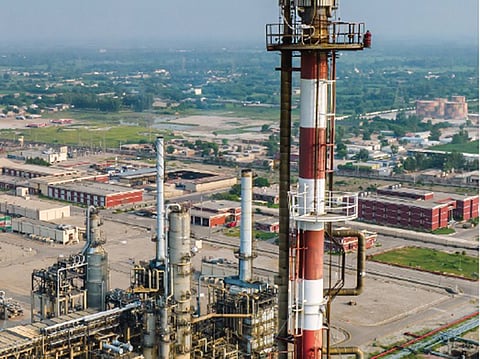
Pak-Arab Refinery Limited (PARCO) has been a cornerstone of Pakistan’s energy infrastructure for half a century, playing a pivotal role in ensuring fuel security and sustaining industrial momentum.
As Pakistan’s largest and most modern operating refinery, PARCO accounts for over half of national refining output, positioning it as a pillar of economic stability and long-term development. Founded in 1974 as a strategic joint venture between Pakistan and the UAE, the company was designed to strengthen bilateral ties and lay the foundation for an energy-secure Pakistan. The partnership underscored an enduring commitment to building infrastructure for Pakistan’s growing energy needs.
PARCO has continuously been at the forefront of Pakistan’s refining industry
Since its establishment, PARCO has followed a modular growth strategy. Beginning with pipelines to transport refined diesel and kerosene to upcountry demand centres, it steadily scaled operations with the expansion of its network and, in the year 2000, the commissioning of its Mid-Country Refinery. Through shareholder support and world-class partnerships, PARCO has grown into a diversified group of companies encompassing refining, pipelines, fuel and lubricant marketing and LPG distribution, making it the most integrated player in Pakistan’s energy ecosystem.
PARCO’s contribution to Pakistan’s economy began with the development of a nationwide pipeline network. The company’s 864-kilometre Karachi-to-Mahmoodkot pipeline was the first step in reducing transportation risks and costs while ensuring steady fuel supply to the heart of the country. Later expansions created a robust pipeline network of over 2,000 kilometres, which transports both gasoline and diesel via batch pipeline operations. This environmentally friendly and cost-effective system has proven vital for meeting Pakistan’s rising energy demand while reducing dependence on road transport.
Since commissioning the Mid-Country Refinery, PARCO has continuously been at the forefront of Pakistan’s refining industry, consistently operating at close to 100 per cent capacity in recent years. With a throughput of 120,000 barrels per day, processing mostly light and medium crude oils, PARCO meets around 30 per cent of national diesel demand and 15 per cent of gasoline requirements, significantly reducing import pressures.
PARCO meets around 30 per cent of national diesel demand and 15 per cent of gasoline requirements
PARCO’s joint venture in the fuel retail business, operating under the Total PARCO brand, is Pakistan’s third-largest oil marketing company, with more than 800 retail stations nationwide. The recent entry of Gunvor as a partner reflects the international confidence in Pakistan’s downstream potential. PARCO also owns the largest LPG marketing business in the country, with a market share of around 10 per cent, serving both B2B and B2C customers through a growing nationwide network of bottling plants, distributors and retail points.
Beyond its operations, the company’s integrated infrastructure has boosted Pakistan’s resilience to energy shocks. By transporting imported crude to its refinery via dedicated pipelines, PARCO minimises bottlenecks at ports and strengthens the supply chain from coast to demand centres. Every barrel processed domestically translates to lower import and logistics costs, and higher value addition within Pakistan.
In response to industry and regulatory changes, PARCO is planning to upgrade its refinery for improving fuel specifications to Euro-5 standards. This modernisation drive will enhance both efficiency and environmental compliance, aligning Pakistan’s refining output with global benchmarks.
Looking ahead, PARCO remains a bridge of growing economic cooperation between Pakistan and Abu Dhabi, focused on operational excellence and long-term value for stakeholders. The company’s upgrades aim to improve yields of cleaner fuels, strengthen supply resilience and support economic progress – in turn boosting Pakistan’s economy and energy security.


